
Human Resources Solutions
The Rise Of People Analytics: Understanding Humans Through Data
Share
Introduction
Depending on who you ask, Mark Zuckerberg has had one of the most unexpected glow-ups in tech. The same founder, once known for hoodies and awkward interviews, is now training in Brazilian jiu-jitsu, competing in MMA tournaments, surfing, and casually talking about building AI-powered humanoid robots like it’s a weekend hobby.
In the earlier days online, he had been called everything from a calmer tech monk to the internet’s favorite joke, the “Lizard King.” The funny part? He seemed in on it. More relaxed. More confident. Like someone who had lived a bit, learned a lot, and grown up right in front of everyone.
Which makes it interesting to look back at how this story really began.
That’s because long before the memes, the martial arts clips, or the public reinvention, Mark Zuckerberg was already obsessed with one idea: understanding people through patterns.
If you also see in the movie The Social Network, there’s a moment where Zuckerberg (played by Jesse Eisenberg) realizes that a simple relationship status could say a lot about a person. Not just who they were dating, but how they felt, what they might do next, and how they connected with others. One small data point. A big human signal.
That’s what this article is all about. People Analytics. So let’s now learn more about the ins and outs of People Analytics.
TL; DR
-
People Analytics helps organizations move from intuition to evidence by using workforce data to understand behavior, engagement, performance, and retention.
-
It focuses on identifying meaningful human signals, not on tracking individuals, to support better, fairer workplace decisions.
-
When used responsibly, People Analytics improve hiring, retention, planning, and employee experience across the business.
-
The real value comes from combining data with context, empathy, and ethical guardrails.
What Is People Analytics?
At its simplest, people Analytics is about using data to understand how people experience work. That includes how they perform, how they collaborate, why they stay, and why they leave. The goal is not to track individuals, but to spot patterns across teams and roles that help organizations make better decisions.
Most of the time, People Analytics is often confused with traditional HR analytics. In fact, it’s more than that.
Today, instead of just counting events, it connects data across systems like hiring, performance, engagement, learning, and collaboration. It looks at why things happen, what might happen next, and what actions could improve outcomes. Over time, this shift moved HR data from simple reporting to insight-driven decision-making.
According to SHRM research, over 90% of business leaders say People Analytics elevates the HR profession, and 71% rate it as essential to their HR strategy, even though few organizations have fully matured their capabilities.
This evolution matters because work itself has changed.
As roles became more dynamic and work became more distributed, organizations needed better ways to understand people beyond surveys and annual reviews. People Analytics emerged to fill that gap, turning everyday workforce data into meaningful insight about human behavior at work.
Now that we know what People Analytics is and why it’s rising, the next step is understanding what actually makes it work behind the scenes.
Key Components Of People Analytics
Even though People Analytics can sound complex, it’s built on a few straightforward components that show how organizations collect, interpret, and act on workforce insights.
The pillars of this framework consist of:
-
The Data It Starts With
People Analytics don’t begin with fancy dashboards. It begins with everyday data already present in the workplace. This includes things like:
None of this is about tracking individuals, though. It’s about looking at patterns across teams to understand the bigger picture.
-
The Systems That Bring It Together
Workplace data lives in different places. To make sense of it, organizations need systems that:
-
Combine data from multiple sources.
-
Clean it so it’s accurate.
-
Organize it in a way that’s easy to analyze.
-
This creates a foundation leaders can trust, rather than making decisions based on scattered or outdated information.
-
The Analytics Behind The Insights
Once the data is in place, analytics help answer deeper questions:
-
Descriptive: What happened?
-
Diagnostic: Why did it happen?
-
Predictive: What might happen next?
-
Prescriptive: What should we do?
-
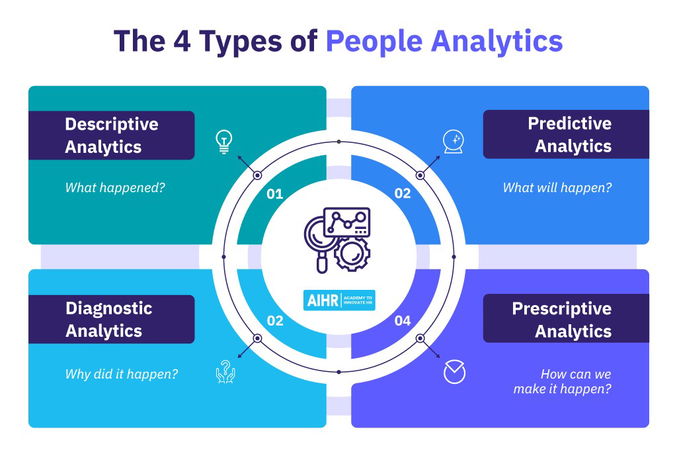
This is where insights move from simple reporting to real understanding.
-
Governance, Ethics, And Trust
People Analytics cannot work without clear guardrails. This includes:
-
Protecting employee privacy
-
Being transparent about what is being measured
-
Using data only for fair, meaningful decisions
-
Avoiding bias in analysis
-
More than the technology, this is what builds trust, and trust is what makes People Analytics sustainable.
-
The People Who Translate It
Finally, the most overlooked component: the humans behind the data. You need analysts, Human Resource Business Partners (HRBPs), managers, and leaders who can:
-
Interpret insights
-
Ask the right questions
-
Turn data into action
-
Communicate findings clearly
-
Otherwise, numbers stay numbers.
Once organizations understand how the People Analytics framework works, the next question becomes obvious: what real difference does it actually make?
That brings us to the benefits. Something leaders care about the most.
Benefits Of People Analytics For Business
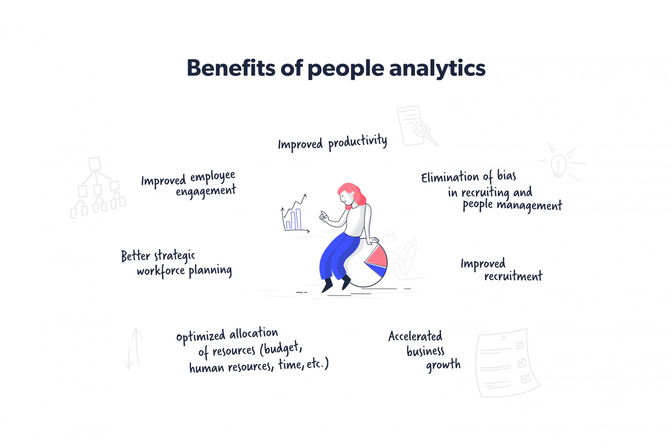
People Analytics genuinely changes how a business understands its people, solves problems, and plans for the future. Here’s how it creates real impact.
-
Smarter Hiring Decisions
Hiring has always involved a mix of instincts and assumptions. People Analytics shifts toward clarity. It helps teams understand:
-
Which candidate traits actually predict success?
-
Which channels bring in long-term performers?
-
What bottlenecks are slowing down the hiring?
-
According to LinkedIn’s Global Talent Trends report, companies that use data-driven hiring are twice as likely to improve recruiting outcomes. Google’s well-known “Project Oxygen” also showed how analyzing hiring and performance data helped identify the behaviors that actually made managers successful.
This leads to better matches and faster, fairer hiring cycles.
-
Stronger Retention And Lower Attrition
Attrition rarely happens suddenly. There are usually quiet signals long before a resignation letter shows up. This includes signals like:
-
Drops in engagement
-
Changes in workload
-
Misaligned roles
-
Stalled growth
-
People Analytics helps spot these patterns early, so leaders can take meaningful action rather than react after valuable people leave.
Gallup reports that 52% of voluntarily exiting employees say their manager or organization could have done something to prevent them from leaving. People Analytics helps surface these early warning signs so leaders can act before disengagement turns into exit.
-
Better Workforce Planning
Roles evolve quickly. Skills shift even faster. People Analytics helps organizations:
-
Understand which roles are growing.
-
Identify skills gaps.
-
Predict future talent needs.
-
This makes workforce planning more proactive and less reactive. According to Deloitte, organizations using workforce analytics are significantly better at planning for future skills and reducing talent shortages. This moves workforce planning from reactive hiring to long-term readiness.
-
Higher Employee Engagement
Engagement is more than a survey score. It is influenced by culture, team dynamics, recognition, career paths, and workload patterns.
People Analytics connect these dots so organizations can create environments where people actually want to contribute and grow.
McKinsey has found that organizations that use people data to improve employee experience achieve higher productivity and stronger performance outcomes, especially in hybrid and remote environments. -
A Fairer And More Transparent Workplace
Bias can creep into decisions without anyone realizing it. With People Analytics:
-
Promotion patterns become clearer.
-
Pay gaps become visible.
-
Performance outcomes become more consistent.
-
This brings fairness into everyday decision-making and builds trust across the organization. Research from PwC shows that employees are more likely to trust organizations that use data transparently to drive fairness and equity.
-
Better Business Outcomes Across the Board
When you combine better hiring, lower attrition, stronger teams, fairer decisions, and more engaged employees, the result is simple: the business performs better.
“Being able to communicate with your employees on how you are using their data is so important… It’s about getting in front of the communication as opposed to being reactive.”—Dawn Klinghoffer, Head of People Analytics at Microsoft (on ethical use of people data and transparency).
Of course, all these benefits come with a reality check. People Analytics can be incredibly powerful, but only if it’s used responsibly.
Which brings us to the part that organizations often overlook: the challenges and ethical questions that come with working on people's data.
Topics For More Insights
Challenges And Ethical Considerations Of People Analytics
People Analytics can do a lot of good, but it also introduces risks if not handled with care. Here are some of the challenges that businesses face.
-
Privacy Isn’t Optional
Employees want to know what’s being measured, why it’s being measured, and how their data is being used. If people feel monitored, People Analytics fails before it even starts.
Organizations must:-
Be transparent about what data is collected.
-
Avoid anything that feels intrusive.
-
Share insights at a group level, not about individuals.
-
IBM’s “AI Ethics and Trust Study” found that 78% of employees expect transparency when AI or data-driven systems influence workplace decisions, including hiring, performance, and promotions.
Remember that trust is the foundation. Without it, the whole process collapses.
-
Data Can Easily Be Misinterpreted
Numbers rarely tell the full story on their own. Without context, analytics can lead to oversimplified conclusions or unfair judgments, like:
-
A drop in performance could point to burnout.
-
Lower engagement scores may reflect team dynamics.
-
High attrition in a role might signal workload or leadership issues.
-
All of this means that human-in-the-loop is needed. MIT Sloan Management Review’s research on human-in-the-loop analytics (especially with AI in the loop) emphasizes that decisions improve significantly when leaders interpret data with situational and emotional context.
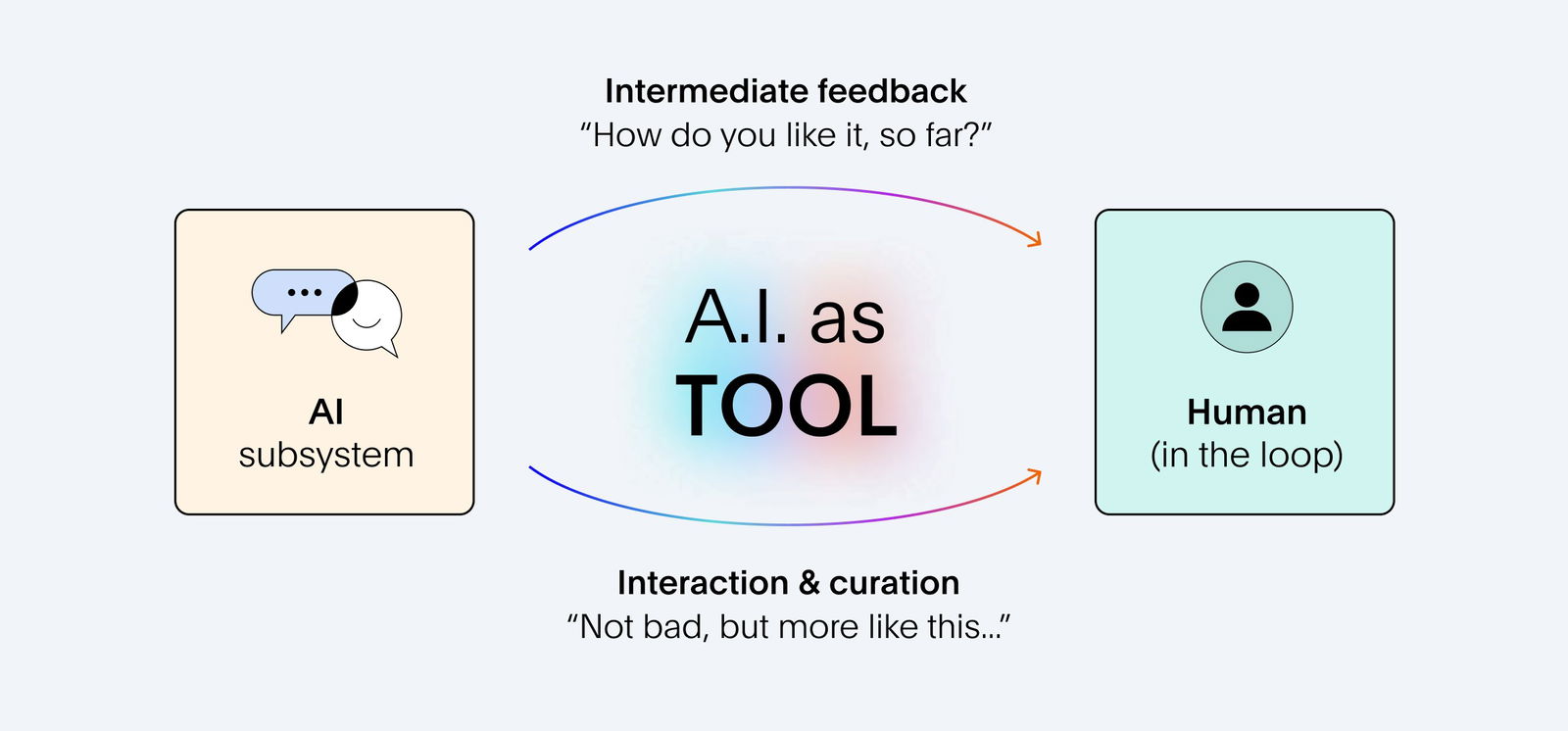
If leaders use analytics without context, they risk making wrong assumptions about people.
-
Bias Can Sneak In Quietly
If historical data is biased, the insights will be too. For example:
-
If past promotions favored certain groups, predictive models might reinforce that pattern.
-
If performance ratings were inconsistent, analytics may repeat those inconsistencies.
-
According to the World Economic Forum’s “Global AI Bias Report”, over one-third of AI-driven decision systems show measurable bias when trained on historical organizational data.
-
Too Much Data Can Feel Like Surveillance
There’s a fine line between understanding people and watching people. Here’s what usually happens:
-
Constant monitoring can make employees feel watched rather than supported.
-
Over-collection of data increases discomfort and resistance.
-
Lack of clarity around data use can foster fear.
-
A Gartner Workplace Monitoring Study found that more than 50% of employees feel workplace monitoring technologies reduce trust, even when introduced for productivity or security reasons.
So, ensure that the goal is always tracking insight, not oversight.
-
Ethical Guardrails Need To Be Clear
People Analytics works best when everyone knows:
-
What the data will be used for.
-
What it will not be used for.
-
Who can access it.
-
How decisions will be made from it.
-
Clear guardrails make the process fair, transparent, and trustworthy. OECD’s AI Principles Framework stresses that transparency, accountability, and clear usage boundaries are critical when applying analytics to human data.
These challenges are a reminder that People Analytics must be approached with care. When organizations treat people's data with respect, transparency, and empathy, analytics becomes a tool for trust and improvement rather than control or suspicion.
So, if People Analytics can create real value and come with real responsibility, the next question is clear: how do organizations build it the right way?
Let’s see that next.
How To Build A People Analytics Strategy
Building a People Analytics strategy is less about tools and more about intention. The strongest strategies start small, stay focused, and grow with the organization.
Here’s a step-by-step procedure that you can follow:
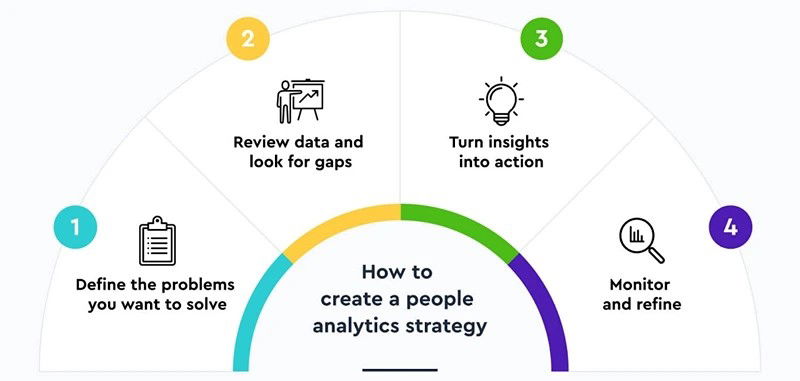
-
Start With Clear Questions, Not Data
Before collecting anything, teams should know what they are trying to understand. Is it attrition? Engagement? Skills gaps? Clear questions prevent unnecessary data collection and keep analytics purposeful.
-
Align People Analytics With Business Goals
People insights should directly connect to the outcomes leadership cares about, such as productivity, growth, or retention. When analytics ties back to business priorities, it gains credibility and support. “People analytics only creates value when it is tied directly to business outcomes leaders care about,” said Josh Bersin, Global HR Analyst.
-
Use The Data You Already Have
Most organizations already sit on valuable people data across HR systems, performance tools, and engagement platforms. The first step is connecting and cleaning this data, not adding more. “Most organizations already have more people data than they realize. The challenge isn’t collection, it’s connection,” said Tomas Chamorro-Premuzic, Professor, University College London.
-
Build Strong Governance And Ethics Early
Define what data can be used, how it will be shared, and who can access it. Being upfront builds trust and avoids confusion later. “Transparency about how employee data is used is not optional. It’s foundational to trust,” said Dawn Klinghoffer, Head of People Analytics, Microsoft.
-
Invest In People Who Can Translate Insight Into Action
Analytics only works when someone can explain what the data means and what to do next. This requires collaboration between HR, data teams, and business leaders. “Analytics has no value if leaders don’t understand it or know how to act on it,” said Alec Levenson, Senior Research Scientist, Center for Effective Organizations.
-
Start Small And Evolve Over Time
People Analytics is a journey. Pilot with one problem, learn from it, and scale responsibly. “The most successful People Analytics teams start small, prove value, and scale responsibly,” said John Boudreau, Professor Emeritus, USC Marshall School of Business.
Done right, a People Analytics strategy becomes less about tracking people and more about helping them succeed with clarity, fairness, and confidence.
Conclusion
People Analytics represents a shift from guessing to understanding. It helps organizations see patterns in how people work, collaborate, and grow, enabling better decision-making.
When used thoughtfully, People Analytics brings clarity to complex human dynamics, highlights risks early, and creates fairer, more transparent workplaces. However, data alone is never enough. Insight still needs context, empathy, and responsible leadership to turn numbers into meaningful action.
As work continues to change, the organizations that succeed will be those that use People Analytics to understand their workforce, build trust, and create environments where people can do their best work.
Frequently Asked Questions
Is People Analytics Part Of HR?
Yes, People Analytics typically sits within HR, but its impact goes beyond it. While HR manages the data, insights are often used by leadership, operations, and managers to make better business decisions.
How To Implement People Analytics Tools In A Remote Work Environment?
Start by integrating existing digital tools, such as HRIS, collaboration platforms, and engagement surveys. Focus on outcome-based metrics, ensure data privacy, and communicate clearly with remote teams about how data will be used.
What Are The Best Practices For People Analytics?
Use people analytics to identify early attrition signals, understand engagement drivers, and spot role or workload mismatches. Combine data insights with manager conversations and timely interventions to address issues before employees disengage or leave.
Thu, Jan 22, 2026

Enjoyed what you've read so far? Great news - there's more to explore!
Stay up to date with the latest news, a vast collection of tech articles including introductory guides, product reviews, trends and more, thought-provoking interviews, hottest AI blogs and entertaining tech memes.
Plus, get access to branded insights such as informative white papers, intriguing case studies, in-depth reports, enlightening videos and exciting events and webinars from industry-leading global brands.
Dive into TechDogs' treasure trove today and Know Your World of technology!
Disclaimer - Reference to any specific product, software or entity does not constitute an endorsement or recommendation by TechDogs nor should any data or content published be relied upon. The views expressed by TechDogs' members and guests are their own and their appearance on our site does not imply an endorsement of them or any entity they represent. Views and opinions expressed by TechDogs' Authors are those of the Authors and do not necessarily reflect the view of TechDogs or any of its officials. While we aim to provide valuable and helpful information, some content on TechDogs' site may not have been thoroughly reviewed for every detail or aspect. We encourage users to verify any information independently where necessary.
Loading comments...