
Human Resources Solutions
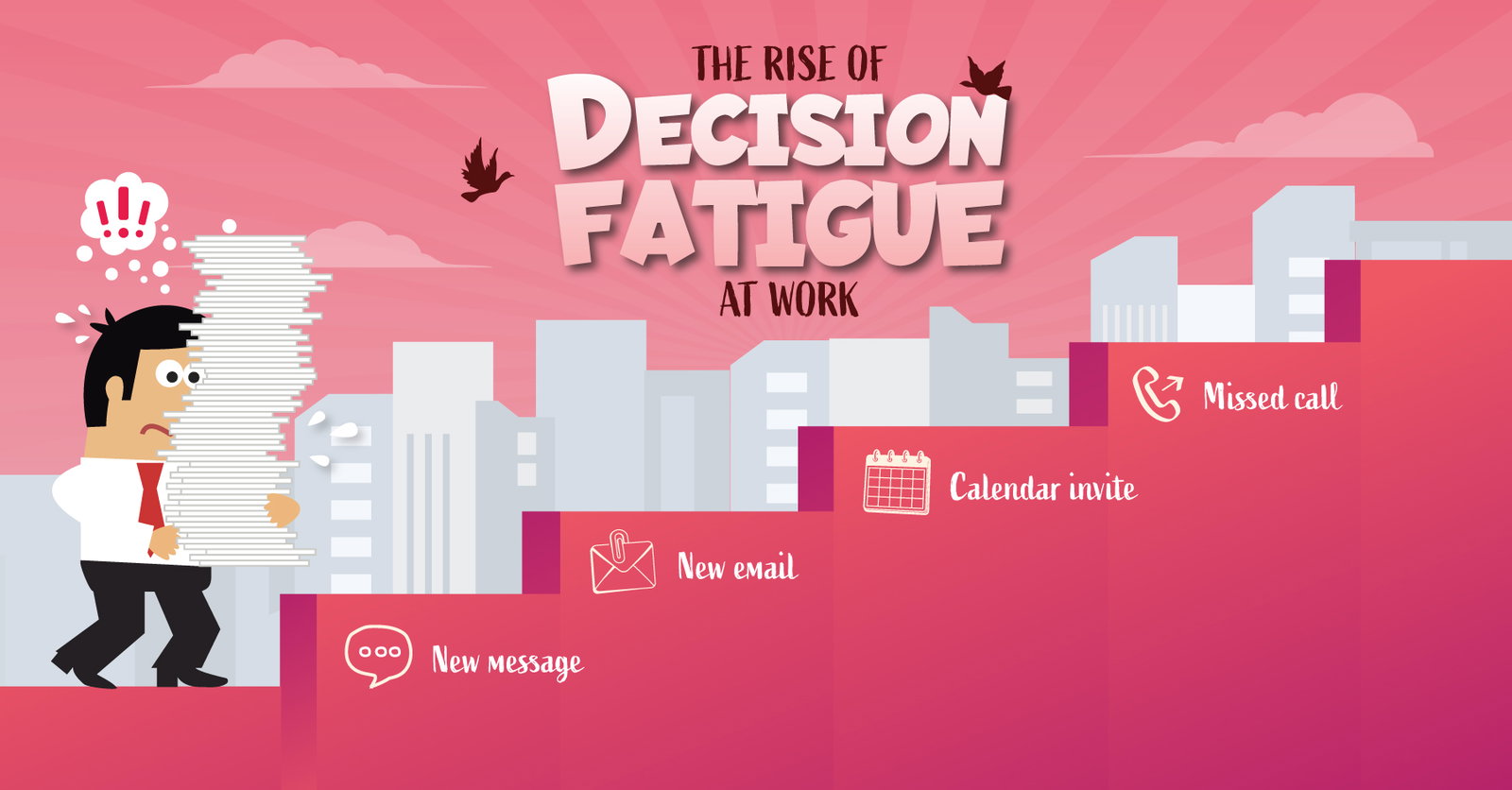
The Rise Of Decision Fatigue At Work
Share
Introduction
Perhaps spending half an hour on food delivery apps only to end up eating cereal for dinner.
It is a lot like standing in a supermarket aisle packed with choices. The more options you see, the more your brain freezes. A 2025 Wellhub report found that 85% of employees experienced burnout or exhaustion, contributing to the fact that nearly two-thirds of workers identify their job as a primary source of stress.
If that sounds familiar, you are not lazy. You are not indecisive. You are probably just experiencing Decision Fatigue.
A psychologist sees this frequently. People come in saying to them, “I don’t know what’s wrong with me. I can’t even choose what movie to watch.”
Before we look at the causes, it helps to understand what this feeling really means.
TL;DR
-
Decision fatigue is rising as daily choices and digital inputs increase at work.
-
Too many meetings and constant context switching drain mental energy.
-
This fatigue leads to more errors, lower creativity, and weaker decisions.
-
Simple habits and clear priorities help protect focus and decision quality.
What Is Decision Fatigue?
Decision fatigue occurs when your decision-making starts to slip after a long stretch of choices. You are not physically tired. It is more about feeling overwhelmed. Every choice you make, such as selecting a new supplier, choosing a marketing strategy, or deciding what to have for lunch, takes a little bit of your mental energy away.
The concept of Decision Fatigue gained prominence through research by psychologist Roy F. Baumeister, who discovered that willpower is like a muscle. The more you use it, the weaker it becomes, until it has time to recover.
Put simply, leaders make better decisions in the morning and weaker ones in the late afternoon, especially when the day is packed with back-to-back meetings.
This is why some of the world's most successful leaders, including Steve Jobs, Barack Obama, and Mark Zuckerberg, have streamlined their daily wardrobe. By reducing minor considerations, such as what to wear, they freed up cognitive bandwidth for more important decisions.
A 2025 cognitive research review found that people make faster, more accurate decisions before noon, indicating that the brain's clarity naturally declines as the day progresses.
Now that we have defined Decision Fatigue, the next step is to understand what causes it at work.
What Are The Causes Of Decision Fatigue At Work?
Today's work environments are fast paced and packed with distractions. It might seem like a side effect of productivity, but it is a major contributor to Decision Fatigue at work.
-
Information Overload
These days, employees are bombarded with information, data, Slack messages, emails, notifications, dashboards, project updates, and more. The human brain just is not built to handle that much input without taking a break. Over time, this constant stream starts to affect how well we make decisions.
-
Too Many meetings, Too Few Outcomes
When meetings dominate the workday, employees have less time and energy to make the necessary decisions. More frequent discussions often involve making new decisions, further depleting mental bandwidth.
-
Context Switching
Switching between tasks, tools, or conversations can really take a toll on your brain. Every time you switch things up, your brain has to take a moment to adjust, which can really drain your focus and make you feel more tired. Switching tasks can disrupt your focus; it may take up to 20 minutes to regain it.
-
Lack Of Structure And Prioritization
Employees have to make many small decisions throughout the day when there are no clear goals, priorities, or workflows. "Should I do A or B first?" "Is this email important?" According to Asana's Anatomy of Work Index 2025, knowledge workers spend 60% of their day on "work about work", tasks like chasing updates, searching for info, and managing shifting priorities.
-
Over-Responsibility And Poor Delegation
Leaders and managers who do not delegate typically have too many choices to make that others could handle. This not only tires people out but also diminishes their power.

All these factors eventually begin to influence how people think, act, and perform at work.
How Decision Fatigue Impacts The Workplace?
Decision Fatigue might seem like something that only affects individuals, but it can impact an organization's performance.
-
Poor Strategic Thinking
When employees are running low on cognitive resources, they are less likely to think long-term or generate innovative ideas. Employees with mental health challenges show a 23% lower productivity rate.
-
Inconsistent Decision-making
Teams struggling with Decision Fatigue may swing between indecision and snap judgments. Fatigued employees make two to three times more reactive decisions.
-
Increased Risk Of Errors
Fatigued minds are more prone to mistakes. Fatigue and stress are cited as contributing to as much as 50% of all workplace accidents. Nearly 90% of all workplace accidents are attributed to human error influenced by fatigue, repetition, and stress.
-
Leadership Burnout
Leaders who have to make tons of decisions every day without any support can really feel the pressure. A 2025 workplace report found that 82% of managers feel burned out, which is a higher rate than the 73% reported by entry-level employees.
-
Lower Engagement And Morale
When employees feel mentally drained, they disengage from their work. Enthusiasm drops, innovation slows, and a “just get it done” mindset replaces creative thinking.

The good part is that Decision Fatigue can be reduced with simple daily habits.
What Are Strategies To Overcome Decision Fatigue In Business?
Decision Fatigue is not permanent and a few smart habits can dramatically reduce it.
-
Prioritise High-Value Decisions
In the morning, you feel the most energised mentally. At that point, you should make the most critical decisions. A 2026 analysis noted that leaders make their most accurate decisions before 11 AM.
-
Simplify Routine Choices
The fewer small decisions you make, the more energy you have for larger ones. Creating routines and templates helps to free up mental bandwidth.
-
Use Decision-Making Frameworks
You have more energy for big decisions when you do not make as many small ones. Making templates and procedures might help clear up mental space. Reports show these tools can reduce decision-making time by up to 30%.
On that note, let’s wrap up this article.
Conclusion
Decision fatigue sneaks up on you, and many people do not realize it until they feel completely wiped out. It is not really about being slow or getting sidetracked. Your mind's just been juggling too many choices without taking enough time to pause.
Making small tweaks, such as tackling important tasks first, reducing unnecessary choices, and using straightforward frameworks, can help you think more clearly and feel better throughout the day.
Over time, these habits make work feel easier and more manageable. Ultimately, it is about giving your mind the space it needs to relax, refresh, and make smarter decisions.
Frequently Asked Questions
What Is Causing Decision Fatigue At Work In 2026?
Decision fatigue in 2026 is driven by constant digital notifications, too many meetings, unclear priorities and frequent context switching. These daily demands drain mental energy, making even simple decisions harder by the end of the day.
How Does Decision Fatigue Affect Productivity And Performance?
Decision fatigue reduces focus, increases errors, and leads to reactive choices rather than thoughtful ones. It also lowers creativity and engagement, especially during late work hours when the brain is most tired.
What Are Practical Ways To Reduce Decision Fatigue At Work?
You can reduce decision fatigue by scheduling important decisions in the morning, limiting small choices through routines, and using simple decision-making tools such as the Eisenhower Matrix or basic prioritization steps.
Tue, Feb 3, 2026

Enjoyed what you read? Great news – there’s a lot more to explore!
Dive into our content repository of the latest tech news, a diverse range of articles spanning introductory guides, product reviews, trends and more, along with engaging interviews, up-to-date AI blogs and hilarious tech memes!
Also explore our collection of branded insights via informative white papers, enlightening case studies, in-depth reports, educational videos and exciting events and webinars from leading global brands.
Head to the TechDogs homepage to Know Your World of technology today!
Disclaimer - Reference to any specific product, software or entity does not constitute an endorsement or recommendation by TechDogs nor should any data or content published be relied upon. The views expressed by TechDogs' members and guests are their own and their appearance on our site does not imply an endorsement of them or any entity they represent. Views and opinions expressed by TechDogs' Authors are those of the Authors and do not necessarily reflect the view of TechDogs or any of its officials. While we aim to provide valuable and helpful information, some content on TechDogs' site may not have been thoroughly reviewed for every detail or aspect. We encourage users to verify any information independently where necessary.
Loading comments...