
Surveillance
The Rise of AI-Powered Drones Across Industries
Share
Introduction
From faster medical deliveries and precision farming to real-time construction updates and interactive marketing, this shift is becoming visible across industries.
AI-powered drone technology is no longer limited to experimentation. It is becoming part of regular workflows across logistics, agriculture, infrastructure, retail, and media.
That is why more industries are beginning to adopt these systems, not as standalone tools, but as part of larger operational processes.
The Rapid Rise Of AI-Powered Drones Across Industries
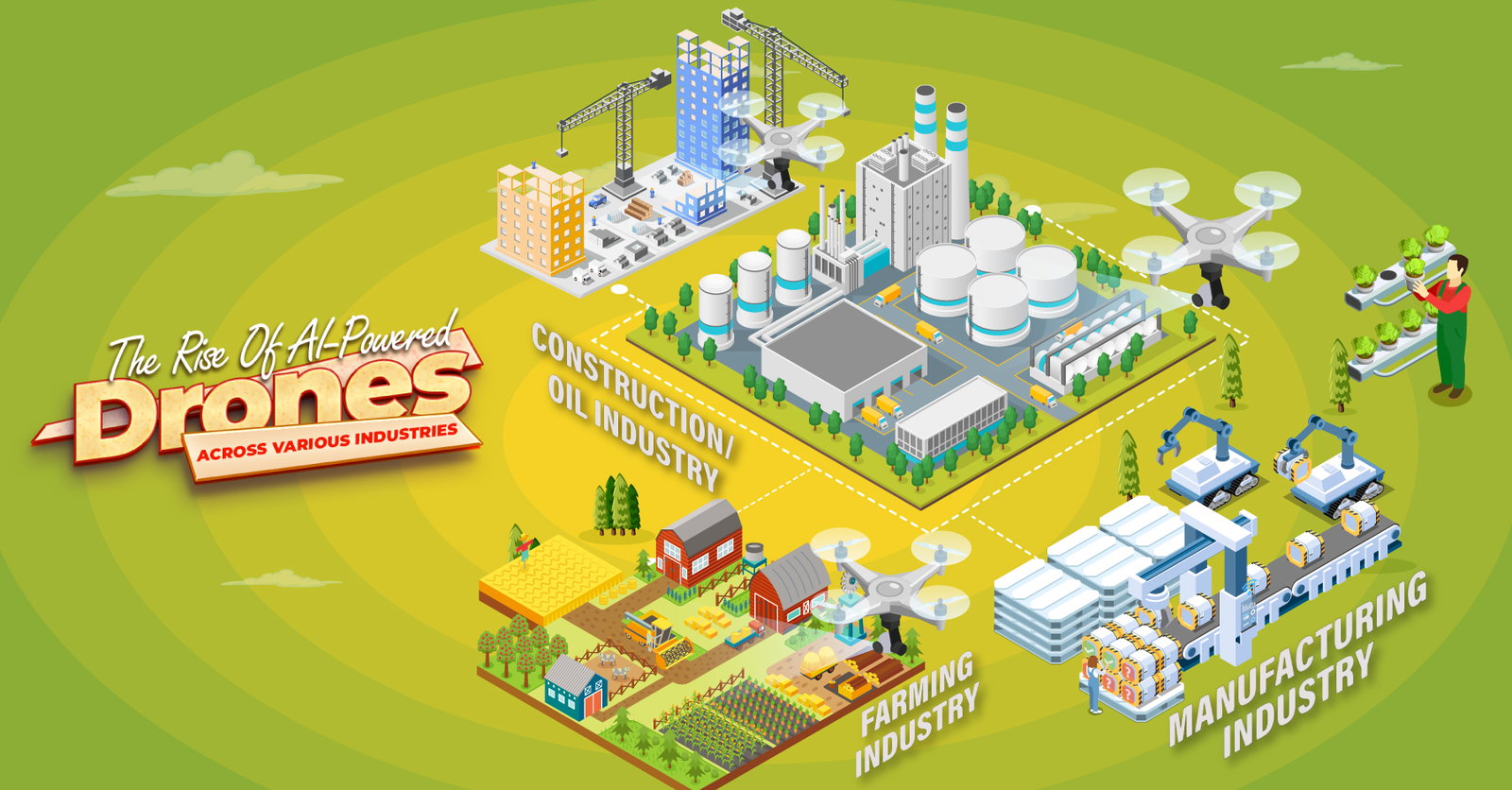
AI-powered drones and autonomous drones are becoming more visible as the ecosystem around them matures. What was once limited to isolated use cases is now supported by regulators, logistics providers, retailers, and software platforms working together to enable regular drone operations.
Regulatory progress is playing a key role in this shift. By early 2026, companies such as Wing, UPS Flight Forward, and Amazon Prime Air had received approvals for commercial drone delivery, signaling that large-scale operations are becoming more viable.
This progress is already visible in real-world activity. Walmart reported completing over 150,000 drone deliveries since 2021 and is expanding operations across multiple U.S. cities. By 2026, Wing had delivered more than 750,000 packages, while Zipline had surpassed two million commercial deliveries.
These numbers show that AI-powered drones are no longer limited to pilots or demonstrations. They are moving toward repeatable, scalable operations across industries, supported by growing infrastructure and regulatory alignment.
However, what makes it different from the Traditional Drones? Let’s find out next.
The Key Differences Between AI-Powered And Traditional Drones
Understanding the rise of AI-powered drones becomes clearer when compared to traditional drones. The difference is not just in how they fly, but in how they process data and support decision-making.
| Aspect | AI-Powered Drones | Traditional Drones |
| Control | Can operate with autonomy and decision support during flight | Fully dependent on human control |
| Data Processing | Real-time data interpretation and insights | Data reviewed manually after flight |
| Navigation | Uses AI vision systems for obstacle detection and avoidance | Relies on pre-set flight paths |
| Efficiency | Faster workflows from capture to action | Slower workflows due to manual steps |
| Use Case Value | Supports decision-making and automation | Primarily used for data collection or visuals |
| Adaptability | Can respond dynamically to surroundings | Limited adaptability during flight |
This difference directly affects how businesses use drone technology. Faster data processing and real-time insights allow teams to act immediately rather than waiting for post-flight analysis.
The drone itself is only one part of the system. The real value comes from AI-powered capabilities that enable faster decisions, improved accuracy, and more efficient workflows.
The Industries Driving the Adoption of AI-Powered Drones
AI drones are reshaping industries because each sector sees a specific, measurable advantage. While the core technology remains the same, the value it delivers varies by use case.
-
Agriculture
Agriculture is one of the leading areas of adoption because the impact is easy to measure. By June 2024, DJI reported that over 300,000 agricultural drones were in use globally, managing more than 500 million hectares of farmland.
The report also highlighted significant efficiency gains, including savings of 210 million metric tons of water, 47,000 metric tons of pesticides, and 25.72 million metric tons of carbon emissions. AI drones help improve precision, reduce costs, and support sustainability in farming operations. -
Retail And Logistics
Retail and logistics are seeing rapid adoption as drone delivery moves beyond pilot programs into real-world operations.
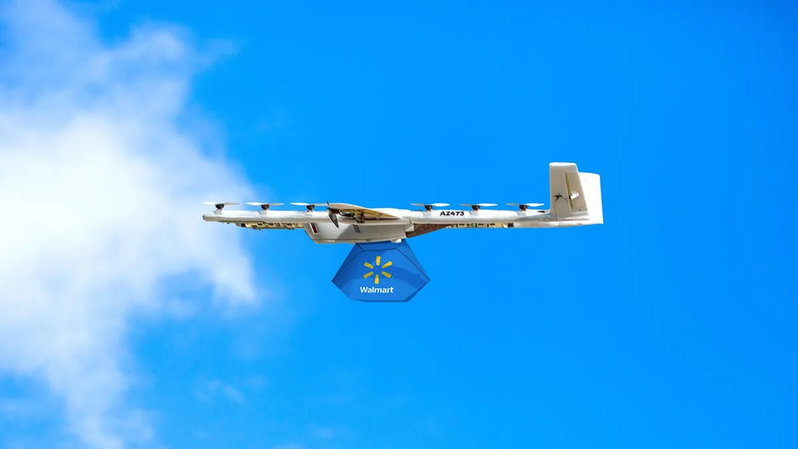
Walmart has completed over 150,000 drone deliveries, with recent reports suggesting the number has crossed 300,000. These numbers show that drone deliveries using AI-powered drones are becoming a viable last-mile solution in select markets.
-
Construction
Construction companies are using AI-powered drone technology to improve visibility and coordination across job sites.
Platforms like DroneDeploy are used across millions of sites globally, allowing teams to generate accurate site updates in minutes. This reduces delays, improves reporting accuracy, and helps teams make faster decisions. -
Infrastructure And Utilities
AI-powered drones are improving inspection processes across infrastructure and utilities.
Companies like Skydio use autonomous drones to inspect power lines, industrial sites, and network infrastructure. This improves safety and allows teams to identify issues more quickly without exposing workers to risk. -
Public Safety
Public safety teams benefit from faster response times and real-time visibility.
Autonomous drones can be deployed within seconds, giving emergency teams immediate situational awareness before arriving on-site. This supports faster decision-making in time-critical scenarios.
Together, these industries show why adoption is accelerating. Each sector applies drone technology differently, but all benefit from the same core capability: combining AI-powered intelligence with mobility to improve speed, accuracy, and efficiency.
Topics For More Insights
The Transformation Of Marketing Through AI-Powered Drones
AI-powered drones are not replacing digital marketing. Instead, they are connecting physical attention with measurable digital engagement.
The broader market context helps explain this shift. IAB reported that U.S. digital advertising revenue reached $259 billion in 2024. At the same time, OAAA reported $9.46 billion in out-of-home advertising revenue in 2025, with digital formats continuing to grow.
This shows that brands still value physical visibility but increasingly want it to connect with trackable digital outcomes.
-
Real-World Media
Drone campaigns combine live experiences, outdoor advertising, and digital amplification. This makes them effective in an environment where audience attention is fragmented across platforms.
-
Product Launches
Ford launched its 2024 Expedition campaign using 1,500 drones integrated with QR codes. The campaign generated 18 million social views and drove more than 100,000 website visits, showing how drone-based campaigns can combine brand awareness with direct response.
-
Live Experiences
Drone shows create visual experiences that are easily captured and shared across social media and PR channels. This allows a single physical event to generate ongoing digital content and extended audience reach.
-
Interactive Engagement
Brands like Coca-Cola have used drone shows in markets such as Japan and Hong Kong to create interactive audience experiences. Features like QR codes and social integrations allow audiences to actively participate rather than passively watch.
-
Large-Scale Brand Storytelling
Hyundai Motor Group launched Genesis in China using 3,281 drones, setting a Guinness World Record. Large-scale drone displays allow brands to create high-visibility storytelling moments that stand out in crowded media environments.



AI-powered drones are not replacing existing marketing channels. Instead, they are enhancing them by connecting physical experiences with digital engagement. A single drone campaign can generate scalable content, increase audience interaction, and drive measurable results across multiple platforms.
Conclusion
AI-powered drones are gaining traction because they solve real operational challenges across industries.
In agriculture, they improve precision and reduce resource usage. In logistics, they enable faster deliveries. In construction and infrastructure, they provide real-time visibility. In public safety, they support quicker response times. In marketing, they turn attention into measurable engagement.
What connects these use cases is not novelty, but practical value.
The market is increasingly favoring drone technology that can collect data, process it in real time, and integrate seamlessly into existing workflows. As these capabilities improve, AI-powered drones are moving from specialized tools to essential systems.
This shift is still evolving, but the direction is clear. AI-powered drones are becoming a core part of how industries operate, make decisions, and scale efficiently.
Frequently Asked Questions
What Is AI-Powered Drones And How Do They Work?
AI-powered drones use artificial intelligence to process data in real time, navigate autonomously, and make decisions during flight. Unlike traditional drones, they rely on AI-driven systems for obstacle detection, data analysis, and task execution, making them more efficient and adaptable across industries.
How Are AI-Powered Drones Used Across Industries?
AI-powered drones are used across industries such as agriculture, logistics, construction, infrastructure, and public safety. They enable faster drone deliveries, real-time site monitoring, precision farming, and improved inspection processes, helping businesses increase efficiency and reduce operational costs.
Why Are AI-Powered Drones Important For Businesses?
AI-powered drones are important because they combine mobility with real-time data processing and automation. This allows businesses to improve decision-making, streamline workflows, reduce manual effort, and scale operations more efficiently across different use cases.
Tue, Mar 31, 2026

Enjoyed what you read? Great news – there’s a lot more to explore!
Dive into our content repository of the latest tech news, a diverse range of articles spanning introductory guides, product reviews, trends and more, along with engaging interviews, up-to-date AI blogs and hilarious tech memes!
Also explore our collection of branded insights via informative white papers, enlightening case studies, in-depth reports, educational videos and exciting events and webinars from leading global brands.
Head to the TechDogs homepage to Know Your World of technology today!
Disclaimer - Reference to any specific product, software or entity does not constitute an endorsement or recommendation by TechDogs nor should any data or content published be relied upon. The views expressed by TechDogs' members and guests are their own and their appearance on our site does not imply an endorsement of them or any entity they represent. Views and opinions expressed by TechDogs' Authors are those of the Authors and do not necessarily reflect the view of TechDogs or any of its officials. While we aim to provide valuable and helpful information, some content on TechDogs' site may not have been thoroughly reviewed for every detail or aspect. We encourage users to verify any information independently where necessary.
Loading comments...