
Human Resources Solutions
Skills Over Titles: The Future Of Work
Share
Introduction
Perhaps you might have hired someone.
Over the years, the hiring process has evolved. For years, employers judged candidates by the usual checklist: the title on your resume, how many years you have spent in that role, and the degree you carried around to prove it. If those lined up, you were considered the right fit.
However, that is changing now.
Here is an example. Two people applied for the same sales role.
One had a business degree. The other had no formal degree but had taken focused sales courses, closed actual deals, and could clearly explain how they grew client accounts.
A few years ago, the degree would have been the deciding factor. Today, hiring managers look more closely at candidates who demonstrate real skills rather than relying on work experience and college degrees.
This shift is happening because roles are changing quickly. AI and new industries are reshaping jobs faster than titles can keep up. That is why more companies are leaning toward a skills-first approach, valuing what you can do over your title.
TL;DR
-
Hiring is moving away from degrees and job titles toward proven, practical skills that reflect real workplace capability.
-
Rapid change from AI and new industries makes skills more reliable indicators of employability than static roles.
-
Organizations succeed by adopting skills-first models using data, technology, and focused pilots aligned to business needs.
-
Long-term career success depends on adaptable skills like learning agility, communication, problem-solving, consistency, and self-awareness.
The Increasing Importance of Skills Over Titles
By 2030, an estimated 39% of worker skills will need to be transformed or will become obsolete due to rapid technological shifts, including AI, making skill gaps the top obstacle to business transformation for 63% of employers.
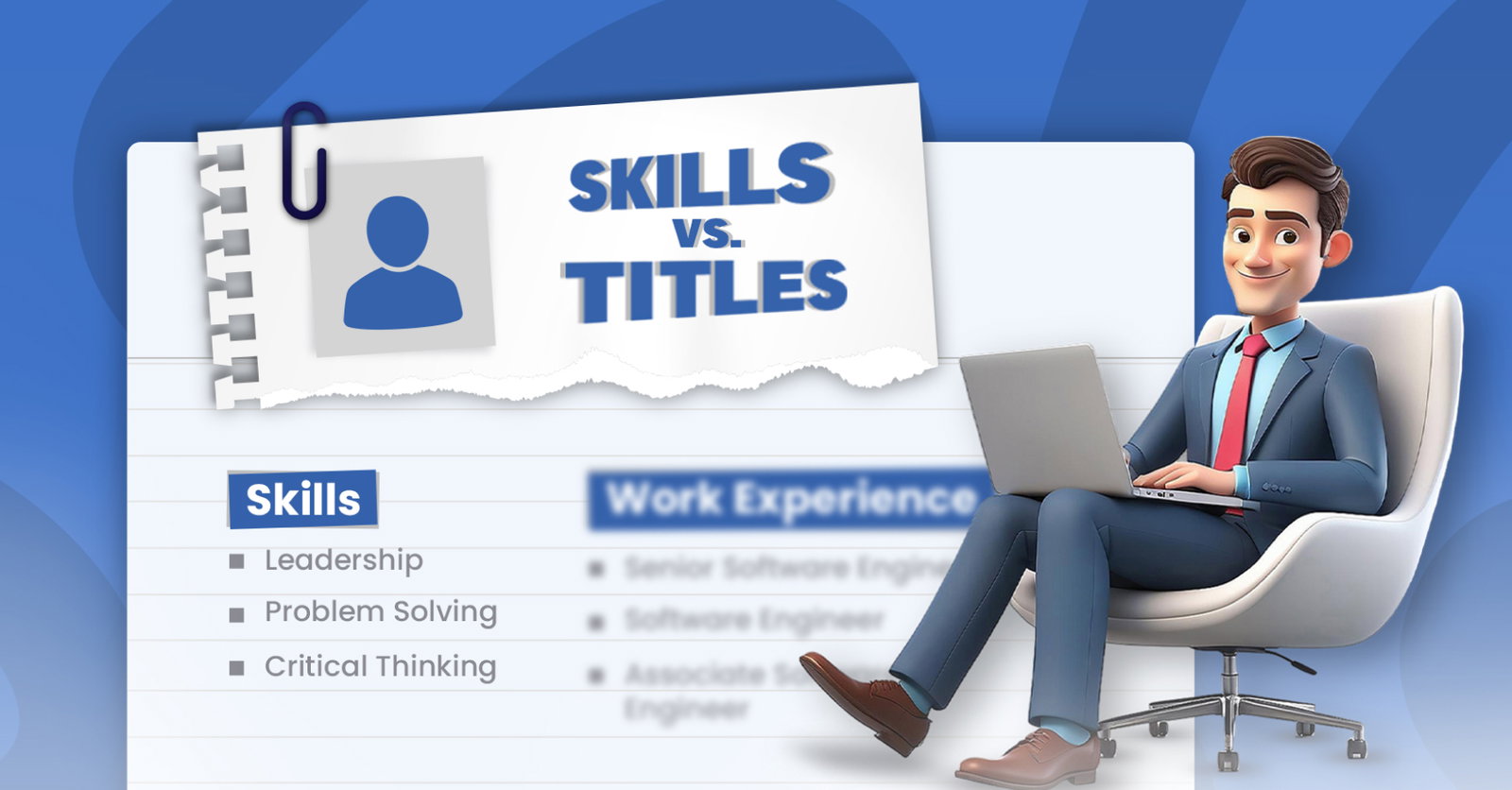
This gap is not due to a lack of titles; rather, their abilities have not developed in line with corporate requirements.
Titles do not change and are often outdated. However, skills evolve, providing an up-to-date view of what someone can do as their role changes.
This is where building a skills-first organization comes in.
Building A Skills-First Organization
You do not have to make a skills-first transformation all at once. It operates by breaking tasks into smaller, focused steps that deliver early wins and build momentum over the long term.
-
Start With The Why
Every skills initiative should kick off with a clear business problem in mind. Getting clear from the beginning is important, whether you want to boost productivity, tackle talent shortages, or back digital changes. It helps keep skills programs from turning into isolated HR projects.
-
Leverage Reliable Skill Data
Having solid skill taxonomies and ontologies really helps organizations sort, measure, and develop their capabilities in a precise way. These frameworks need to align with the industry and the specific roles they support.
-
Use Technology
Skill data needs a home. When it comes to Human Capital Management (HCM), employee experience platforms, or internal talent marketplaces, the tech should really make it easy for both employees and managers to assess and develop skills.
-
Secure Buy-In Through Focused Pilots
Skills transformation really sticks around when the business takes the lead on it. Identify leaders facing genuine talent challenges and test skills-first models in fields such as data science or cloud engineering. This helps us gather insights and tailor external taxonomies to our organization's needs.
-
Set Clear Skill Governance
Skills evolve constantly. Assign ownership for updating skill data and integrating it into performance, growth pathways, succession planning, learning initiatives, talent mobility frameworks, leadership development programs, and organization-wide capability-building strategies to ensure consistent workforce agility.
The future of work makes this shift hard to ignore. Let’s dive in.
Future Jobs And Required Skills
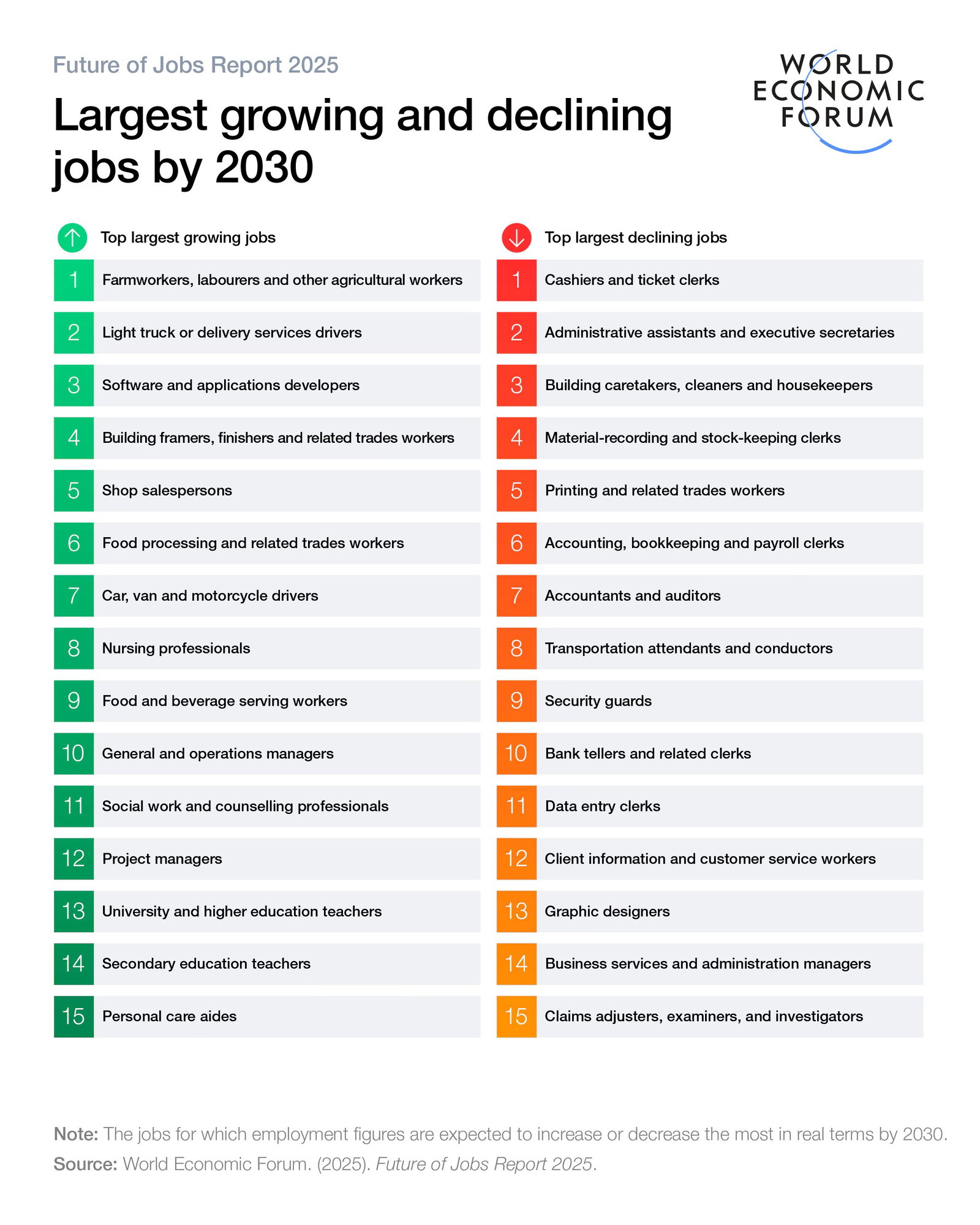
The World Economic Forum estimates that 22% of global jobs will undergo disruption by 2030. About 170 million new roles will emerge, and 92 million will be displaced, resulting in a net gain of 78 million jobs.
Job growth is not limited to one field; it is happening everywhere. The shift toward greener economies could generate 34 million new farming jobs, while delivery drivers, developers, builders, food workers, and retail staff are also seeing rapid hiring as industries adapt to new technologies and consumer trends.
Furthermore, nursing, social work, and counselling professionals are also expected to grow as demographics shift and the population ages.
Job titles can vary as the economy shifts. However, skills are what truly show if someone is employable. In the coming decade, the workers who succeed will be those who develop adaptable, transferable skills that remain relevant regardless of how roles evolve.
Topics For More Insights
While job-specific skills change, a few core abilities remain valuable across roles.
Soft Skills That Will Pay You Forever
These five core competencies stand out as the real foundations of long-term success:
-
Adaptability
The ability to learn, unlearn, and relearn. When markets change and roles evolve, the people who stand out are not necessarily the smartest; they are the ones who learn the quickest.
-
Articulation
Success is not only about having good thoughts; it is also about expressing them clearly. People who can take ideas and turn them into something everyone understands really help build trust, sway decisions, and get others moving in the right direction.
-
Consistency
Your goals do not determine your success; it is really about the daily habits you stick to. It is interesting how those small, consistent actions we take can add up over time, often outperforming the big bursts of motivation we sometimes rely on.
-
Resourcefulness
Progress happens when you ask yourself, “How can I tackle this with what I’ve already got?” Being able to figure things out on your own is what really sets leaders apart from those who rely on others.
-
Self-Awareness
The most underrated skill of all. Getting a grip on your emotions, recognizing your blind spots, and understanding how you affect others helps build empathy and resilience, and helps you stay calm as a leader when things get tough.
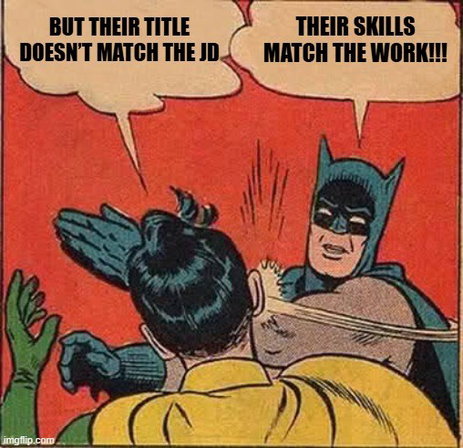
On that note, let’s hear the final thoughts.
Conclusion
It looks like the future of work is moving towards a focus on skills. As work continues to change, adaptability and a continually up-to-date skill set will matter more than job titles.
One of the most valuable skills you can have in any workplace is not really about your job title. It is about being able to tackle problems and support operations and clients. The most effective people jump in, think things through, and take action, regardless of whether the issue falls within their job description.
Focus on outcomes, continuity, and keep things moving. That is what maintains operations stable. That is what truly adds value to any organization. Both individuals and organizations must adapt to this change to thrive in the dynamic global economy.
For individuals, this means focusing on continuous learning and acquiring new skills. For employers, it involves fostering a culture that values and develops talent based on skills.
In this new landscape, those who focus on skills rather than titles will be in the best position for success.
Frequently Asked Questions
Why Are Companies Shifting From Job Titles To Skills-First Hiring?
Organizations are facing rapid industry changes, particularly driven by AI and automation. Job titles often fail to reflect real capability, while skills offer a clearer, more current picture of what a candidate can actually do. Skills-first models allow companies to match talent to evolving business needs more accurately.
What Skills Will Matter Most In The Future Of Work?
Adaptability, communication, problem-solving, resourcefulness, and self-awareness consistently appear as long-term success drivers across industries. These transferable skills help individuals remain relevant as job roles evolve or disappear.
How Can Organizations Start Building A Skills-First Approach?
Companies can begin with a clear business challenge, build a reliable skills taxonomy, use technology to visualize skills, run focused pilot programs, and establish governance to keep skill data up to date. This phased approach ensures early wins and long-term adoption.
Tue, Feb 3, 2026

Enjoyed what you've read so far? Great news - there's more to explore!
Stay up to date with the latest news, a vast collection of tech articles including introductory guides, product reviews, trends and more, thought-provoking interviews, hottest AI blogs and entertaining tech memes.
Plus, get access to branded insights such as informative white papers, intriguing case studies, in-depth reports, enlightening videos and exciting events and webinars from industry-leading global brands.
Dive into TechDogs' treasure trove today and Know Your World of technology!
Disclaimer - Reference to any specific product, software or entity does not constitute an endorsement or recommendation by TechDogs nor should any data or content published be relied upon. The views expressed by TechDogs' members and guests are their own and their appearance on our site does not imply an endorsement of them or any entity they represent. Views and opinions expressed by TechDogs' Authors are those of the Authors and do not necessarily reflect the view of TechDogs or any of its officials. While we aim to provide valuable and helpful information, some content on TechDogs' site may not have been thoroughly reviewed for every detail or aspect. We encourage users to verify any information independently where necessary.
Loading comments...