
Automation
Physical AI Explained: The Next Wave Of AI
Share
Overview
However, we are now entering the Physical AI phase, where intelligence moves into the real world through robots, autonomous machines, and smart systems that can sense and act.
As NVIDIA CEO Jensen Huang put it, “The next big thing is Physical AI, AI with a body. Robots, autonomous machines, industrial systems… it’s all coming.”
To understand where this shift is really heading, let’s first look at what Physical AI actually means.
TL;DR
-
Physical AI brings artificial intelligence into real-world machines like robots and autonomous systems.
-
Physical AI is already used in manufacturing, healthcare, smart cities, and homes.
-
Businesses adopt Physical AI to improve productivity, safety, and efficiency.
-
Despite challenges, Physical AI is shaping future human–machine collaboration.
Understanding Physical AI
Physical AI is a type of artificial intelligence that is built into physical agents. These agents do more than process information; they also interact with the real world by performing tasks, making independent decisions, and engaging with people in meaningful ways.
According to McKinsey, AI-enabled robotics now reduces payback periods to one to three years compared with five to seven years for traditional automation. Organizations adopting Physical AI are gaining measurable efficiency, flexibility and competitive advantage, signalling that this is no longer an experimental niche but a strategic enterprise imperative.
Now that we know what Physical AI is, let’s look at the key factors that make it work and set it apart from traditional AI systems.
Factors Of Physical AI
Here are the factors of Physical AI:
-
Enhanced Human-Machine Collaboration
Physical AI is opening up exciting new ways for humans and machines to work together. Cobots, or collaborative robots, are designed to work alongside humans, enhancing their capabilities and creating safer, more efficient work environments. Bringing together human intuition and robotic precision could transform workflows across manufacturing, healthcare, and more.
-
Smart Environments And IoT Integration
The combination of AI and the Internet of Things (IoT) is making it possible for self-driving systems to interact with their surroundings in real time. AI-powered sensors and devices that communicate with one another and act on real-time data are now found in smart industries, cities, and homes. These technologies make processes more efficient, cut down on waste, and ultimately enhance security.
-
Adaptation And Personalization
Physical AI can adapt to the needs of each user and to environmental changes. Physical AI's versatility makes it perfect for tailored healthcare, elder care, and rehabilitation. Robots that can monitor and respond to a patient's condition or help an elderly person with everyday duties are a new frontier in personalized, hands-on care.
Okay, but where do we actually see Physical AI in action? Let’s look at some real-world use cases where it’s already in use.
Real-Time Use Cases Of Physical AI
There are various use cases of Physical AI across industries. Here are some of the most relevant applications:
-
Manufacturing And Industrial Processes
Physical AI will enable even faster, real-time optimization without the need to reprogram or reconfigure when operating conditions change or unexpected events occur. Digital twins and simulations with a stronger physical-world grounding will be more powerful, enabling higher performance and expanding their scope beyond individual plants to encompass entire supply chains and even the broader environment.
-
New Robotics Applications
Physical AI will allow for even faster, real-time optimization, eliminating the need to reprogram or reconfigure in response to changing operating conditions or unforeseen events. Digital twins and simulations with a stronger physical foundation will be far more powerful, enabling higher performance and expanding their scope beyond individual plants to include entire supply chains and even the broader ecosystem.
-
Smart Cities And Homes
Physical AI could enable real-time traffic flow optimization, mobility provision, and public safety improvements, with robots assisting in delivering key urban services. It could also enable adaptive control of the home environment, bringing the long-awaited science-fiction concept of domestic humanoid robots to assist with day-to-day activities.
Now that we’ve seen where Physical AI is being used, let’s discuss why businesses are investing in it and the real benefits it delivers.
“Topics for More Insights”
Benefits Of Physical AI
Below are the benefits of Physical AI:
-
Higher Productivity And Output
Physical AI boosts productivity by enabling machines to operate with lower downtime and higher accuracy. According to the International Federation of Robotics, sales of professional service robots increased by 15% worldwide in the recent past. McKinsey forecasts that smart automation can increase manufacturing output by up to 30% by improving workflows, eliminating rework, and shortening production delays.
-
Improved Workplace Safety
Physical AI decreases human exposure to harmful jobs by placing intelligent devices in hazardous areas such as factories, mines, and warehouses. According to the International Labour Organization, automation and robotics reduce workplace injuries by handling repetitive and high-risk operations. AI-powered robots consistently perform tasks without fatigue, eliminating mishaps caused by human error or exhaustion.
-
Lower Operational And Maintenance Costs
AI-powered physical systems constantly monitor equipment health and spot anomalies early. According to McKinsey & Company, predictive maintenance can reduce maintenance costs by 10% to 40% while reducing unplanned downtime by up to 50%. This enables firms to extend asset life, eliminate emergency repairs, and plan maintenance more effectively.
Of course, it’s not all smooth sailing. Like any growing technology, Physical AI also comes with a few real challenges that need careful attention.
Challenges Of Physical AI
Below are the challenges of Physical AI:
-
Implementation And Deployment Complexity
Implementing Physical AI systems is not simple or quick. These systems require advanced hardware, sensors, robotics, software integration, and skilled teams to set them up and manage them. Many organizations also need to upgrade existing infrastructure before deployment. This increases initial costs, lengthens setup time, and makes adoption difficult, especially for small and mid-sized businesses.
-
Safety Risks In Human-Machine Interaction
Physical AI operates in shared environments with humans, which raises safety concerns if systems misinterpret movement or environmental changes. Maintaining predictable conduct in unexpected situations is difficult. Even modest perception or control errors can lead to physical harm, injuries, or production stoppages.
-
Reliability Issues In Real-World Environments
Physical settings are unpredictable. Dust, light variations, temperature changes, and mechanical wear can all affect sensor performance. AI models trained in controlled environments may fail when conditions change, necessitating periodic recalibration and continuous monitoring to ensure constant performance.
Let’s bring everything together and see what this really means moving forward.
Conclusion
Physical AI is gradually becoming a reality in our daily lives, rather than a futuristic concept. We can already see its impact in manufacturing, healthcare, and smart environments, where machines help people work more efficiently and safely.
While there are certain issues with the technology, including setup, safety, and reliability, the benefits are evident and growing. Physical AI is not designed to replace humans, but rather to assist them in doing complex, risky, or repetitive jobs.
As this sector evolves, the emphasis should be on employing Physical AI responsibly, pragmatically, and in a human-friendly manner that genuinely delivers value.
Frequently Asked Questions
What Is An Example Of Physical AI?
A common example of Physical AI is a robot working on a factory floor. These robots do more than follow fixed instructions. They can sense their surroundings, adjust movements, avoid obstacles, and work alongside humans. Other examples include autonomous warehouse robots, self-driving vehicles, delivery drones, and robotic assistants used in hospitals for patient care and logistics.
What Is The Difference Between Physical AI And GenAI?
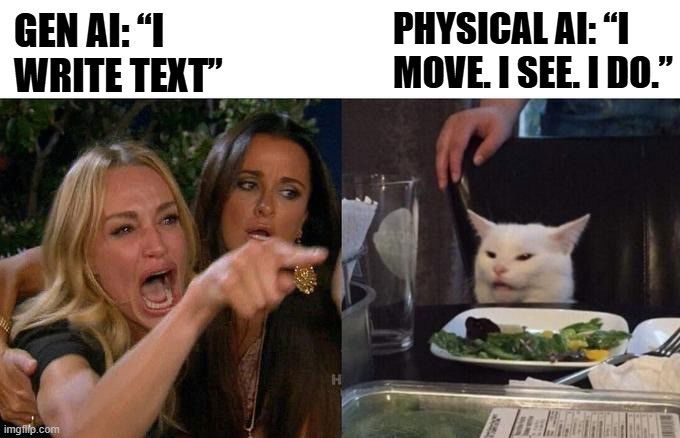
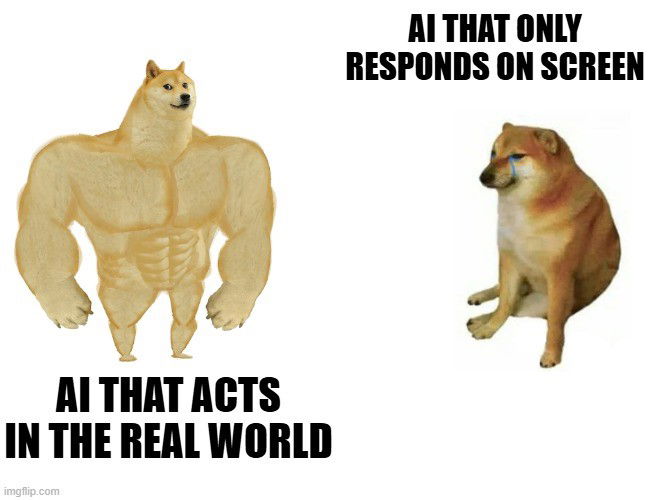
The main difference is where and how they operate. Generative AI works in the digital space. It creates text, images, code, or videos based on data patterns. Physical AI, on the other hand, has a physical form. It can move, sense, and interact with the real world. Simply put, GenAI thinks and creates, while Physical AI acts and performs tasks in real environments.
How Does Physical AI Work?
Physical AI combines AI software with hardware such as sensors, cameras, motors, and control systems. Sensors collect real-world data such as movement, distance, or temperature. AI models process this data and determine the appropriate action. The machine then responds by moving, adjusting, or completing a task. This loop operates continuously, enabling Physical AI systems to react in real time.
Mon, Jan 5, 2026

Enjoyed what you read? Great news – there’s a lot more to explore!
Dive into our content repository of the latest tech news, a diverse range of articles spanning introductory guides, product reviews, trends and more, along with engaging interviews, up-to-date AI blogs and hilarious tech memes!
Also explore our collection of branded insights via informative white papers, enlightening case studies, in-depth reports, educational videos and exciting events and webinars from leading global brands.
Head to the TechDogs homepage to Know Your World of technology today!
Disclaimer - Reference to any specific product, software or entity does not constitute an endorsement or recommendation by TechDogs nor should any data or content published be relied upon. The views expressed by TechDogs' members and guests are their own and their appearance on our site does not imply an endorsement of them or any entity they represent. Views and opinions expressed by TechDogs' Authors are those of the Authors and do not necessarily reflect the view of TechDogs or any of its officials. While we aim to provide valuable and helpful information, some content on TechDogs' site may not have been thoroughly reviewed for every detail or aspect. We encourage users to verify any information independently where necessary.
Loading comments...