
Manufacturing Technology
How Uber Is Winning The Self-Driving Race Without Building A Single Car
Share
Introduction
Waymo is already running fully driverless rides in San Francisco and Phoenix. Tesla has been promising full autonomy for years and is inching closer. Chinese companies like Baidu are deploying robotaxis at home and eyeing global expansion. Even Nvidia's Jensen Huang declared at GTC 2026 that "the ChatGPT moment of self-driving cars has arrived."
The robotaxi era is arriving faster than expected. The only question left is who will own it.
Right in the middle of all of it is Uber. A company that walked away from building its own autonomous vehicles in 2020 was written off from the Uber self-driving race entirely and is now quietly attempting to own the whole thing without building a single car itself.
To understand how Uber got here, we have to first understand how it walked away.
How Uber Made Its Smartest Move
In 2020, Uber sold off Uber ATG, its in-house autonomous vehicle unit, to Aurora, in a deal that valued Aurora at $10 billion. On the surface, it looked like a retreat. The company was bleeding money, facing intense scrutiny, and needed to get its house in order. Ride-hailing and delivery were the priorities. The moonshots could wait.
It was, in many ways, the right call. Building self-driving technology from scratch is enormously expensive, brutally competitive, and takes years to show results. Companies like Waymo had a head start with Google's backing. Uber was fighting a war; it was not equipped to win, at least not that way.
However, Uber did not walk away empty-handed. It kept equity stakes in the companies it spun off, maintained quiet relationships across the AV ecosystem, and stayed close enough to the space to know exactly when and how to come back.
What looked like a white flag was actually a calculated pause. Uber was not giving up on self-driving. It was finding a smarter way to play the game.
How Uber Is Building The World's Biggest Autonomous Vehicle Network
Starting in 2024, Uber shifted into a higher gear. Rather than racing to build the technology itself, Uber started partnering with nearly everyone who was. Aggressively, and across every corner of the AV world.
-
Waymo
Uber Waymo partnership: The deal that started it all. Waymo's fully driverless Jaguar I-PACE vehicles went live on the Uber app in Phoenix in October 2023, before expanding exclusively to Austin and Atlanta in early and mid-2025. In Austin alone, Waymo vehicles were rated 4.9 stars on average and were busier than 99% of human drivers on the platform within months of launch.
-
Lucid Motors + Nuro
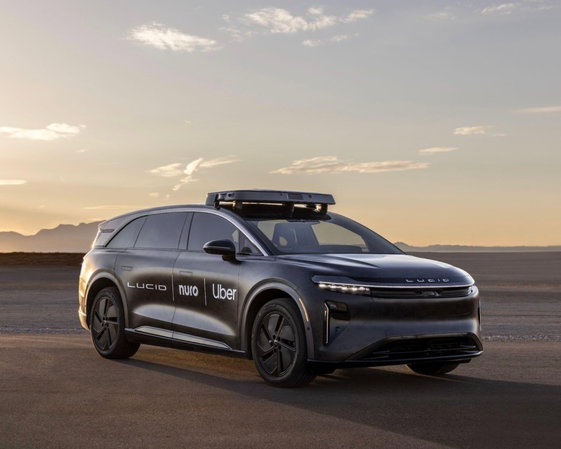
Uber invested $300 million in Lucid Motors as part of a deal to bring up to 20,000 luxury Gravity SUVs, powered by Nuro's self-driving technology, onto its platform. The service is set to launch in San Francisco in 2026, positioning Uber directly against Waymo in one of the world's most competitive robotaxi markets.
-
WeRide
Uber partnered with Chinese AV company WeRide to deploy fully driverless robotaxis in Abu Dhabi, Dubai, and Riyadh, marking one of its most significant moves into the Middle East and signaling that Uber's AV ambitions are firmly global.
-
Volkswagen ID. Buzz
Uber struck a deal with Volkswagen to deploy thousands of autonomous ID. Buzz vehicles across multiple US cities, starting in Los Angeles, with a commercial launch expected in 2026. It is a strong signal that legacy automakers are choosing Uber's network over building their own.
-
Uber Zoox Partnership
Announced in March 2026, Amazon-backed Zoox will deploy its purpose-built robotaxis with no steering wheel or pedals on Uber's platform in Las Vegas in summer 2026, followed by Los Angeles in mid-2027. Notably, this is the first time Zoox has ever partnered with a third-party platform.
In total, Uber AV partnerships in 2026 now span over 25 companies across robotaxis, freight, and delivery. It currently offers AV rides in Abu Dhabi, Atlanta, Austin, Dallas, Dubai, Phoenix, and Riyadh, and aims to be in 15 cities globally by the end of 2026.
The playbook is now impossible to miss. Uber's robotaxi strategy is built on owning the network, not the technology.
Uber x Rivian: The Biggest And Riskiest Bet In The Autonomous Vehicle Race
In March 2026, the Uber Rivian deal marked the boldest move in its new chapter. It announced a $300 million initial investment in Rivian, the American EV maker, as part of a deal to secure 10,000 fully autonomous Rivian R2 robotaxis, exclusively for Uber's platform. These vehicles are planned to hit the roads in San Francisco and Miami by 2028. Uber also holds the option to order 40,000 more starting in 2030, taking the potential total value of the deal to $1.25 billion.
On paper, it is Uber's most significant autonomous vehicle commitment to date. However, if you look closer, the deal raises as many questions as it answers.
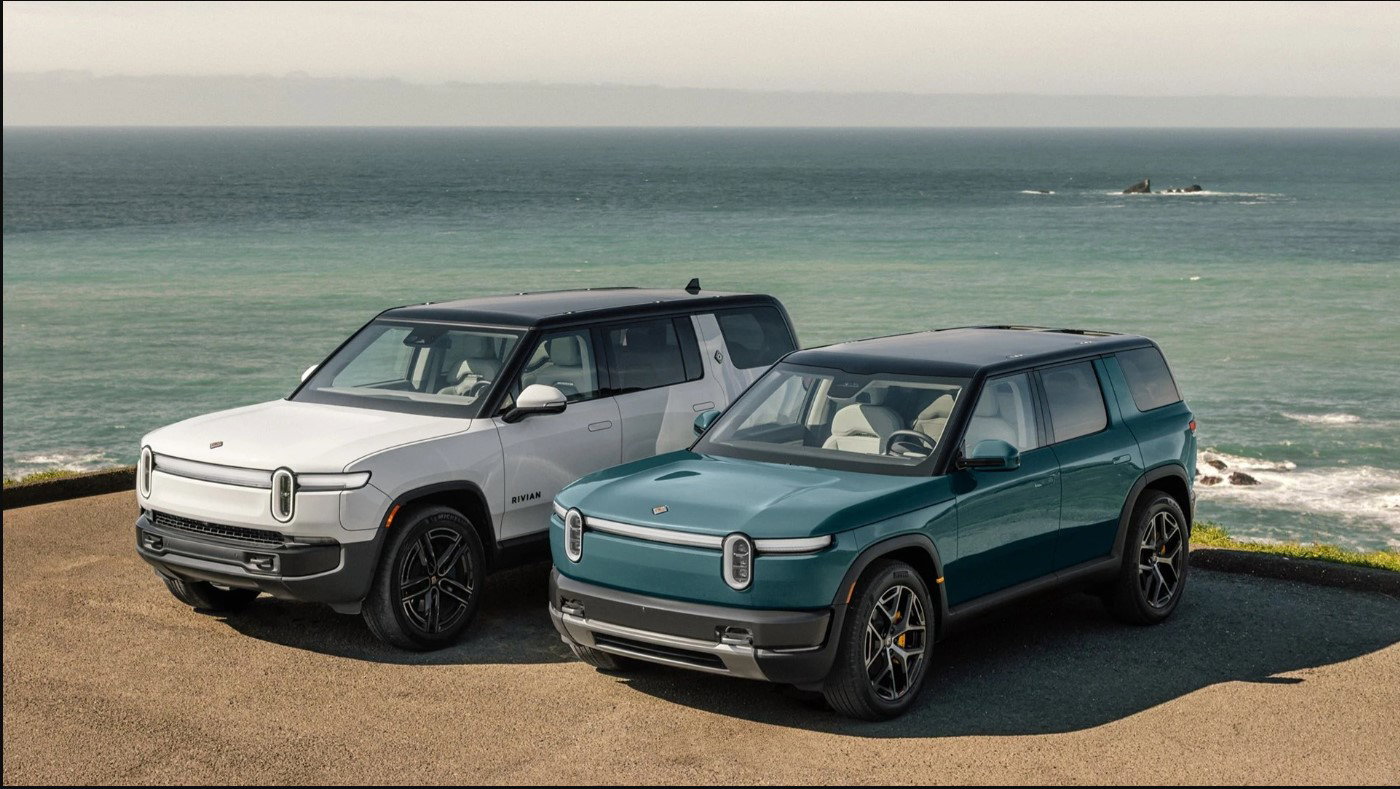
Rivian has not actually built the R2 yet. The Georgia factory where it plans to manufacture these vehicles is still under construction. The company has also never built or deployed a self-driving system designed for robotaxi operations. That is an enormous amount of ground to cover before 2028.
What makes this deal unlike any other Uber has signed is that Rivian is both the vehicle manufacturer and the self-driving system developer. Every other Uber partnership separates these two roles: a car company builds vehicles; an AV company provides the technology. Rivian is attempting to do both, simultaneously, at scale, under a tight deadline.
To take on this challenge, Rivian has already dropped its 2027 profitability target. While Uber writes a relatively manageable cheque, Rivian is carrying the real weight of this deal.
NVIDIA x Uber: Building The Infrastructure Behind The Race
While Uber is assembling the network from the top, NVIDIA is quietly building the infrastructure beneath it.
At its GTC 2026 conference, NVIDIA CEO Jensen Huang announced new or expanded deals with BYD, Geely, Hyundai, and Nissan for its Drive Hyperion autonomous vehicle development platform, adding to existing agreements already in place with GM, Mercedes-Benz, and Toyota. Seven of the world's biggest automakers are all building on Nvidia's foundation.
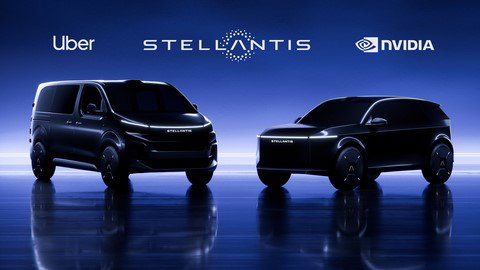
Huang did not hold back on stage. "The ChatGPT moment of self-driving cars has arrived," he declared. Between just the four new partners announced at GTC, those automakers collectively build 18 million vehicles a year.
NVIDIA does not own a single one of those cars. It does not need to. It just needs to be the engine running inside all of them. In the same way, Uber just needs to be the app that passengers open. Two companies, two different layers of the same race, running the same playbook.
Neither builds the thing everyone is actually talking about. Both intend to profit more than anyone else.
Waymo Vs. Tesla Vs. Uber
The autonomous vehicle race looks clean and exciting from the outside. Up close, it is crowded, complicated, and moving faster than anyone can fully keep up with.
Take Waymo. In Austin and Atlanta, Uber and Waymo are partners. Waymo's driverless Jaguar I-PACE vehicles run exclusively on Uber's platform in both cities. But in San Francisco, the same two companies are direct competitors. Uber is deploying Lucid EVs powered by Nuro's self-driving technology, going head-to-head with Waymo in one of the most-watched robotaxi markets in the world. Partner in one city, rival in another.
Then there is Tesla. Elon Musk has been promising full autonomy for years, and in 2025, Tesla finally launched a limited robotaxi service in Austin. However, Tesla's Full Self-Driving software is now under the US federal government's highest level of scrutiny, an escalated engineering analysis that is a required step before a possible recall order.
The rules of the road, literally and figuratively, are still being written. Waymo is ahead but not unchallenged. Tesla is loud but not yet proven at scale, and Uber is threading through all of it, partnering where it makes sense, competing where it has to, and betting that owning the network matters more than winning any single city.
No player has a clean lane right now, but Uber might just have the smartest map.
Final Thoughts
From Tokyo to the Middle East, from San Francisco to Miami, Uber is quietly stitching together an autonomous empire. Uber is not building the technology. It is becoming the operating system that all the technology runs on. Let the engineers build the cars and write the code. Uber will make sure that when a passenger anywhere in the world opens an app to book a robotaxi, it is Uber's app they reach for.
The robotaxi era is arriving faster than expected. The real question was never whether the cars would show up. It was always about who would be waiting to collect the fare when they did.
At the moment, it seems like Uber is going to collect all the fares.
Frequently Asked Questions
How Is Uber Winning The Self-Driving Race Without Building Its Own Cars?
Uber's strategy is built entirely on partnerships rather than technology development. Instead of building its own autonomous vehicles or self-driving software, Uber has signed deals with over 25 AV companies across robotaxis, delivery robots, autonomous trucks, and drones, including Waymo, Rivian, Zoox, WeRide, and Volkswagen. The idea is simple: let the technology companies build the cars and write the code, while Uber owns the network and the rider relationship. When a passenger anywhere in the world books a robotaxi, Uber wants to be the platform they use.
What Is The Uber Rivian Deal And Why Does It Matter?
In March 2026, Uber announced a $300 million initial investment in Rivian as part of a deal to secure 10,000 fully autonomous R2 robotaxis exclusively for its platform, with a planned rollout in San Francisco and Miami by 2028. Uber also holds an option to order 40,000 more vehicles from 2030, taking the total potential deal value to $1.25 billion. The deal is significant because it is the first time Uber has partnered with a company that is both building the vehicle and developing the self-driving system, making Rivian's execution risk considerably higher than any previous Uber AV deal.
Who Are Uber's Biggest Competitors In The Robotaxi Space?
Uber's two most significant competitors are Waymo and Tesla. Waymo, backed by Google's parent company Alphabet, is currently the most advanced robotaxi operator in the world, providing over 400,000 paid rides per week across multiple US cities. Interestingly, Uber both partners with Waymo in Austin and Atlanta and competes with it directly in San Francisco. Tesla, meanwhile, launched a limited robotaxi service in Austin in 2025, but its Full Self-Driving software is currently under the US federal government's highest level of scrutiny. The robotaxi battlefield is complicated; alliances and rivalries often exist between the same players at the same time.
Tue, Mar 24, 2026

Liked what you read? That’s only the tip of the tech iceberg!
Explore our vast collection of tech articles including introductory guides, product reviews, trends and more, stay up to date with the latest news, relish thought-provoking interviews and the hottest AI blogs, and tickle your funny bone with hilarious tech memes!
Plus, get access to branded insights from industry-leading global brands through informative white papers, engaging case studies, in-depth reports, enlightening videos and exciting events and webinars.
Dive into TechDogs' treasure trove today and Know Your World of technology like never before!
Disclaimer - Reference to any specific product, software or entity does not constitute an endorsement or recommendation by TechDogs nor should any data or content published be relied upon. The views expressed by TechDogs' members and guests are their own and their appearance on our site does not imply an endorsement of them or any entity they represent. Views and opinions expressed by TechDogs' Authors are those of the Authors and do not necessarily reflect the view of TechDogs or any of its officials. While we aim to provide valuable and helpful information, some content on TechDogs' site may not have been thoroughly reviewed for every detail or aspect. We encourage users to verify any information independently where necessary.
Loading comments...