
Computing
Cloud Computing Security: Best Practices In 2024
Share
Overview
Not just this, the app can even store your information on its servers (pun intended) and use it on other devices where you log in. Furthermore, using your browsing data, the app can suggest alternate restaurants, cuisines or dishes, based on other people’s data.
At the end of the day, such data is used by businesses to personalize experiences. We mean, the world runs on data, right? It's in your smartphone, at work, at home and even being transmitted through the air and across the digital realm.
However, the scope of business data covers a larger spectrum, spanning operational, analytical, computational and other aspects that dictate their processes. In a bid to quicken processes, businesses have turned to cloud computing - which has attracted the dark side of the force.
We’re talking about cybercriminals who are out to steal confidential business data by attacking vulnerabilities in their cloud systems. This is where businesses must fortify themselves by ensuring they’re following the Best Practices for Cloud Computing Security In 2024.
So, read on as we take you on an authorized journey of how businesses can secure their clouds and themselves!
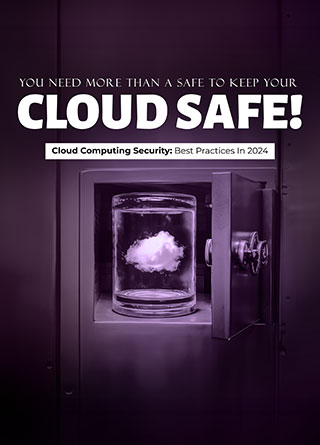
.jpg.aspx "TechDogs-\"Cloud Computing Security: Best Practices In 2024\" You Need More Than A Safe To Keep Your Cloud Safe!")
Colonel Sanders’ KFC (Kentucky Fried Chicken) is known for its fried chicken and is often marketed as a “Secret Recipe”, “Original Recipe” or “One of the biggest trade secrets in the world” - KFC’s recipe is indeed unique!
It’s such a big secret that KFC employs two different firms to produce the spice mix made from 11 ingredients, each possessing half of the recipe. When the first half is made, it’s sent to the other company to be combined with the remaining ingredients.
While a copy of the recipe (signed by Colonel Sanders) is stored in a vault at KFC’s headquarters, sitting beside 11 vials of the ingredients, the company hasn’t revealed any digital copy (surely, there must be one?).
Moving away from the finger-lickin’ good food, most companies now store their data, both confidential and public, online. Moreover, they use mountains of data in their daily processes. Owing to the multitude of benefits, businesses have begun migrating their operations and mission-critical workloads to cloud environments, to leverage quick, flexible and efficient operations.
This brings up a key question – what's being done about cloud security?
According to a report, 39 seconds is the average time span between two cyber-attacks on a global scale. Moreover, considering the rise of malware attacks, security breaches and threat vectors are evolving with each passing day. Businesses need to adhere to the best practices to secure their clouds!
So, read on to discover what the most common security issues are, what the importance of cloud security is and what businesses should do to protect themselves in 2024!
What Are The Most Common Cloud Computing Security Issues?

“Know your enemy.” Have you heard of this phrase derived from Sun Tzu's The Art of War?
If not, you’ve surely heard of “Keep your friends close and your enemies closer” (also Sun Tzu), right?
Either way, businesses need to know who they must safeguard themselves from and where their shortcomings lie. Let’s dive into where businesses falter when it comes to Cloud Computing Security issues. While some threats originate externally, some are also homegrown. The top threats include:
-
Misconfiguration
It’s not the easiest thing to always get the settings right. It’s a daily struggle to balance the hot and cold water while taking a shower. When it comes to businesses, they need to be safer with their security, considering misconfiguration of access controls, open ports and security settings can lead to exposed vulnerable points. This can be offset by implementing rigorous security policies and automated scanning tools.
-
Breaches, Losses And Privacy Concerns
Businesses love data. If they could, they’d store the entire world’s data and storage wouldn’t be a problem as they leverage cloud solutions. However, as they migrate data to the cloud, it opens the door to the prying eyes and unauthorized access of cybercriminals who’d love to hold companies to ransom to avoid data leaks of sensitive information to maintain their reputation. #BetterSecurityTools
-
Insider Threats
As per a report, 95% of cybersecurity breaches are caused by human error, highlighting the critical role that employee awareness and training play in data security. Sometimes, breaches occur due to negligent employees, while occasionally, the malicious actor resides within the organization. With cloud services increasing the exposed area, monitoring threats effectively can become tougher. The use of third-party vendors, insecure APIs and providing overprivileged access hinders security further.
-
Advanced Persistent Threats
If you end up eating stale or bad food and fall sick because you can’t see the germs in the food, do you blame your body for being unable to cope? Nope! Similarly, sometimes the threats are just too sophisticated to spot at the first glance. This is what happens when businesses face advanced persistent threats, where threats like advanced malware or denial-of-service (DoS) attacks remain undetected or disrupt the business’ control.
Needless to say, Cloud Computing Security is important. How important, you ask?
What Is The Importance Of Cloud Computing Security?
Businesses must pick a compatible security solution before narrowing down on a cloud provider, while they’re transitioning and even when using the cloud. This is where picking a cloud provider that can cater to the customizations a business needs becomes important. Additionally, businesses must stay updated with the latest trends, tools and offerings by security providers.
These are done by leveraging the 4 types of Cloud Computing Security controls, which are deterrent controls (which block malicious attacks on cloud systems), preventive controls (which eliminate vulnerabilities), detective controls (which identify and react to security threats and controls) and corrective controls (which limit damage post-attack).
Using effective security provides businesses with centralized and real-time security, which in turn helps enhance traffic analysis, web filtering, quicker management and lowered burden on endpoint security. It can also help in reducing the expenditure on administration manpower and hardware while improving reliability and enabling authorized access from anywhere.

All this means nothing if businesses don’t make an effort to enhance their cloud security. Let’s explore what the best practices are!
How Can Businesses Secure Their Cloud Infrastructure?
Owing to the widespread adoption of cloud computing and cloud infrastructure, businesses are accelerating their security efforts, looking for all kinds of technologies that can enhance their protective measures. Some of the best practices include:
-
Leveraging AI, ML And Automation
You’ve surely heard enough about the capabilities of artificial intelligence (AI) and machine learning (ML) at this point. Just like other industries, this technology is redefining cybersecurity in cloud infrastructures. The combination of AI and ML offers businesses the ability to detect anomalies, identify threats, respond rapidly and analyze logs in real time. It also acts as a perpetual security personnel that enables automation and streamlining of cloud-based workloads such as software updates, patch management, scanning for vulnerabilities and more.
-
Using Cloud Access Security Brokers (CASBs)
Imagine if you could scan every dish that was served to you at a restaurant for harmful microbes and bacteria to ensure anything that you ate wasn’t infected (but remember to wash your hands!). That’s what businesses get from CASBs. This tool acts as a security guard at the entrance that checks and controls the movement of all those trying to access the cloud. This helps prevent unauthorized access to the cloud while also preventing data leaks, enforcing security policies, enhancing cloud usage visibility and unifying security controls.
-
Embracing Zero Trust
Trust no one! That’s what zero trust security is all about in a nutshell. This strategic approach helps businesses protect themselves by requiring users to authenticate and verify themselves. This technique brings in stricter access controls, continuous verification of users and identities, scanning device health and other measures before granting access. Essentially, businesses are embracing this technique in their cloud to reduce attack surfaces and risks of breaches.
-
Securing Data And Infrastructure As Code (IaC)
We began by establishing the value data holds in the eyes of a business. Suffice it to say, protecting data should be paramount for them. Businesses should implement data masking, data encryption, granular access controls and DLP (data loss prevention) solutions to protect their cloud data and apps, while also reviewing their data classification and compliance efforts. On the other hand, they should ensure they strengthen the foundational code used in cloud-based apps and servers by securing IaC scripts, coding practices and configurations.
-
Enhancing Security Awareness
Change starts at home! For businesses, looking inward is key in securing their cloud infrastructure. This includes educating employees about the importance of cloud computing security, cyber threats, best practices, reporting issues and more. Additionally, security teams should be clear when drafting security strategies, defining requirements, developing detailed plans, performing due diligence, building threat models, embracing transparency, prioritizing risk management, creating SSO solutions and enhancing DDoS protection.
That’s it, folks – all the things you need to be aware of to secure your cloud infrastructure and deployments!
Wrapping It Up
Cloud computing is reforming the business world with its capabilities and there’s no question that it faces numerous risks from bad actors, cybercriminals (both within and outside the organization) and other vulnerabilities. This makes it important to enforce the best practices for Cloud Computing Security.
While some of the solutions lie in specialized tools and technologies, businesses can fortify themselves from within by educating their employees. A secure cloud is an efficient cloud!
Frequently Asked Questions
What Are The Most Common Cloud Computing Security Issues?
Cloud computing security issues can stem from various sources, both external and internal. Misconfiguration of access controls, open ports and security settings poses a significant threat, potentially leading to exposed vulnerable points. Additionally, breaches, losses and privacy concerns arise as businesses migrate data to the cloud, making it susceptible to unauthorized access by cybercriminals. Insider threats also present a considerable risk, with human error accounting for a significant portion of cybersecurity breaches. Moreover, advanced persistent threats, such as advanced malware and denial-of-service attacks, can remain undetected or disrupt business operations, underscoring the importance of robust cloud security measures.
What Is The Importance Of Cloud Computing Security?
Cloud computing security is paramount for businesses leveraging cloud environments due to the sensitive nature of the data stored and processed. Businesses must prioritize selecting compatible security solutions and cloud providers that cater to their specific needs. By implementing deterrent, preventive, detective and corrective controls, organizations can bolster their cloud security posture. Effective security measures offer centralized and real-time protection, enabling enhanced traffic analysis, web filtering, quicker management and reduced burden on endpoint security. Moreover, robust cloud security practices can lead to decreased administration costs, improved reliability and facilitated authorized access from anywhere, thereby ensuring the integrity and confidentiality of critical data.
How Can Businesses Secure Their Cloud Infrastructure?
Securing cloud infrastructure involves adopting a multi-faceted approach encompassing advanced technologies and best practices. Leveraging artificial intelligence (AI), machine learning (ML) and automation enables businesses to detect anomalies, identify threats and respond rapidly to security incidents. Cloud Access Security Brokers (CASBs) act as gatekeepers, preventing unauthorized access to the cloud and enforcing security policies. Embracing the zero-trust security model enhances access controls and mitigates the risks of breaches by requiring continuous user verification. Moreover, securing data and Infrastructure as Code (IaC) through data masking, encryption and granular access controls is crucial for protecting sensitive information. Enhancing security awareness among employees, coupled with clear security strategies and risk management practices, strengthens the overall security posture of cloud infrastructure and deployments.
Thu, Mar 14, 2024

Liked what you read? That’s only the tip of the tech iceberg!
Explore our vast collection of tech articles including introductory guides, product reviews, trends and more, stay up to date with the latest news, relish thought-provoking interviews and the hottest AI blogs, and tickle your funny bone with hilarious tech memes!
Plus, get access to branded insights from industry-leading global brands through informative white papers, engaging case studies, in-depth reports, enlightening videos and exciting events and webinars.
Dive into TechDogs' treasure trove today and Know Your World of technology like never before!
Disclaimer - Reference to any specific product, software or entity does not constitute an endorsement or recommendation by TechDogs nor should any data or content published be relied upon. The views expressed by TechDogs' members and guests are their own and their appearance on our site does not imply an endorsement of them or any entity they represent. Views and opinions expressed by TechDogs' Authors are those of the Authors and do not necessarily reflect the view of TechDogs or any of its officials. While we aim to provide valuable and helpful information, some content on TechDogs' site may not have been thoroughly reviewed for every detail or aspect. We encourage users to verify any information independently where necessary.
Loading comments...