
Artificial Intelligence
Claude Sonnet 4.5: How Does It Code Autonomously For 30+ Hours?
Share
Overview
Well, most of us instinctively would choose to lean toward a sprint. The 100-meter dash is electric—a burst of adrenaline, a flash of perfection, and it’s over before you even catch your breath. It’s dramatic, measurable, and made for headlines!
Yet, when you look closer, a marathon tells a different story—one of pacing, patience, and endurance. The marathoner doesn’t succeed by burning energy quickly; they do so by managing it smartly. Every mile is a decision, every second a negotiation with fatigue, and every finish line a testament to focus that never wavered.
Similarly, that’s the shift we’re seeing in Artificial Intelligence (AI) today. Most AI models that code are sprinters—brilliant in short bursts of quick answers and snappy code suggestions. They shine bright, but briefly.
Then there’s Claude Sonnet 4.5, Anthropic’s latest breakthrough—the AI that isn't just quick, but it endures a longer run, just like in a marathon. So, how does it do that?
That’s what this article is about. Dive in!
Folks, AI tools are evolving from instant responders to tireless, always-ready collaborators. The latest leap, Claude Sonnet 4.5, is a model that redefines what endurance means in machine intelligence.
Its developer, Anthropic, claims it’s designed to code, reason, and build autonomously for hours. That’s not just a technical upgrade; it’s a shift in how we view productivity itself.
Just imagine an AI that doesn’t just assist but persists—debugging through days and nights, optimizing through complex code, and never losing context along the way. That’s what Claude Sonnet 4.5 is all about!
So, what exactly is Claude Sonnet 4.5 and how did it become the first true marathoner of AI coding?
Let’s have a look.
What Is Claude Sonnet 4.5?
Claude Sonnet 4.5 is a middle-tier Large Language Model (LLM) in Anthropic’s Claude family, designed for both rapid response and long-horizon reasoning. Its standout feature is the ability to autonomously code, plan, debug, and build continuously for over 30 hours, while maintaining context, consistency, and tool integration.
Internally, it balances speed and depth via hybrid reasoning modes, sustained memory (a large context window), and iterative “artifact” checkpointing to prevent information drift.
Simply put, while most models fade after a few hours or lose context in complex codebases, Claude 4.5 is built for endurance. Anthropic designed it to retain focus across large projects, autonomously refactor code, debug issues, and even track progress across multiple iterations—all without a human nudge.
So, now that we know about Claude Sonnet 4.5, the real question is—how does it actually keep going for so over 30 hours without losing its chain of thought?
To answer that, let’s peel back the layers and see what makes Claude’s long-haul coding endurance possible.
How Does It Code Autonomously for 30+ Hours?
At its core, Claude Sonnet 4.5 is built around a concept that Anthropic calls “long-horizon autonomy.”
Instead of working in isolated prompts like most models, it operates in continuous loops of planning, execution, and evaluation. Each loop produces what Anthropic refers to as an “artifact”—a saved output that acts as a checkpoint before moving to the next stage.
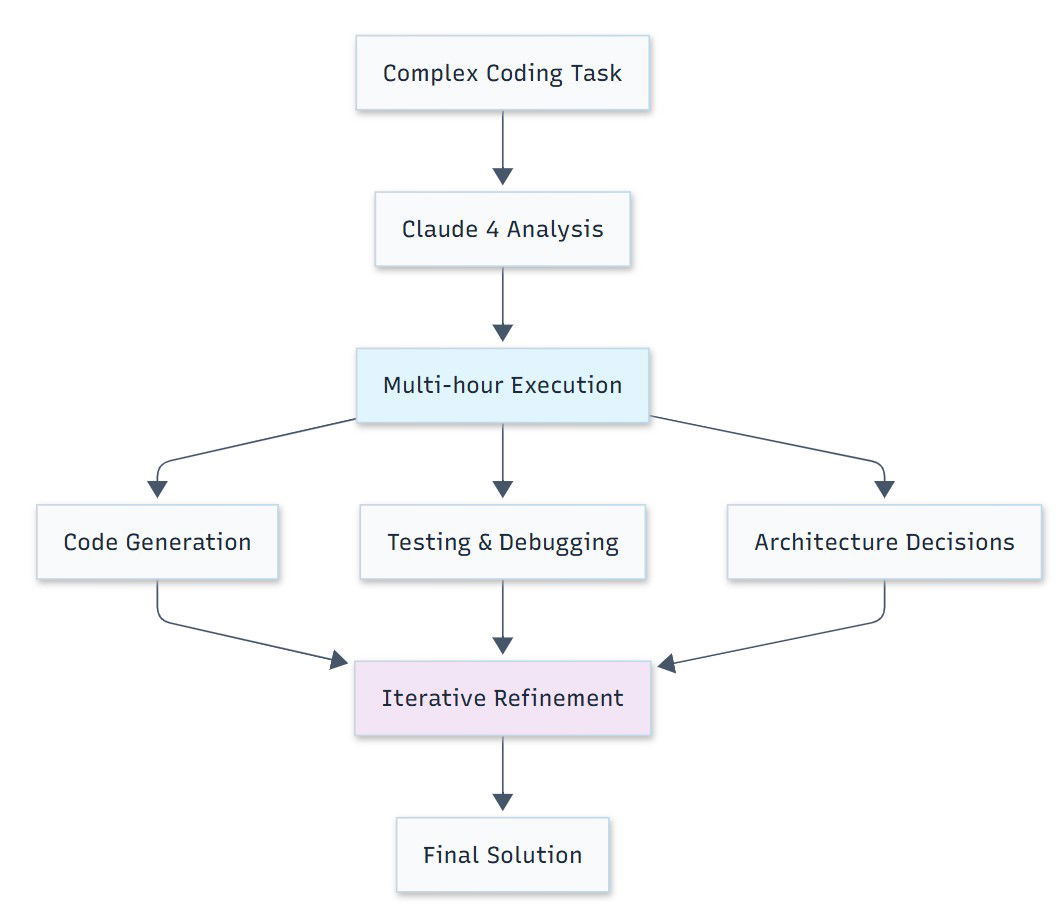
It’s an AI coder that not only writes a function but pauses to test, refine, and document it before proceeding. This artifact-based approach allows Claude to retain context, recover from interruptions, and maintain coherence even after hours of operation.
It also uses persistent memory and self-referential reasoning, meaning it doesn’t just generate but remembers why it generated something. That’s how it avoids the classic problem of context drift that plagues other AI coders in long coding sessions.
While this idea of a 30-hour coding session might sound exhausting for humans, for Claude 4.5 Sonnet, it’s a well-structured, self-sustaining feedback cycle—a marathon made possible by engineering discipline.
This endurance, of course, means little without performance. Running for 30 hours straight is impressive, but only if the output at hour 30 is as sharp as at hour one.
So, how does Claude Sonnet 4.5 actually measure up when put to the test?
Let’s take a look at the benchmarks!
Early Quality Signals And Benchmarks Of Claude 4.5 Sonnet
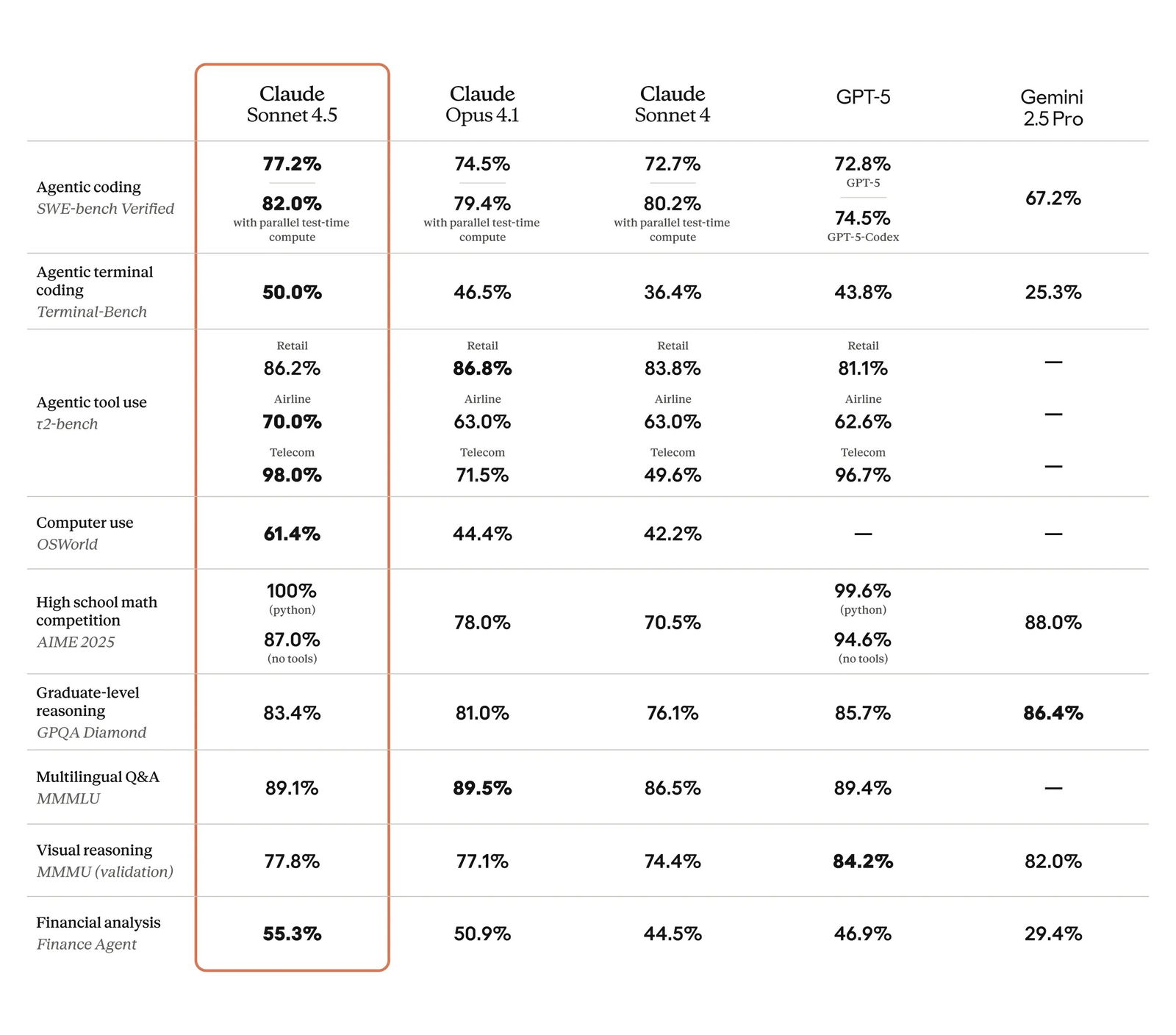
When Anthropic released Claude Sonnet 4.5, the buzz wasn’t just about its stamina—it was about its consistency. The model didn’t just last longer, but performed smarter across extended coding tasks, passing real-world benchmarks that typically expose an AI’s breaking point.
On the SWE-Bench Verified test—a gold standard for measuring AI coding ability—Claude 4.5 reportedly achieved results that outperformed many of its peers. The test simulates realistic GitHub issues, requiring the model to read, analyze, fix, and validate code across hundreds of repositories.
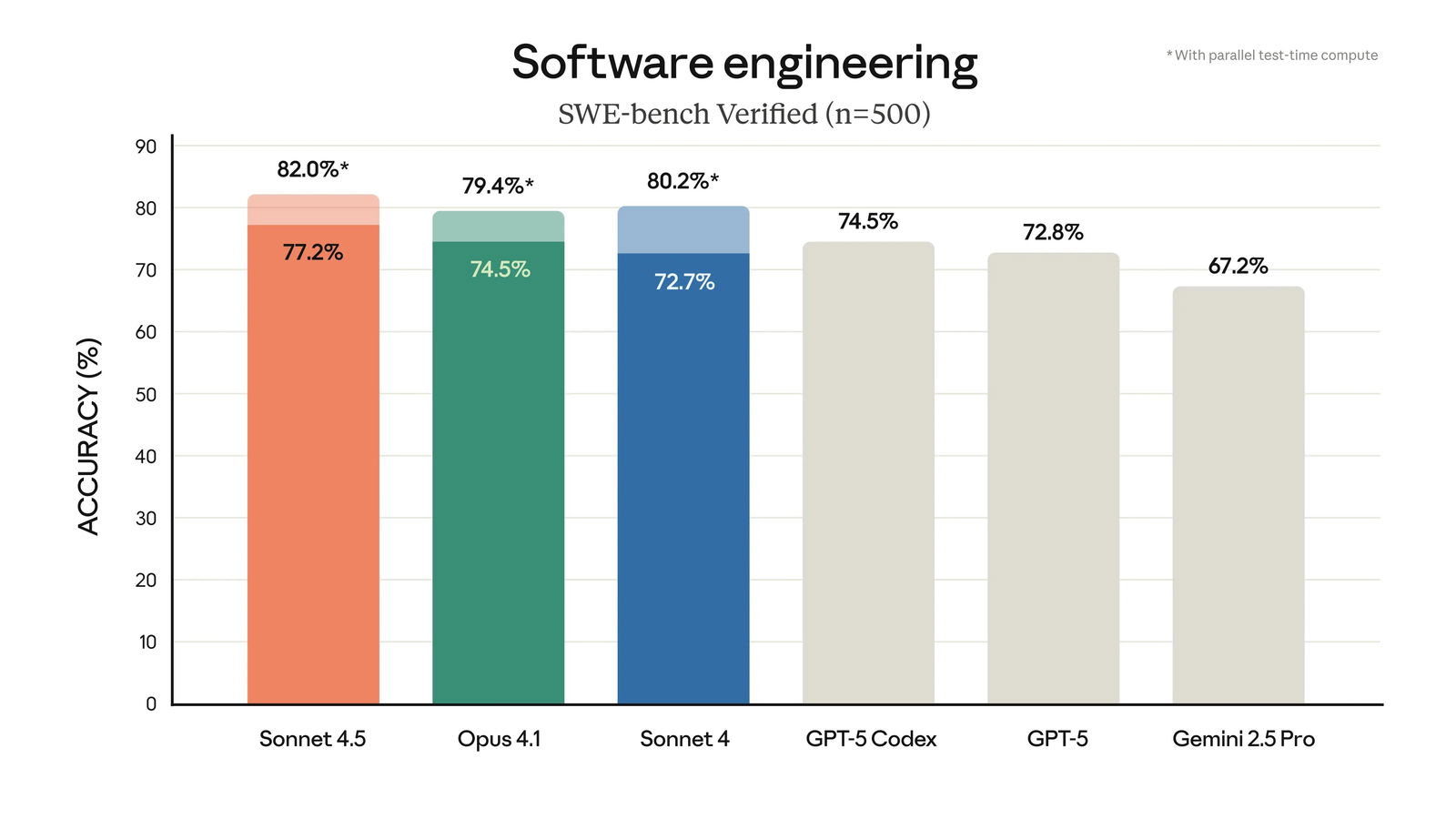
What truly stands out is its error resilience. In most AI models, accuracy tends to decline as session length increases; Claude 4.5, however, maintained coherence deep into its multi-hour runs.
Developers observed that it not only retained earlier logic but improved it over time, refining functions and optimizing code flow much like a human engineer revisiting their own work after a long night of debugging.
Beyond the metrics, what makes these benchmarks meaningful is the shift they signal: from AI as a one-shot assistant to a reliable collaborator.
So, with Claude Sonnet 4.5, the conversation isn’t about how quickly an AI can respond, but how long it can stay relevant, accurate, and productive without fatigue.
Now, you know that benchmarks prove what a model can do, but what matters next is where it fits. So, where does a 30-hour autonomous coder like Claude Sonnet 4.5 truly belong?
Read on!
Enterprise Readiness: Where Does A 30-Hour Coding Agent Fit?
Claude Sonnet 4.5 is a preview of how AI will embed itself into enterprise workflows. It's true power lies in long-haul reliability, making it ideal for teams managing complex, high-context projects that can’t afford to pause.
Here’s where its endurance really counts:
-
Software Engineering And DevOps Pipelines
Ideal for organizations managing large codebases and release cycles. Claude can autonomously handle regression testing, log analysis, and version updates to keep builds moving while human engineers rest.
-
Enterprise IT And Cloud Operations
In always-on environments where system uptime matters, Claude functions as an intelligent monitor and executor by documenting, diagnosing, and resolving low-risk issues continuously.
-
Digital Transformation And Modernization Projects
Businesses migrating from legacy to cloud or modern architectures can leverage Claude to refactor old codebases, ensure compatibility, and maintain migration momentum without delays.
-
Data Engineering And Automation Workflows
For teams processing massive datasets, Claude can maintain pipeline scripts, optimize ETL (extract, transform, load) code, and manage routine error handling—saving hours of repetitive oversight.
-
Product Design And Prototyping Labs
Innovation teams can use it as a long-term collaborator for testing, iterating, and refining prototypes or simulations continuously, without losing context between design stages.
-
Global Collaboration Setups
Enterprises operating across time zones can rely on Claude as a hand-off agent that ensures workflow continuity—for instance: working while a team is off-work to summarize updates for when they log-in.
In short, Claude Sonnet 4.5 fits wherever projects outlast people’s working hours—acting as the connective tissue between human creativity and machine consistency.
However, Claude Sonnet 4.5 isn’t making headlines for its 30-hour coding streak, but it’s also sparking conversations about how such endurance could redefine workflows, productivity, and the very idea of “autonomous work.”
So, where are competitors seeing its real-world impact?
Let’s check it out.
What Competitors And The Press Highlight As Practical Use Cases
Since its release, Claude Sonnet 4.5 has been positioned as more than an AI model. Competitors and industry analysts are already identifying where this long-horizon intelligence could make the biggest impact. Here’s how:
-
For Autonomous Coding And App Development
Outlets like The Verge and Tom’s Guide emphasize how Claude can code continuously for 30+ hours, completing entire projects through planned loops of creation, testing, and debugging.
-
Enterprise Workflow Automation
In AWS Bedrock integrations, Claude 4.5 is highlighted as an always-on system for complex DevOps or cloud operations—performing builds, analysis, and documentation without human hand-holding.
-
Legacy System Modernization
Analysts from VentureBeat and Databricks point to its value in refactoring legacy codebases or migrating enterprise systems, where long, repetitive work often stalls digital transformation efforts.
-
Data And Research Tasks
Media coverage from Axios and TechCrunch also notes its potential for running extended analytical or simulation workflows, from data preprocessing to model validation—without losing logical continuity.
-
Agentic Collaboration
Claude’s 30-hour autonomy aligns with the industry’s move toward “Agentic AI”— systems that work in teams, hand off tasks, and keep projects running across time zones.
Collectively, the narrative is clear: Claude Sonnet 4.5 isn’t competing on speed but redefining stamina in automated intelligence. By bridging autonomy and reliability, it represents the next frontier of enterprise-grade AI: systems that don’t just react but relentlessly persist.
Now, all this buzz means little if it stays theoretical. For teams curious to see whether Claude Sonnet 4.5’s endurance actually fits into their workflow, the next question is simple—how do you start?
To answer that, let’s look at how developers and enterprises are already experimenting with this long-haul coder.
Getting Started With Claude 4.5 Sonnet
Getting started with Claude Sonnet 4.5 is straightforward. Anthropic has made it accessible via different user tiers, from curious developers to enterprise innovators:
| Platform Availability | Pricing |
| Claude.ai (Web App) | Free for casual users with limited message caps. The Claude Pro plan costs $20/month, offering faster access and longer context windows—ideal for testing multi-hour tasks. |
| Anthropic API | Usage-based pricing starts at $3 per million input tokens and $15 per million output tokens for Sonnet 4.5. |
| AWS Bedrock | Enterprises can deploy Claude Sonnet 4.5 within AWS using on-demand pricing, billed per 1,000 tokens processed. |
Anthropic recommends defining clear session boundaries—up to 200K+ tokens per session—to maintain coherence over long coding runs. Developers experimenting with endurance tasks report better results using artifacts (Claude’s internal checkpoints) to preserve context across iterations.
To get the best results, teams should begin with controlled experiments—automating documentation, debugging open-source projects, or creating small utilities. Once familiar, they can scale up to overnight builds, continuous Quality Assessment, or data transformation pipelines that leverage Claude’s extended runtime.
Through AWS Bedrock, Claude Sonnet 4.5 can also integrate seamlessly with tools like GitHub Actions, Jira, and Slack, enabling organizations to orchestrate continuous workflows safely within their existing cloud ecosystems.
In short, onboarding Claude Sonnet 4.5 is about starting small, experimenting wisely, and scaling to let Claude’s endurance prove its worth.
Conclusion
The evolution of Claude Sonnet 4.5 signals a quiet shift in how we measure progress—from speed to stamina, from instant outputs to intelligent persistence. In a world obsessed with faster responses and shorter attention spans, Claude’s 30-hour coding run reminds us that endurance can be just as revolutionary as innovation.
Where most AI tools sprint—dazzling with quick fixes and clever code snippets—Claude runs the marathon. It paces itself through complexity, recovers from fatigue, and keeps building until the finish line is more than an endpoint.
For enterprises, this represents the next AI frontier. Agentic collaborators that don’t just assist but sustain, capable of working through the night, across teams, and through challenges without burning out. Yet, the lesson here isn’t only about machines—it’s about redefining what endurance means in the age of automation.
That’s because in the long race toward intelligent productivity, it’s not the AI that runs the fastest that will lead the future—it’s the one that never stops running.
Frequently Asked Questions
What Is The Pricing For Claude Sonnet 4.5?
Claude Sonnet 4.5 follows Anthropic’s API pricing of $3 per million input tokens and $15 per million output tokens. It’s also available on Claude.ai Pro for $20/month, and on AWS Bedrock via pay-per-token enterprise billing.
How Long Can Claude Sonnet 4.5 Code Autonomously?
According to Anthropic, Claude Sonnet 4.5 can code continuously for over 30 hours, maintaining logical structure, debugging accuracy, and task memory without human intervention—a benchmark that showcases its endurance and context stability across complex software or analytical projects.
What Are The Features Of Claude Sonnet 4.5?
Claude Sonnet 4.5 introduces enhanced long-horizon reasoning, improved artifact-based coding, and 30-hour autonomous operation. It supports computer-use capabilities, better context retention, faster response times, and safer alignment through Anthropic’s Constitutional AI framework, making it ideal for enterprise-grade, long-duration tasks.
Tue, Oct 14, 2025

Enjoyed what you read? Great news – there’s a lot more to explore!
Dive into our content repository of the latest tech news, a diverse range of articles spanning introductory guides, product reviews, trends and more, along with engaging interviews, up-to-date AI blogs and hilarious tech memes!
Also explore our collection of branded insights via informative white papers, enlightening case studies, in-depth reports, educational videos and exciting events and webinars from leading global brands.
Head to the TechDogs homepage to Know Your World of technology today!
Disclaimer - Reference to any specific product, software or entity does not constitute an endorsement or recommendation by TechDogs nor should any data or content published be relied upon. The views expressed by TechDogs' members and guests are their own and their appearance on our site does not imply an endorsement of them or any entity they represent. Views and opinions expressed by TechDogs' Authors are those of the Authors and do not necessarily reflect the view of TechDogs or any of its officials. While we aim to provide valuable and helpful information, some content on TechDogs' site may not have been thoroughly reviewed for every detail or aspect. We encourage users to verify any information independently where necessary.
Loading comments...