
Financial Management Solutions
AI In FinTech: 7 Ways AI Is Reshaping The FinTech Industry Today
Share
Overview
You can still shred the chicken by hand, make tomato puree the old way, or boil rice carefully on the stove.
It is not impossible, but it takes more time, more effort, and honestly, a lot more patience. When you have the right appliance, everything becomes quicker, cleaner, and a lot easier.
The same thing is happening in the fintech world. The industry can solve problems, handle fraud cases, and manage processes on its own, but when AI steps in, everything runs more smoothly.
Tasks get finished faster, errors are reduced, and the workload becomes lighter. AI does not replace the system; it simply helps it work smarter.
Come on then. Let’s check more of it.
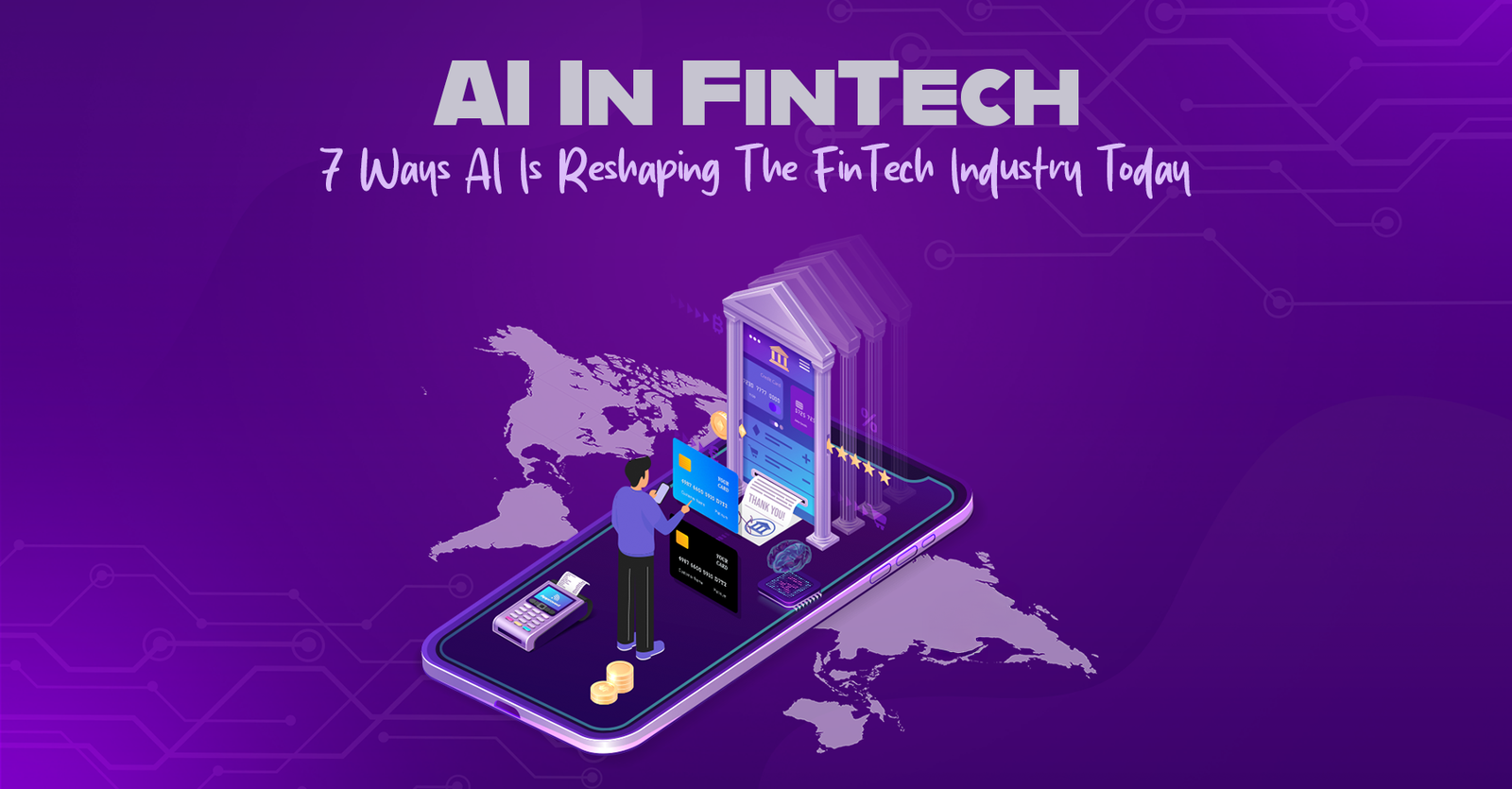
Every industry has its own version of “doing things the hard way,” and in fintech, that means managing large volumes of data, handling customer requests, and controlling fraud without advanced tools. The work gets done, but it is slow, tiring, and often unpredictable.
As the digital world advances, these challenges multiply. This is why fintech companies are turning to AI. It gives them the support they need to handle tasks faster, reduce errors, and make better decisions.
Instead of replacing people, AI helps them focus on what matters by taking over the repetitive, time-consuming parts. With this shift, fintech is not only becoming more efficient but also more secure and customer friendly.
Sounds fantastic, right? Let’s understand better why AI is important for the FinTech industry in today’s time.
Role Of AI In The FinTech Industry
As banking and finance became more digital, trades and other services created more data. AI in FinTech helps make financial tasks easier and business partnerships stronger by searching for and refining relevant data. It can help avoid danger, forecast the future, enhance financial planning and make an organization better.
Today, FinTech solutions include digital wallets, online banking, payment platforms, personal finance tools, investment apps, and loan services. To survive and grow in this fast-paced digital era while providing customers with a smooth, convenient experience, financial institutions need the right balance of AI technology and human expertise.

Now that we have understood why AI is important for the FinTech industry in today’s time, let’s get to the section you have been waiting for. How AI is transforming the FinTech Industry.
7 Ways AI Is Reshaping The Fintech Industry Today
Although there are many ways, we have chosen 7 of the most fundamental.
-
Stronger Security
Over the years, AI has made a considerable impact on the security of data in the financial technology field. Several banks and fintech companies assist their users through AI-powered chatbots.
Voice, face, and fingerprint recognition are some of the other ways AI is making banking safer. When it comes to improving security, these AI models can offer a range of options, such as resetting forgotten passwords and giving more access. -
Greater Fraud Detection
There are so many financial transactions every day that it would be nearly impossible to manually check them for mistakes or suspicious behavior.
Effective AI systems can scrutinize real-time banking transactions, and AI algorithms can spot anomalies or trends that deviate from what users usually spend their money on. AI in Fintech can respond rapidly and more accurately to fraudulent activity.
-
Improved Customer Service
Call centers often face backlogs while providing constant support. AI-powered chatbots, virtual assistants, and other AI interfaces help reduce the work required by handling complex queries and the most common user issues.
AI is consistently improving fintech customer service by leveraging advanced sentiment analysis to better understand customer experience, identify issues, and train chatbots to resolve them. -
Personalized Banking Services
AI-powered technology enables the provision of customized services to diverse audiences. Individualization can help customers trust your business more and stay loyal to your brand.
Using user data, the system can suggest the right pre-approved products and tailor financial advice to each user. Using AI in banking apps can also help customers track their spending and progress toward their financial goals. -
Enhanced Algorithmic Trading
In algorithmic trading, AI technologies, including machine learning, are used to execute trades in stocks by following pre-programmed rules that analyze data and make trading decisions. The standard trading desk has been transformed by AI, which evaluates millions of data points in real time and identifies insights that statistical models cannot.
Artificial intelligence systems can adapt more quickly to changes in the trading world because they continually receive new data and learn from it. With AI in finance, the next wave of algorithmic trading will make trading even safer by helping people make better decisions. -
Save Money And Resources
Manual procedures usually take longer and cost more because they require more work. From the front desk to the back office, AI saves banks money with personalized insights, anti-money laundering, and credit screening.
It is essential for a bank to always have sufficient cash flow to cover its short-term operating costs and debt obligations, so its day-to-day operations can run smoothly. AI and machine learning algorithms improve capital optimization by keeping and organizing records of the near-constant flow of cash. -
Automated Loan Approvals
Specialized AI applications speed up the time-consuming, expensive process of reviewing and approving loan applications by analyzing them in real time, helping lenders make informed credit decisions. AI models can ensure information is accurate, verify compliance with certain financial standards, and determine whether a person is creditworthy.
AI uses a wide range of data points to create a more accurate picture of a customer's money situation. AI systems look at data from notes left by collection agencies, field visits, and campaign data, in addition to traditional data sources.
Now that we know how AI is already reshaping the FinTech industry, let’s look at some of the examples.

Benefits Of AI In Finance
The use of AI in finance brings numerous advantages. It improves decision-making accuracy and promotes continuous growth, playing a crucial role in transforming the industry. Here are some of the examples:
-
Payment Processing Automation
Reduces errors, speeds up transactions, and lowers operational costs.
-
Credit Scoring Algorithms
Provides more accurate risk assessments and offers greater financial inclusion.
-
Fraud Detection Systems
Leverages pattern recognition to identify and prevent fraudulent activities.
-
Customer Service Bots
Delivers 24/7 customer service and support, enhancing client satisfaction.
-
Personalized Financial Recommendations
Offers tailored money advice by examining user spending and saving patterns.
With everything said and done, one thing is sure. AI is here to stay, and it will play an important role in the future of FinTech. Don’t believe us? Check for yourself.
The Future Of AI In Fintech
Some major trends are shaping the way forward as technology improves.
-
AR And AI
Artificial intelligence (AI) and augmented reality (AR) will collaborate to create new banking experiences. Visual, immersive formats will let users interact with financial data, and easy-to-use interfaces will streamline complex tasks such as portfolio analysis and goal planning.
-
Decentralized Finance
AI-powered DeFi platforms will continue to advance, offering people smarter, algorithm-based alternatives to standard banks. From smart asset management to automated lending, these platforms provide great transparency, control, and ease of use.
-
Quantum AI
Quantum AI will make significant steps in credit risk modeling, fraud detection, and predictive analytics by giving computers a lot more power to handle and analyze vast amounts of data in real time. This will lead to better risk management and faster, more reliable financial choices.
Let’s put everything together.
Conclusion
So, after looking at everything, it's pretty clear that AI is here to streamline the fintech world. It is here to make the work easier and a lot more manageable, just like having the right appliance in your kitchen.
Fintech already does a lot on its own, but with AI, the complex tasks feel lighter, the risks feel smaller, and the customer experience feels smoother.
As the industry grows, AI will continue to support it with better security, faster decisions, and smarter tools that actually understand what users need.
The future of fintech is not about choosing between humans and technology. It is about both working together in the simplest and smartest way possible.
Frequently Asked Questions
How Is AI Used In The Fintech Industry?
AI is used for fraud detection, customer support, risk analysis, personalized banking, loan approvals, and automating routine financial tasks to improve accuracy and speed.
Does AI Replace Human Decision-Making In Finance?
No, AI does not replace humans. It supports them by handling repetitive tasks, analyzing data faster, and providing insights that help in better decision-making.
Why Is AI Important For The Future Of Fintech?
AI improves security, enhances customer experience, speeds up processes, and helps financial institutions manage growing data and digital demands more efficiently.
Tue, Nov 25, 2025

Enjoyed what you read? Great news – there’s a lot more to explore!
Dive into our content repository of the latest tech news, a diverse range of articles spanning introductory guides, product reviews, trends and more, along with engaging interviews, up-to-date AI blogs and hilarious tech memes!
Also explore our collection of branded insights via informative white papers, enlightening case studies, in-depth reports, educational videos and exciting events and webinars from leading global brands.
Head to the TechDogs homepage to Know Your World of technology today!
Disclaimer - Reference to any specific product, software or entity does not constitute an endorsement or recommendation by TechDogs nor should any data or content published be relied upon. The views expressed by TechDogs' members and guests are their own and their appearance on our site does not imply an endorsement of them or any entity they represent. Views and opinions expressed by TechDogs' Authors are those of the Authors and do not necessarily reflect the view of TechDogs or any of its officials. While we aim to provide valuable and helpful information, some content on TechDogs' site may not have been thoroughly reviewed for every detail or aspect. We encourage users to verify any information independently where necessary.
Loading comments...