
Blockchain
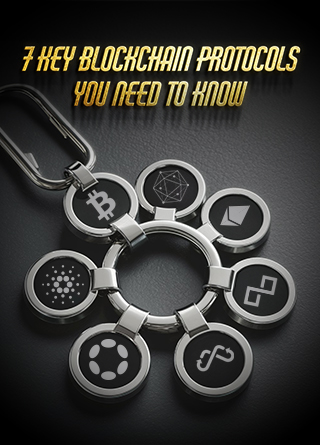
7 Key Blockchain Protocols You Need To Know
Share
Overview
Before you start reading this article, make sure you are following these protocols:
- Keep some snacks and drinks handy.
- Find a cozy and warm place.
- Read slowly and take deep breaths.
We know that these protocols might be too much to follow while reading an article online but you cannot miss out on protocols when the stakes are high. Protocols are sets of rules or guidelines that govern how systems or technologies operate and interact. They are crucial for ensuring security, efficiency and seamless communication between different entities.
One notable example of a technology that heavily relies on protocols is Blockchain. You may have heard of this decentralized, distributed ledger technology that enables secure and transparent record-keeping and transactions. However, various protocols must be in place for Blockchain to function effectively.
Understanding blockchain protocols is crucial for comprehending how this innovative technology functions and how it achieves its core principles of decentralization, transparency and immutability.
So, scroll on as we discuss the key 7 Blockchain protocols you need to know!
.jpg.aspx "TechDogs-\"7 Key Blockchain Protocols You Need To Know\"")
Every modern industry requires technologies that drive growth, innovation and efficiency. Well, Blockchain fits perfectly in this scenario!
This application of a decentralized ledger has recently taken center stage and enabled secure, transparent and reliable data recording for businesses across various sectors.
Even the numbers speak for themselves. The global blockchain market is projected to soar from $17.57 billion in 2023 to a whopping $469.49 billion by 2030. With such a rise, it's crucial to understand the backbone of blockchain technology – the protocols.
However, before delving into the nitty-gritty of protocols, let's first hash out what blockchain protocols are.
What Are Blockchain Protocols?
Well, protocols are nothing but a set of rules and standards that govern how systems operate and communicate. Blockchain, on the other hand, consists of mechanisms that facilitate the secure and decentralized transfer of data between nodes in the network. They define the algorithms, data structures and communication processes essential for maintaining the integrity and transparency of the distributed ledger.
You see, blockchain protocols are critical components that enable trustless, peer-to-peer transactions without the need for a central authority. They establish the rules for validating transactions, achieving agreement among nodes and ensuring the immutability of recorded data. While there are various blockchain protocols, each one is tailored to specific use cases.
So, let’s open the wallet and understand them one by one!
7 Key Blockchain Protocols You Need To Know
With a firm grasp of the fundamentals, let's explore the ledger of 7 key blockchain protocols that are driving real-world applications and shaping the future of decentralized systems. Here they are:
Protocol 1: Bitcoin
Bitcoin, the largest cryptocurrency by market capitalization, is often called the "gold standard" when it comes to digital currencies. It is a decentralized peer-to-peer payment system, that allows users to send and receive payments without intermediates. One of its critical features is its decentralized nature, ensuring no single entity controls it, providing a high level of security and making it difficult for governments or organizations to interfere.
What you might not know is that Bitcoin pioneered the decentralized digital currency revolution through its proof-of-work system, where nodes compete to solve complex mathematical puzzles to validate transactions on the network. Despite the energy required for its competition-based mining, Bitcoin remains a top protocol for trustless and peer-to-peer transactions through Blockchain. Crypto’s OG, isn’t it?
Protocol 2: Ethereum
Heard of Ethereum? It is the second-largest cryptocurrency globally, also known as the world computer, due to its decentralized platform designed for building and executing applications. It's a renowned blockchain platform that lets users create decentralized applications and gives them all the control.
Attracting developers with its features, Ethereum boasts a built-in programming language called Solidity, simplifying smart contract development. To give you a fair idea, smart contracts are self-executing agreements coded to automatically execute when specific conditions are met, thus eliminating the need for any intermediaries. Moreover, its scalable network can handle numerous transactions per second, catering to decentralized applications requiring substantial data processing.
Well, before we get to the next node, here’s an Ethereum joke.
Why did the blockchain go to school?
To become a smart contact!
.gif.aspx "TechDogs-\"Protocol 2: Ethereum \"-\"A GIF Of A Woman Saying - Was That Supposed To be A Joke?\"")
Nah? Well, we’ll try to do better. Let’s navigate through the next fork.
Protocol 3: Hyperledger
When it comes to deploying blockchain-based applications, Hyperledger emerges as a reliable choice. This protocol comes equipped with a suite of tools and libraries, streamlining the development process significantly. Particularly renowned for its expertise in handling intellectual property rights, Hyperledger also offers efficient solutions for enterprise needs.
Hyperledger's extensive library empowers developers to create applications and its crypto-agnostic nature ensures that functionality isn't dependent on cryptocurrency prices. Moreover, the open-source nature allows public accessibility where participants can freely view, modify and distribute its resources to meet their specific needs. You see, these capabilities have solidified Hyperledger as one of the most sought-after blockchain solutions in the industry.
Protocol 4: Cardano
Cardano embarked on its journey with a mission to overcome the limitations of existing blockchain protocols, such as scalability, interoperability and governance. Unlike projects focused solely on speed, Cardano took a meticulous approach, involving a global network of researchers and experts, resulting in peer-reviewed research and a robust technological foundation.
Cardano employs a proof-of-stake (PoS) protocol for scalability and security, fostering seamless communication between different blockchains. This interoperability enables the creation of multichain applications and fosters collaborative development across blockchain networks. Moreover, Cardano prioritizes sustainability and boasts an energy-efficient design and a low carbon footprint.
Protocol 5: Multichain
Multichain is a blockchain protocol tailored for communication within or between organizations, offering solutions for private enterprise blockchains. With its API, Multichain accelerates blockchain solution development, boasting an impressive 80% reduction in development time. Recently, it even secured over $60 million in seed funding, reflecting its alignment with cutting-edge technologies tailored to business needs. Impressive, isn’t it?
Founded to promote efficiency and innovation in proof-of-work methods, Multichain assists for-profit businesses in creating private blockchains. Similar to Hyperledger, Multichain Protocol is open-source, offering APIs for rapid deployment, primarily to private industries. Unlike public blockchains, Multichain provides complete control over the blockchain, making it ideal for high-privacy financial transactions.
Protocol 6: Quorum
Quorum, like many leading protocols, focuses on aiding businesses in the finance sector and boasts strong support from financial institutions. Stemming from Ethereum's code modifications, Quorum maintains a strong association with the Ethereum ecosystem. Like Hyperledger and Ethereum, this framework also offers open-source solutions with similar infrastructure and approaches. However, what sets Quorum apart is its superior protocols, tailored for business performance.
With features like a voting-based consensus mechanism and enhanced transaction privacy, Quorum paves the way for industrial advancements in decentralization and data transparency. Quorum also enables diverse applications in the enterprise ecosystem, requiring authorization from designated entities for implementation. It serves as a trusted network, catering to a wide array of enterprise needs and setting the stage for seamless growth and innovation.
Let us try one more time!
What did the blockchain say to the cryptocurrency?
“Will you be my valen-coin?”
.gif.aspx "TechDogs-\"Protocol 6: Quorum\"-\"A GIF OF Various People Clapping\"")
Protocol 7: Polkadot
Polkadot, a multichain network, facilitates interoperability among diverse blockchain systems, empowering developers to construct decentralized applications for seamless communication and data transfer across various blockchains. This capability enables the creation of more intricate and interconnected applications, enhancing innovation in the blockchain space. Moreover, Polkadot facilitates asset and information transfer between different blockchains while providing a shared security model for all connected chains.
Known for its interoperability, Polkadot employs a proof-of-stake mechanism and supports para chains - parallel blockchains with their own native tokens. With a focus on enabling trust-free message and value transfers among blockchains, Polkadot’s protocols aim to establish a fully decentralized network where independent chains can exchange information and transactions autonomously.
To Sum Up
In summary, blockchain protocols such as Bitcoin, Ethereum, Hyperledger, Cardano, Multichain, Quorum and Polkadot are revolutionizing industries with their transparency, security and efficiency. Each protocol brings unique features to the table, from Bitcoin's pioneering proof-of-work to Ethereum's smart contract capabilities and Qurom’s open-source approach. As we continue to explore the potential of blockchain technology, such protocols will always ensure we can reach a consensus without any blocks!
Frequently Asked Questions
What Are Blockchain Protocols?
Blockchain protocols are sets of rules and standards that govern how blockchain systems operate and communicate. They define the algorithms, data structures and communication processes essential for maintaining the integrity and transparency of the distributed ledger. These protocols enable trustless, peer-to-peer transactions without the need for a central authority, ensuring security and immutability of recorded data.
Why Are Blockchain Protocols Important?
Blockchain protocols are crucial for enabling secure and decentralized transactions within the blockchain network. They establish rules for validating transactions, achieving agreement among nodes and ensuring the immutability of data. By providing a framework for communication and operation, blockchain protocols ensure the reliability and integrity of blockchain technology, fostering trust among participants and driving adoption across industries.
What Are Some Examples Of Popular Blockchain Protocols?
Some popular blockchain protocols include Bitcoin, Ethereum, Hyperledger, Cardano, Multichain, Quorum and Polkadot. Each protocol has its own unique features and use cases. For example, Bitcoin pioneered decentralized digital currency through its proof-of-work system, while Ethereum enables the creation of decentralized applications and smart contracts. Hyperledger is known for its enterprise solutions, while Cardano focuses on scalability and interoperability. Multichain caters to private blockchains, Quorum serves the finance sector and Polkadot facilitates interoperability among diverse blockchain systems.
Mon, Apr 8, 2024

Enjoyed what you read? Great news – there’s a lot more to explore!
Dive into our content repository of the latest tech news, a diverse range of articles spanning introductory guides, product reviews, trends and more, along with engaging interviews, up-to-date AI blogs and hilarious tech memes!
Also explore our collection of branded insights via informative white papers, enlightening case studies, in-depth reports, educational videos and exciting events and webinars from leading global brands.
Head to the TechDogs homepage to Know Your World of technology today!
Disclaimer - Reference to any specific product, software or entity does not constitute an endorsement or recommendation by TechDogs nor should any data or content published be relied upon. The views expressed by TechDogs' members and guests are their own and their appearance on our site does not imply an endorsement of them or any entity they represent. Views and opinions expressed by TechDogs' Authors are those of the Authors and do not necessarily reflect the view of TechDogs or any of its officials. While we aim to provide valuable and helpful information, some content on TechDogs' site may not have been thoroughly reviewed for every detail or aspect. We encourage users to verify any information independently where necessary.
Loading comments...