
IT Security
Top 5 Vulnerability Management Tools In 2026
Share
Overview
Vulnerability management tools provide essential health checks to identify and fix security weaknesses before hackers can exploit them.
-
Wiz: Offers agentless cloud security that continuously discovers risks across complex environments without slowing down teams.
-
Snyk: Provides a developer-friendly platform that integrates directly into workflows to secure code and containers early.
-
Tenable Nessus: Delivers deep visibility and industry-standard scanning across modern attack surfaces like IoT and AI.
-
Qualys VMDR: Combines asset discovery and automated patching into a single risk-based platform for enterprise-wide protection.
-
Intruder: Focuses on ease of use for mid-sized businesses by prioritizing real-world threats and reducing alert fatigue.
Introduction
Imagine you are setting out on a long road trip when a tiny warning light suddenly flickers on your dashboard. It is tempting to ignore it and keep driving, but that small glimmer is often the precursor to a flat tire or an overheated engine that leaves you stranded. In the digital world, vulnerabilities act exactly like that warning light, serving as minor indicators of much larger potential disasters.
Just as a car requires a skilled mechanic to interpret those signals and keep the journey safe, modern businesses need robust systems to identify and resolve technical weaknesses before they snowball into operational shutdowns. These tools provide a continuous health check for your infrastructure, finding and fixing gaps that cybercriminals are eager to exploit. By prioritizing proactive scanning and timely remediation, organizations can build lasting resilience against an evolving threat landscape. Here are the Top 5 Vulnerability Management Tools Of 2026 to ensure your digital systems stay in top shape.
What Are Vulnerability Management Tools?
Vulnerability Management Tools give your digital systems a regular health check-up. It's the process of finding, fixing and preventing weaknesses that cybercriminals could exploit.
As cybersecurity challenges evolve, 2026 brings new opportunities to bad actors and a new wave of security tools. Expect more advanced AI-powered features, better integration with cloud-native environments and tools that are more intuitive and capable of managing increasingly complex infrastructures.
Let's take a look at the top vulnerability management platforms of 2026.
Top 5 Vulnerability Management Tools in 2026
Let's uncover the Top 5 Vulnerability Management Tools in 2026. We've outlined each one's features and USPs, so you can explore and determine which best strengthens your security approach. Read on!
 |
 |
 |
 |
 |
Wiz: Best For Security
Back on this year's list, Wiz is a cloud-native security platform that helps businesses find and fix vulnerabilities across their cloud environments. Already trusted by over 200 companies, including more than half of the Fortune 100, Wiz makes cloud security simple and effective. Recognized by G2 as a Spring 2025 Leader and Winter 2026 Most Implementable, it's a tool enterprises rely on to protect their cloud infrastructure.
Why We Chose Wiz In 2026
Wiz's Unified Vulnerability Management (UVM) changes the game. Its agentless platform continuously discovers vulnerabilities across code, cloud workloads, and external attack surfaces without slowing teams down. With features such as automated scans, anomaly detection, risk scoring, and secrets management, Wiz provides a full picture of where your systems are exposed.
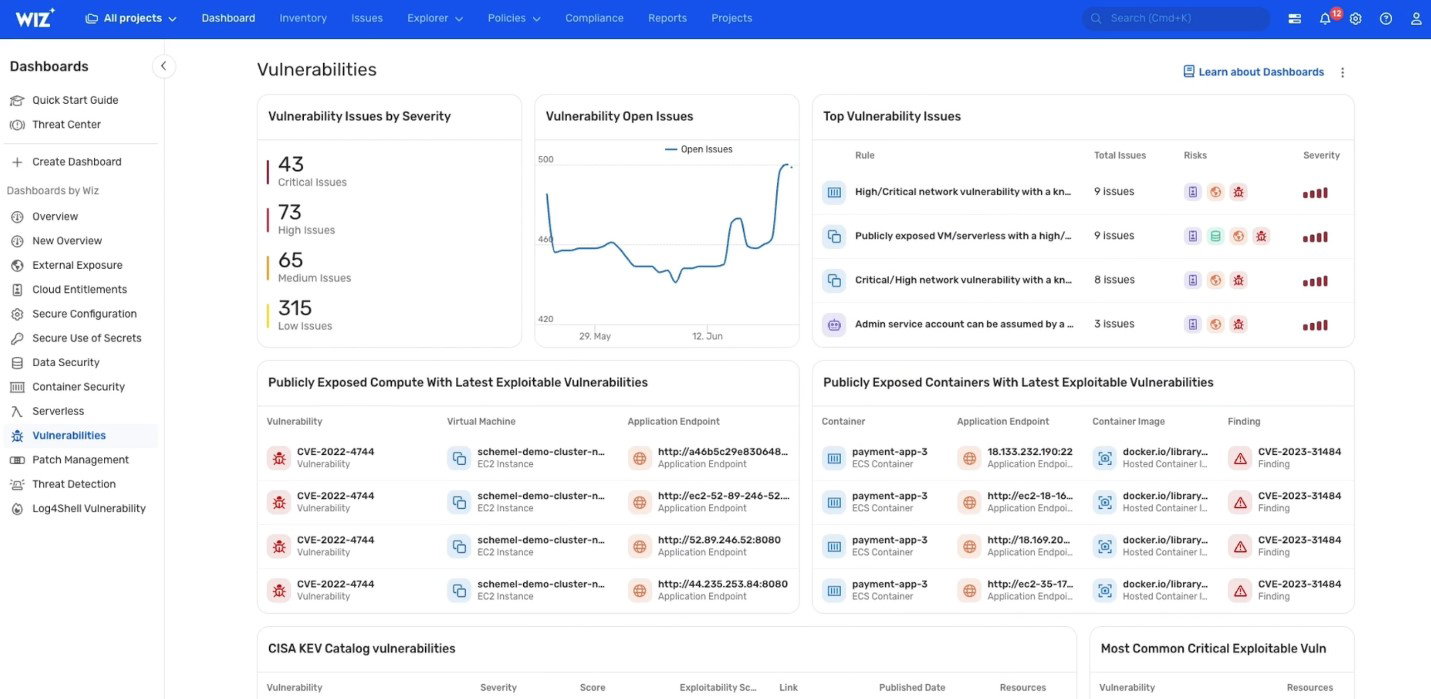
What makes it even more powerful is how it helps teams act. The Wiz Security Graph combines findings with identity, data, and network context to highlight which vulnerabilities matter most. With risk-prioritization, threat hunting, and remediation suggestions, teams can fix issues faster, embed security earlier in development, and keep risks under control from a single, cloud-ready platform.
Pricing
Wiz follows a flexible, quote-based pricing model designed around business needs. It offers two main plans, with the option to add modules like Wiz Code, Wiz Sensor, and Wiz Defend for extended capabilities. Exact pricing is not publicly listed, and organizations are encouraged to contact the Wiz team for customized quotes based on their cloud environment and security requirements.
What Works And What Doesn't
| Pros | Cons |
| Easy to set up | Requires learning time |
| Shows real risks | Can be expensive |
| Clear cloud view | Many alerts |
Our Final Take
Wiz works best for businesses running complex cloud systems and looking to simplify vulnerability management. Smaller teams may find it more than they need, but it's an excellent pick for those aiming for clear, actionable cloud security.
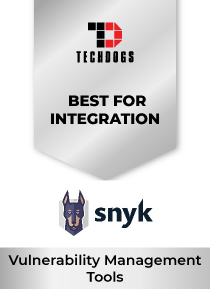
Snyk: Best For Integration
Snyk makes its debut on this year's list. It is a developer-friendly security platform that helps teams protect code, open-source libraries, containers, and cloud infrastructure from one place. It lets developers catch and fix issues early, while keeping development fast and seamless. Trusted by top global companies and recognized in the 2024 Gartner Peer Insights Customers' Choice Awards, Snyk makes secure development simple.
Why We Chose Snyk In 2026
Snyk helps developers find and fix vulnerabilities across code, open source libraries, containers, and cloud environments. It works directly in the IDE or CLI, supports multiple programming languages, and lets teams scan pull requests and add security checks to CI/CD pipelines. Continuous monitoring ensures new vulnerabilities are caught early, keeping applications secure without slowing development.
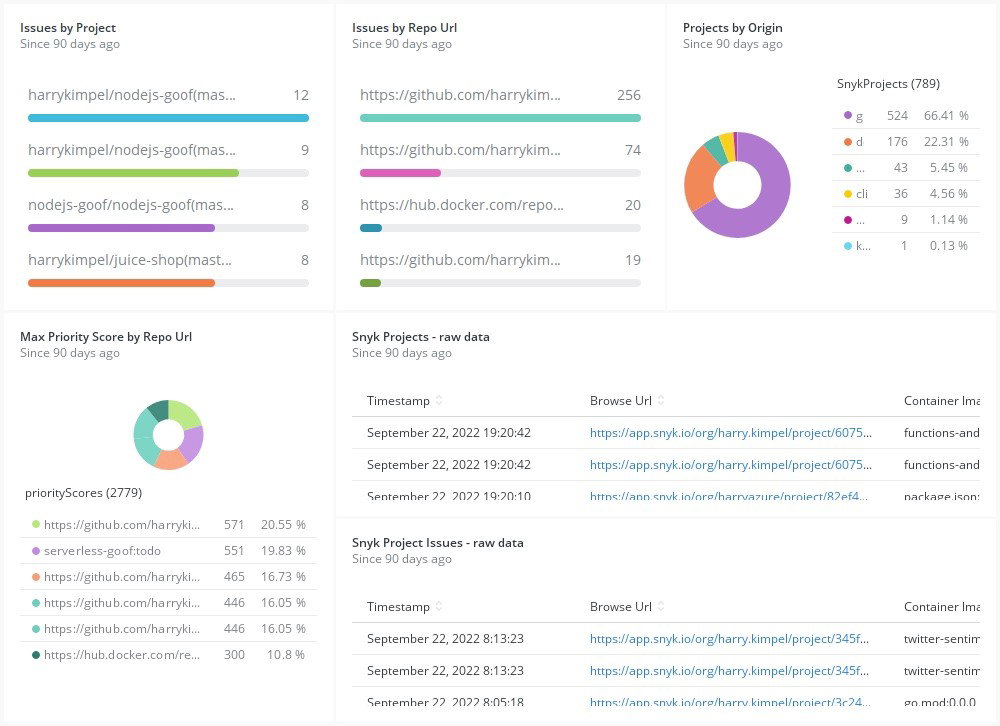
What makes Snyk stand out is how fast teams can act. Automated fixes, one-click pull requests, and intelligent risk prioritization based on business context make remediation simple. Developers can quickly identify which issues matter most, track progress through integrated workflow tools, and stay on top of security across the entire development lifecycle. With actionable insights and clear reporting, Snyk empowers teams to improve security while keeping development flowing smoothly and continuously.
Pricing
Snyk offers a flexible pricing structure for developers and teams of all sizes. It includes a Free plan at $0 per developer, making it easy to get started. The Team plan begins at $25 per month, while the Ignite plan is priced at $1,260 per year. For larger organizations, Snyk provides custom Enterprise plans with tailored pricing and advanced features based on business requirements.
What Works And What Doesn't
| Pros | Cons |
| Fast vulnerability detection | Can be expensive |
| Strong CI/CD integration | Some false positives |
| Developer-friendly workflow | Limited on-prem options |
Our Final Take
Snyk is best suited for development teams and organizations building modern applications who want continuous, developer-friendly security across code, open source, containers, and cloud. It may not work well for small teams, but it's a great choice for those prioritizing fast, integrated vulnerability management.
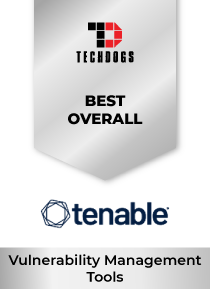
Tenable Nessus: Best Overall
Returning this year is Tenable Nessus, a trusted vulnerability assessment platform built for security professionals. With over 313,000 plugins, it has assessed more than 115,000 vulnerabilities, making it a go-to tool for identifying and managing security risks. Recognized as a Winter 2025 G2 Leader and named in The Forrester Wave™ for Unified Vulnerability Management, Nessus continues to set the industry standard.
Why We Chose Tenable Nessus In 2026
Tenable Nessus remains a go-to choice for security professionals looking to strengthen their vulnerability management program. It provides deep visibility across modern attack surfaces, including IT, cloud, OT, IoT, and AI, while helping teams move beyond simply finding vulnerabilities. By combining vulnerability data with business, technical, and threat intelligence, Nessus makes it easier to understand which issues truly matter and to prioritize remediation where it counts most.
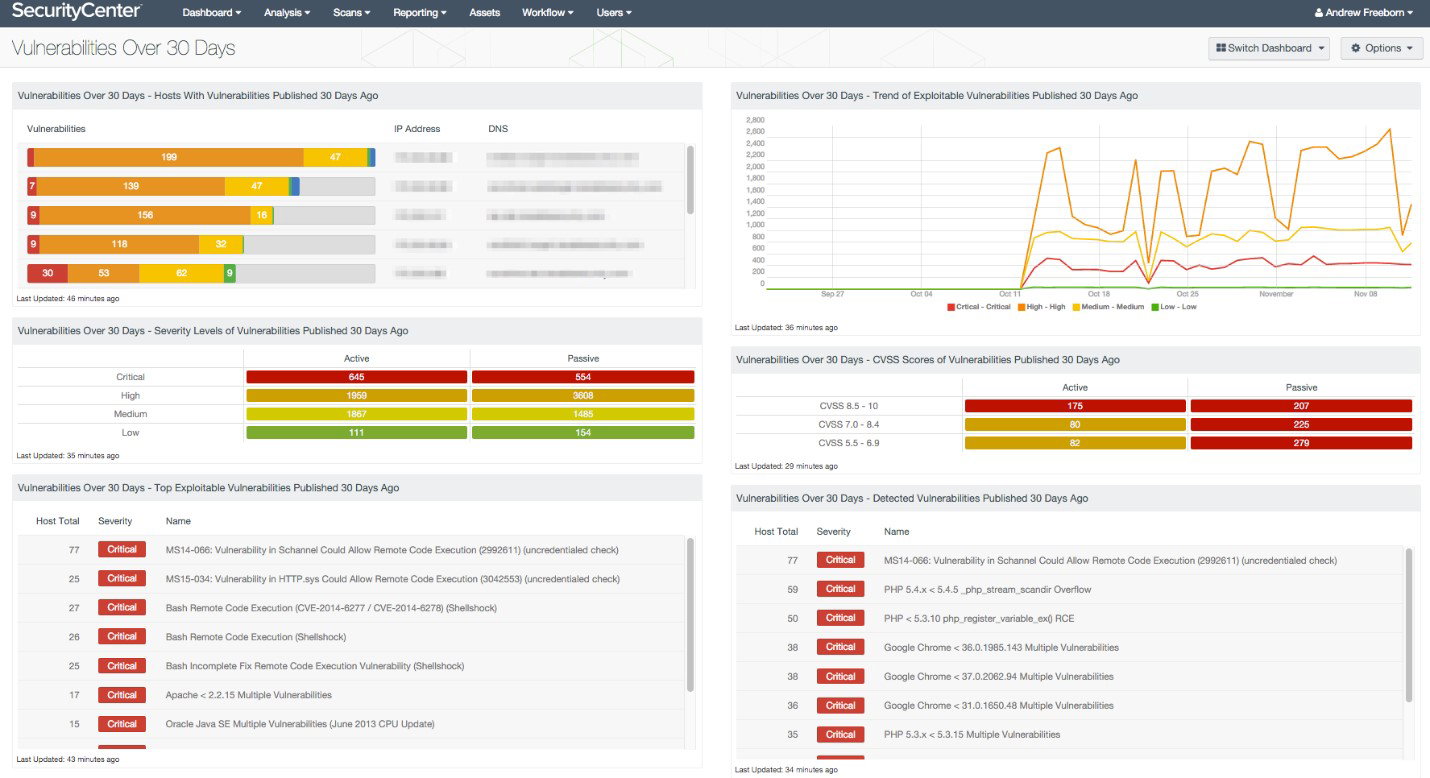
Teams can focus on the highest-risk vulnerabilities, predict which weaknesses are likely to be exploited, and clearly communicate exposure to executives. Tenable Nessus also provides unified context by combining vulnerability, identity, and cloud security data to reveal toxic combinations that could give attackers access to critical systems. With continuous monitoring, smart prioritization, and clear reporting, security teams can act faster, plan remediation strategically, and show measurable risk reduction.
Pricing
Tenable Nessus offers flexible annual pricing plans along with a free trial. The Nessus Pro plan starts at $3,390 per year, while the Expert plan is priced at $4,990 per year. Both plans can be bundled with 24/7 Advanced Support, bringing the total to $3,790 for Pro and $5,390 for Expert. Each plan includes a one-year license, making it easier for teams to choose based on their security and support needs.
What Works And What Doesn't
| Pros | Cons |
| Finds vulnerabilities accurately | Requires learning time |
| Easy to set up and start scans | Limited reporting options |
| Regular updates and plugins | Longer scanning time |
Our Final Take
If you're looking for deep vulnerability scanning and smart risk insights, Tenable Nessus delivers. Smaller teams might find it heavy, yet it's a go-to for organizations that value comprehensive security coverage.Topics For More Insights
Qualys VMDR: Best for Enterprise
Fresh to this year's picks, Qualys VMDR is an all-in-one, risk-based vulnerability management solution that helps organizations understand and reduce cyber risk. With automated remediation, no-code workflows, and ITSM integrations like ServiceNow, it empowers security and IT teams to collaborate efficiently. Trusted by over 10,000 organizations and recognized as a leader in the 2026 Forrester Wave for CNPP, Qualys delivers actionable insights to strengthen security posture.
Why We Chose Qualys VMDR In 2026
Qualys VMDR gives security teams full visibility across the entire attack surface, including cloud, containers, and mobile, while continuously discovering unknown assets before attackers do. With TruRisk™ scoring, real-time threat intelligence, and automated prioritization, teams can focus on the vulnerabilities that truly matter and quickly reduce critical risks.
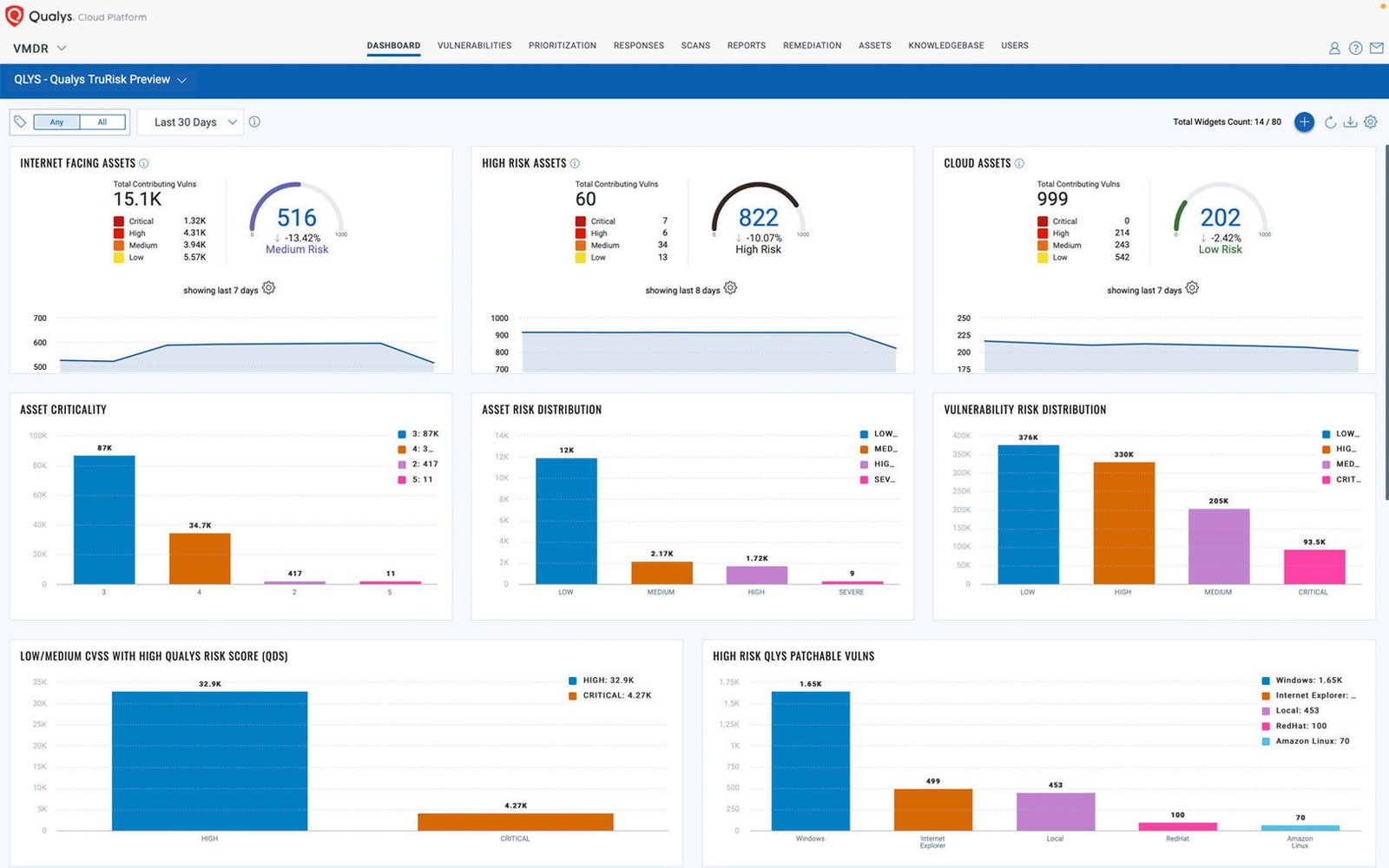
The platform doesn't stop at detection. VMDR also streamlines remediation with automated patching, mitigations, and seamless ITSM integrations. Combined with configuration assessment, runtime software analysis, and continuous monitoring, Qualys lets organizations manage risk efficiently from a single platform. It's a smart, practical choice for teams looking to turn vulnerability data into actionable security decisions.
Pricing
Though Qualys VMDR does not list standard pricing, businesses can reach out to their team to request a custom quote tailored to their environment and needs.
What Works And What Doesn't
| Pros | Cons |
| Real-time vulnerability alerts | Requires learning time |
| Comprehensive asset visibility | Complex interface |
| Automated risk prioritization | Higher pricing for small teams |
Our Final Take
Qualys VMDR is ideal for organizations that want a single platform to stay on top of vulnerabilities, assets, and patching. Smaller teams might find it a bit complex or pricey. It's a great choice for those looking to simplify security while focusing on what matters most.
Intruder: Best User Experience (UX)
Intruder makes its comeback on this year's list. Intruder is a user-friendly exposure management platform designed for mid-sized businesses. It helps teams identify critical vulnerabilities, act quickly, and prevent breaches. In Winter 2026, G2 recognized Intruder for its usability and ease of implementation, and over 3,000 companies rely on Intruder to protect their digital assets.
Why We Chose Intruder In 2026
Intruder helps mid-sized businesses to spot vulnerabilities that other scanners can miss. With continuous scanning for on-prem systems, cloud environments, web apps, and APIs, teams can identify and fix real risks fast. Emerging threat scans ensure critical vulnerabilities are flagged within hours, not just during scheduled scans, keeping systems protected against the latest threats.
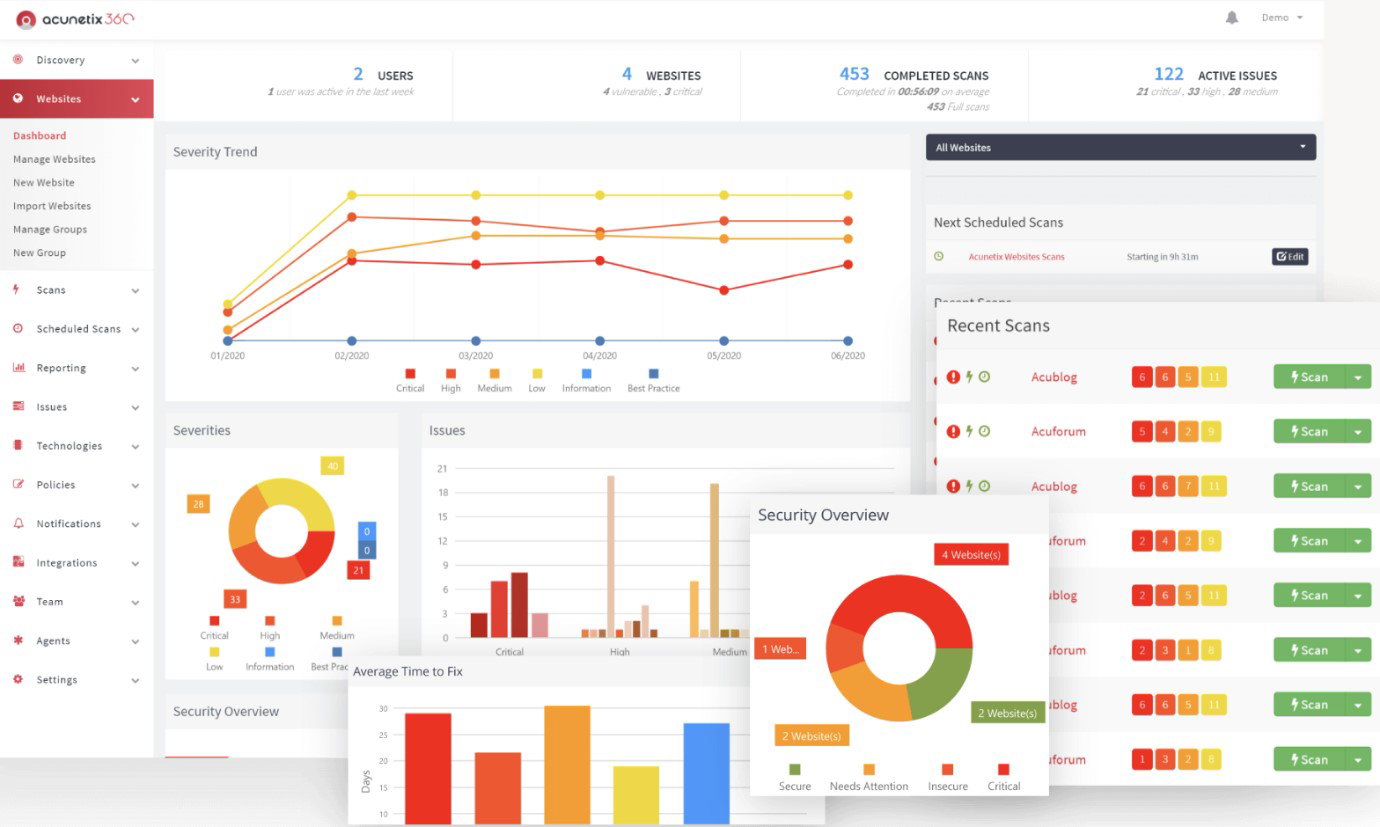
Intruder also helps teams focus on what truly matters, reducing alert fatigue by prioritizing vulnerabilities based on exploit likelihood and real-world threat intelligence. Streamlined workflows, clear remediation guidance, and integrations make collaboration seamless, enabling teams to act quickly without juggling multiple platforms. By focusing on real-world risks rather than false alarms, Intruder empowers lean security teams to protect their attack surface efficiently, respond faster, and handle emerging threats from one easy-to-use platform.
Pricing
Intruder's flexible pricing starts with the Essential plan at $149/month, the Cloud plan at $299/month, and the Pro plan at $499/month. For large enterprises with complex attack surfaces, a custom Enterprise plan is available. All plans include scalable features to meet evolving security needs.
What Works And What Doesn't
| Pros | Cons |
| Easy to use | Scan speed slow |
| Clear, actionable findings | Occasional false alerts |
| Continuous vulnerability monitoring | Manual patch work needed |
Our Final Take
Intruder works well for small to mid-sized teams that want to keep their systems secure without getting lost in complex setups. It might not fit very large networks with heavy scanning needs. Perfect if you want clear, easy-to-act-on security insights.
Top 5 Vulnerability Management Tools Comparison
Finding the right vulnerability management tool can be tricky. This guide compares the leading tools, outlining their key features, benefits, and who they are best suited for. This way, you can pick the platform that keeps your business secure and efficient.
P.S. Always remember to visit the vendor's site for the latest information!
| Criteria |  |
 |
 |
 |
 |
| Starting Price | NA | $25/month | $3,390 | NA | $149/month |
| Avg. User Rating | 4.7 | 4.5 | 4.5 | 4.4 | 4.8 |
| Free Trial/Demo | Demo | Demo | 7 Days | 30 Days | 14 Days |
| Key Features | Agentless discovery, risk prioritization, unusual activity alerts | Developer-friendly security, CI/CD integration, automated fixes | Deep scanning, risk insights, continuous monitoring | TruRisk scoring, automated remediation, full asset visibility | Continuous scanning, emerging threat detection, streamlined workflows |
| Integrations | Opsgenie, Zendesk, PagerDuty | GitHub, IntelliJ, Android Studio | Nutanix, Microsoft Azure, Splunk | Jira, ServiceNow, Jenkins | AWS, Drata, Slack |
Wrapping Up
Choosing the right vulnerability management tool doesn't have to feel like navigating a cyber maze. From Wiz's agentless cloud coverage to Snyk's developer-friendly magic, Tenable Nessus' deep scans, Qualys VMDR's all-in-one risk dashboard, and Intruder's easy, mid-market-friendly approach, there's something for every team.
The key is knowing what fits your setup, your team size, and your appetite for automation versus hands-on control. While no single tool is perfect for everyone, these five platforms stand out in 2026 for making vulnerability management smarter, faster, and a little less scary.
Pick wisely, act quickly, and let your systems stay safe while you focus on building your business!
Frequently Asked Questions
Which Are The Top Vulnerability Management Tools In 2026?
The top Vulnerability Management Tools in 2026 are Wiz, Snyk, Tenable Nessus, Qualys VMDR, and Intruder. Each excels in different environments, from cloud-native systems to mid-sized networks, offering unique features for discovery, risk prioritization, and remediation.
What Is Vulnerability Management?
Vulnerability management is the process of identifying, evaluating, prioritizing, and remediating security weaknesses in systems, networks, and applications. It helps organizations reduce risk, prevent breaches, and maintain compliance with security standards.
Are These Vulnerability Management Tools Suitable For Large Enterprises?
Yes, solutions like Tenable Nessus, Qualys VMDR, and Wiz scale well for large environments with complex infrastructure and compliance needs.
Thu, Feb 26, 2026

Enjoyed what you read? Great news – there’s a lot more to explore!
Dive into our content repository of the latest tech news, a diverse range of articles spanning introductory guides, product reviews, trends and more, along with engaging interviews, up-to-date AI blogs and hilarious tech memes!
Also explore our collection of branded insights via informative white papers, enlightening case studies, in-depth reports, educational videos and exciting events and webinars from leading global brands.
Head to the TechDogs homepage to Know Your World of technology today!
Disclaimer - Reference to any specific product, software or entity does not constitute an endorsement or recommendation by TechDogs nor should any data or content published be relied upon. The views expressed by TechDogs' members and guests are their own and their appearance on our site does not imply an endorsement of them or any entity they represent. Views and opinions expressed by TechDogs' Authors are those of the Authors and do not necessarily reflect the view of TechDogs or any of its officials. While we aim to provide valuable and helpful information, some content on TechDogs' site may not have been thoroughly reviewed for every detail or aspect. We encourage users to verify any information independently where necessary.
Loading comments...