
Computing
What Is Brain Computer Interface?
Share
Introduction
It is constantly sending signals. As you read this, millions of neurons are firing, interpreting these words, forming opinions, maybe even getting distracted.
For most of human history, those signals stayed inside your head. The only way to act on a thought was through your body. Typing, speaking, moving.
That is starting to change.
Researchers and engineers have spent decades figuring out how to read those neural signals directly and translate them into commands a machine can understand.
It is not seamless yet, and it is not cheap, but it is real. It is already being used by people with paralysis who can move a cursor with their mind, by patients who have regained a sense of touch through a robotic arm, and by researchers mapping the brain in ways that were unimaginable a generation ago.
This is a Brain-Computer Interface, or BCI. What is BCI? Let’s dive in.
TL; DR
-
BCIs let you control devices using only your brain signals.
-
They can help restore movement, communication, and freedom for people with disabilities.
-
Think sci-fi becoming real: your mind is slowly turning into a direct input and controlling device.
What Is A Brain-Computer Interface?
A Brain-Computer Interface is a sophisticated communication system that facilitates direct interaction between the human brain and an external system or computer, bypassing muscles and peripheral nerves.
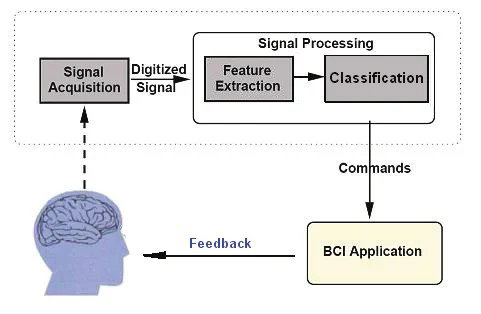
Brain computer interface guides and optimizes the activities of the Central Nervous System (CNS) and translates them into artificial outputs that can restore, replace, supplement, or enhance natural CNS outputs. The standard BCI framework constitutes three major elements:
-
An acquisition system that records brain signals, generally through electrode arrays.
-
A signal processing system that translates and extracts metrics of brain signals into speech, movement, or cognition.
-
An effector to implement the user’s intentional actions.
If we try to extend the definition of brain computer interface technology, they include systems that replace or alter neural activities by neurostimulation devices, such as cochlear prostheses that reinforce hearing by stimulating auditory nerves.
While the term Brain-Computer Interface sounds advanced, its roots go back to the 20th century. Let's visit the evolution.
Evolution Of The Brain-Computer Interface
The origin and emergence of BCI technology can be traced back to the 1970s academic research on neuronal control in animals, to advanced and precise AI-powered systems that can restore mobility and communication to paralyzed patients. The chronology of evolution unfolds here:
-
Foundation
In 1924, Hans Berger discovered electroencephalography (EEG), which enabled non-invasive tracking of electrical activity. It was later in the 1970s that the research witnessed the first fundamental breakthrough into monkeys altering neurons for computer control.
-
Early-Stage Development
Research propagated to using EEG for human-machine interaction, paving the way for the first feasible potential for BCI applications to emerge.
-
Major Milestone
The early 2000s featured vital human trials, especially utilizing “Utah Array” technologies. They enable paralyzed patients to control small devices and cursors all by their thoughts.
-
Modern Era
BCIs evolved from single-unit neuronal recording to using Electrocorticography (ECoG) and Local Field Potentials (LFPs) for enhanced long-term stability.
Current BCI advancements emphasize removing percutaneous ports to control infection risks and migrating to fully autonomous, implantable wireless systems.
Speaking in terms of BCIs sync with AI and ML advancements, rapid advances in data processing enable accurate and faster signal interpretation.
Now that we have walked through the journey of the Brain-Computer Interface, it is crucial to understand how it even works.
How Does A Brain Computer Interface (BCI) Work?
A brain-computer interface is modeled and configured on the electrophysiology of a brain’s neural network. When a human mind makes a decision or thinks about making a decision, electrical chemicals trigger a spark.
This activity occurs in the nervous system, specifically, in the spaces between neurons, called synapses, as they communicate back and forth.
-
In order to capture this brain functioning, BCIs place electrodes in close vicinity to these conversations.
-
These sensors, placed proximally, detect voltage, measuring the intensity and frequency of each ‘spike’ as it sparks.
-
More or less, simply put, it is like some microphone, but here, we listen to electrical signals emitted by the brain instead of sound.
-
The data received is then fed to local system software, where it is relayed in a process known as neural decoding.
-
Several AI agents and ML algorithms now take over to convert complex data sets retrieved from the brain into a programmable understanding of what could be the brain’s intention.
If we dive deeper into understanding the working, it presents itself in invasive and non-invasive models of the brain-computer interface overview.
In the former approach, BCIs directly connect to a patient’s brain tissue, implemented through complex surgical procedures. Since this involves major risks due to surgeries, it is only appropriate for patients who need to recover from injuries, severe paralysis, or neuromuscular disorders.
The non-invasive fashion involves wearable devices with sensors that allow two-way communication channels between the brain and the machine. As they are not in direct contact with brain tissues, they produce weaker signals.
Hence, they are suitable for augmented reality applications, virtual gaming, and guiding the actions of robots and gadgets.
The sequential operation of BCI finds its utility in multiple applications.
Use Cases Of The Brain-Computer Interface
The fascinating human-machine sync technology drives innovations across the following verticals:
-
Healthcare
BCIs are coming up with new avenues in healthcare and medicine. Severe motor disabilities like stroke, ALS, or spinal cord injury pose a significant communication challenge.
BCIs can translate the patient’s brain signals into commands, allowing them to control a speech-generating device, type on screen, or interact with their environment.
One of the most promising areas of BCI research is restoring movement. Experts are developing systems that let people control robotic arms, prosthetic limbs, and wheelchairs only with brain activity. -
Entertainment And Gaming
Developers are creating games using BCI technology that respond to particular facial expressions and mental commands detected by an EEG headset.
A gamer can push any virtual object by converging on it or trigger actions by simply blinking or smiling. This develops a hands-free control system that makes gaming deeply engaging and more accessible.
-
Education And Research
Educational programs could leverage BCI to understand a student’s cognitive workload and engagement capability to adjust learning accordingly. For instance, if students feel drained or burnt out, the BCI-powered system can offer a pause or deliver the learning material differently.
This develops a more customized and flexible learning pathway for every learner. -
Smart Homes
Imagine playing the music, adjusting the lights, or turning up the home temperature with a single mental command. This has become a tangible reality as BCI integrates with smart home devices and the Internet of Things (IoT).
BCI serves as a universal remote for your connected devices by translating brain signals into commands. -
Security And Authentication
Fingerprints and passwords would soon be replaced by some more personal form of identification, brainwaves. Each person's brain activity shows a unique pattern, much like the retina and fingerprints.
Researchers are finding multiple ways to use these ‘brainprints’ for authentication purposes, developing a highly secure method for identity verification. This method, known as passthoughts, can be used to protect sensitive data and secure systems.
The widespread adoption of BCI remains constrained by operational and security hurdles.

Challenges Of The Brain-Computer Interface
Although BCI sounds fascinating, innovative, and promising, it comes with its own share of concerns that need to be addressed.
-
Informed Consent And Medical Risk: BCIs often involve invasive brain procedures and risky experimentation. A considerable ethical challenge is ensuring that patients fully understand the risks, procedures, and long-term implications.
-
Neural Data Security And Privacy: BCIs fetch neural data that not only reveals clinical details but also the thoughts and emotions impacting the individual’s future. Securing this data from breaches or misuse has been a crucial concern.
-
Long-Term Responsibility And Support: Users continue to carry implants in their brains long after the clinical trials. This raises concerns about who assures long-term medical compatibility, sustains the technology in the body, and supports users forever.
Now that we have understood the challenges, where does it leave all of us? Let’s wrap this up.
Conclusion
Brain-Computer Interface is no longer a fancy thought from science fiction; it is gradually turning into a transformative reality.
By facilitating direct communication between machines and the human brain, BCI is restructuring how we interact with systems and technology, leading new breakthroughs into gaming, healthcare, security, and beyond.
While concerns around privacy, ethics, and long-term utility persist, BCI’s potential to reconfigure accessibility and optimize human capability makes it one of the most exciting and promising innovations for mankind.
Frequently Asked Questions
How Are Brain-Computer Interfaces Integrated Into Enterprise Or Real-World Applications?
BCI is incorporated with robotics, assistive technologies, and IoT systems to improve accessibility and allow hands-free control.
In advanced configurations, BCI is linked with AI platforms to collect neural data for decision support, automation, and customized user experiences.
What Are The Key Technical Components Required To Deploy A BCI System?
A BCI system consists of signal processing algorithms, signal acquisition (implants or EEG), and an output interface.
These components catch brain signals, decode them with the help of AI/ML models, and translate them into actionable commands.
What Challenges Organizations Face Before Adopting BCI Technology At Scale?
Enterprises adopting BCI need to address regulatory compliance, data privacy, and the criticality of interpreting neural signals.
They also require ethical frameworks, robust infrastructure, and continual system training to ensure user security and reliability.
Fri, Mar 27, 2026

Liked what you read? That’s only the tip of the tech iceberg!
Explore our vast collection of tech articles including introductory guides, product reviews, trends and more, stay up to date with the latest news, relish thought-provoking interviews and the hottest AI blogs, and tickle your funny bone with hilarious tech memes!
Plus, get access to branded insights from industry-leading global brands through informative white papers, engaging case studies, in-depth reports, enlightening videos and exciting events and webinars.
Dive into TechDogs' treasure trove today and Know Your World of technology like never before!
Disclaimer - Reference to any specific product, software or entity does not constitute an endorsement or recommendation by TechDogs nor should any data or content published be relied upon. The views expressed by TechDogs' members and guests are their own and their appearance on our site does not imply an endorsement of them or any entity they represent. Views and opinions expressed by TechDogs' Authors are those of the Authors and do not necessarily reflect the view of TechDogs or any of its officials. While we aim to provide valuable and helpful information, some content on TechDogs' site may not have been thoroughly reviewed for every detail or aspect. We encourage users to verify any information independently where necessary.
Loading comments...