
Networking Solutions
What Is An Edge Network?
Share
Overview
Different names, same man. If you’ve watched 'Better Call Saul," you know what we mean.
Remember that first-season stunt? Jimmy “rescues” a guy dangling from a billboard. Dramatic, right?
Not quite!
It wasn’t an accident. Jimmy orchestrated it. (Yes, Chuck McGill. We remember your allegations and miss you!)
Why did he do it, you ask? Simple: to grab attention, network, and pull in clients.
Jimmy loved shortcuts. He always knew the loopholes.
Today, technology has also found its shortcut. For example, networking, which used to be centralized, slow, and one-way, has evolved into a smarter version.
Do not worry, this shortcut to networking is not a billboard scam, but rather faster and flexible networking. Introducing Edge Network!
So, what exactly is an edge network? For that, you need no other shortcut than this article.
Scroll on because ‘Saul Goodman. (Read it’s all good, man!)
Remember the days of dial-up, when getting online meant noisy connections and endless waiting?
That was networking’s humble beginning. Slow, clunky, and anything but seamless. Then came Wi-Fi, and everything changed. The internet was no longer a place you “visited.” It was always there, in your pocket, on your couch, across offices and cities.
We’ve come a long way. From waiting for the internet, we’ve reached a point where the internet now waits for us.
In the latest generation of networking, we have Edge Networking. Let’s understand what that is, shall we?
What Is An Edge Network?
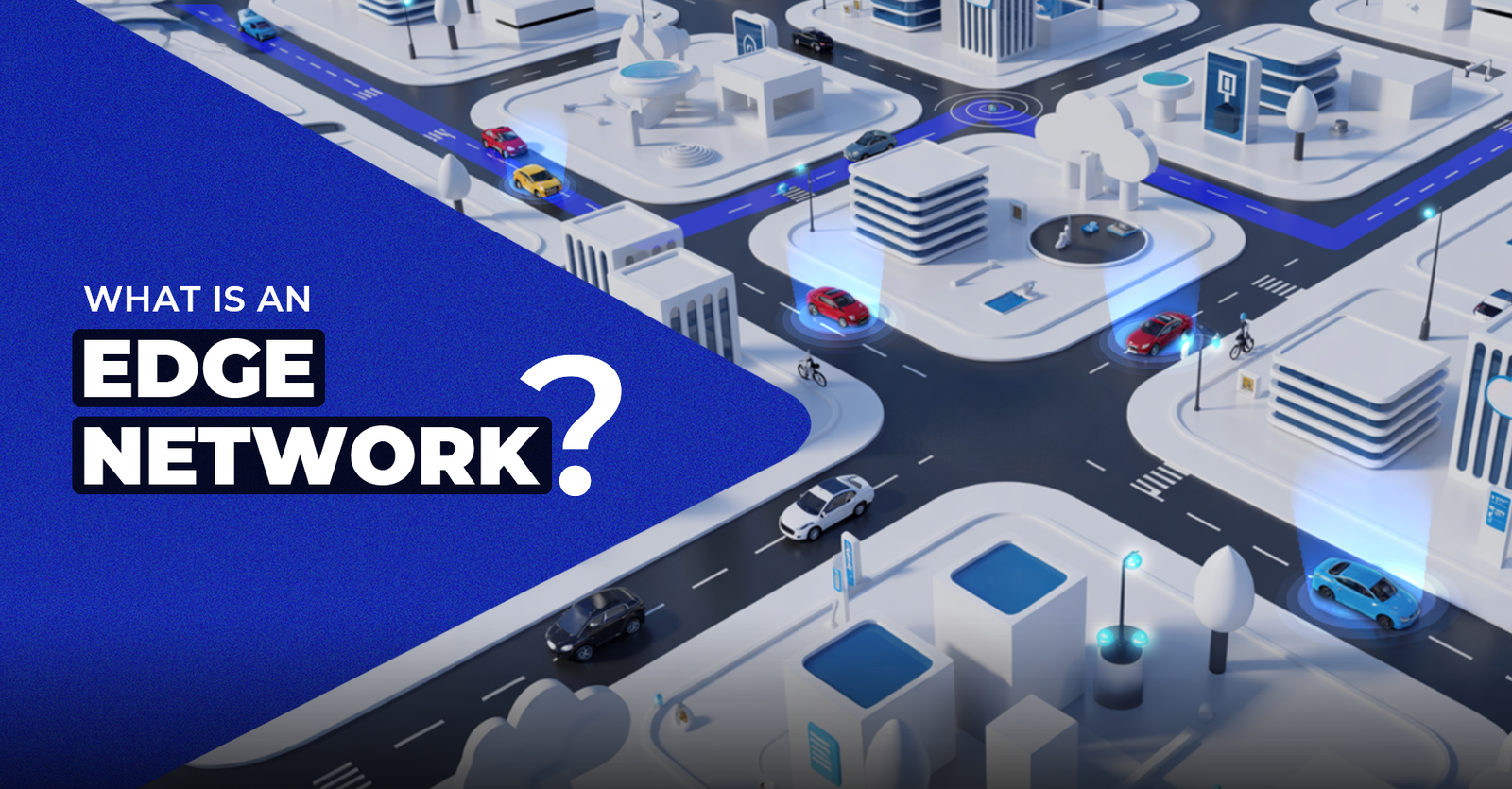
An edge network is a way of handling computing tasks closer to where data is created instead of sending everything to a central data center. This reduces the load on data centers because edge devices like sensors, routers, or local servers take care of much of the processing themselves.
The idea is simple: move applications and processing to the “edge” of the network. This helps organizations get faster performance, lower latency, and stronger security since data doesn’t always need to travel long distances before being processed.
Edge networks are part of the broader field of edge computing. Together, they enable quicker data analysis, real-time insights, and more reliable digital experiences for businesses and users.
However, like Jimmy’s many reinventions in Better Call Saul, Edge Networks are still relatively new, evolving and finding their identity in the larger tech landscape. Let’s look at their history.
What Is The History Behind The Edge Network?
The roots of edge networking go back to the 1990s, when Content Delivery Networks (CDNs) like Akamai were introduced. They placed servers closer to users to speed up website loading, planting the first seeds of distributing computing power.
-
2000s
In the early years of the 21st century, researchers started investigating how mobile and Internet of Things (IoT) devices could handle data processing locally. The IEEE CS published a research paper introducing the concept of cloudlets, small data centers located at the edge designed for faster, low-latency computing.
-
2010s
By the 2010s, major players such as Cisco, IBM, and HP began formalizing the term Edge Computing. Cisco even coined the phrase Fog Computing in 2012, describing a system where data processing happens between the cloud and end devices.
-
2020s
As we stepped into the third decade of the century, Edge Networking became critical for 5G, autonomous vehicles, and AI-driven applications. Today, it is seen as a core technology for modern digital infrastructure, powering industries from healthcare to smart cities.
With its journey from CDNs to cloudlets and IoT, Edge Networking has matured. Now, let’s understand how the mature Edge Networking actually works in practice.


How Does An Edge Network Work?
Do you like coffee? Well, who doesn’t!
So, let’s use a simple example to understand how an Edge Network works.
Imagine walking into Starbucks in the morning (BRB! Gotta go for the coffee break!). There is a long queue for the order (obviously)! There is only one barista, and you’re in a hurry because you’re already running late for a meeting. It’s as if everyone is sending requests to a central server. (Yup, this is going to take time!)
Now, Edge Networking changes this by letting you order from smaller ‘coffee counters’ around your coffee shop to take some of those orders right where you are. This way, you won’t miss your meeting!
Edge Networking works by linking your organization’s servers with IoT devices, sensors, machines, or even local computers. These connected devices handle small processing tasks themselves while sharing data with the cloud. The result is a balanced system where workloads move smoothly between edge devices and the central server.
To better understand, let’s explore the components of an Edge Network.
What Are The Components Of An Edge Network?
An Edge Network is built from several components that work together to make data processing faster, secure, and more reliable. Here are the five core elements:
-
Edge Devices
These are sensors, machines, smartphones, or local servers placed at the endpoints of the network. They capture and sometimes process data directly where it’s created.
-
Edge Routers
Positioned at the boundary of a network, they guide data between internal systems and external networks, ensuring smooth connections.
-
Wide Area Networks (WANs)
WANs connect multiple smaller networks, such as local networks in different offices, so that data can travel securely across distances.
-
Switches
These devices manage how data flows between networks, linking local area networks (LANs) to service providers for faster access.
-
Edge Firewalls
Located at the edge of the network, they safeguard applications, servers, and devices from cyber threats before data reaches the central systems.
Together, these components make Edge Networking a complete package like Howard. Remember Howard Hamlin from the show?
Yes, Edge Networking is a lot like him. 100% absolute, polished, and reliable. The difference? Edge Networking brings way more real benefits to the table. (Sorry, Howard! You didn’t deserve that. Fans of the show will get the joke!)


What Are The Benefits Of The Edge Network?
Edge Networks offer several advantages by handling data closer to where it’s created and consumed. Here are the key benefits:
-
Instant Brew
By processing data locally, edge networks deliver near-instant response times. This is crucial for real-time applications like video streaming, autonomous vehicles, or IoT-driven manufacturing, where every millisecond counts.
-
Filter Out Costs
With less data traveling back and forth to central servers, organizations reduce bandwidth usage and cloud storage costs. This ‘filtered’ approach makes operations more efficient and budget friendly.
-
Strong Blend
Security gets stronger at the edge. Processing data closer to its source limits exposure to external threats during transmission and reduces risks of breaches, creating a more resilient digital framework.
-
Doppio Espresso
Just as a double shot of espresso gives you more energy, edge networks boost agility and scalability. By distributing workloads across multiple servers, they adapt quickly to demand spikes and keep services running smoothly.
-
Locally Roasted
By keeping data grounded in local regions, edge networks make it easier to comply with regulations like GDPR while maintaining user trust.
With all the coffee puns, one thing is pretty sure. We can use Edge Networks across the city, and we can all have our favorite pumpkin latte available wherever we are. However, that is not the only use case of Edge Networks.
Let’s look at the others!
What Are The Use Cases Of An Edge Network?
Edge Networks are transforming how various industries operate. Here’s where they make the biggest impact:
-
Healthcare
Hospitals and clinics benefit from real-time patient monitoring, quicker access to medical records, and secure remote consultations. Edge Networks also helps the doctors respond faster and eventually improve patient outcomes.
-
Retail
Part of the contemporary online customer experience is being able to immediately find the products you want, purchase them safely and securely, and have them rapidly dispatched for shipment. Edge networks assist this entire on-demand process.
-
Transportation
As the advent of connected vehicles continues, edge networks play a growing role in their implementation. Logistics companies also use them to optimize routes, track fleets in real time, and reduce delays.
-
Communications
Edge Networks help telecom providers deliver ultra-fast mobile connections, uninterrupted video calls, and smooth streaming services while reducing congestion on central systems.
-
Utilities
Energy utilities must satisfy mandated supply levels, upgrade aging assets and accommodate ever-changing demand. Edge networks support smart grids with real-time data. This promotes faster decision-making and the use of prescriptive analytic models.
These use cases prove Edge Networking is already reshaping industries today. Now, let’s shift gears and explore its future.


What Is The Future Of the Edge Network?
Edge networking is set to grow rapidly as industries demand faster services, real-time insights, and secure digital experiences. With the rise of 5G and IoT, more devices will process data directly at the edge.
In the coming years, enterprises will use edge networks to power innovations like autonomous vehicles, smart cities, and advanced healthcare systems. This shift will make operations more efficient and responsive.
The way things are moving, Edge Networking is going to be the foundation of tomorrow’s digital life. This will help organizations stay agile, compliant and ready for the new opportunities.
On that optimistic note, let’s hear the final thoughts.
Wrapping Up!
In the end, Jimmy’s shortcuts were flashy, but they always came with consequences. A billboard stunt might win clients for a moment, but sooner or later, the truth catches up.
Edge Networking, though, isn’t a scam; it’s the real deal. It’s the shortcut that actually works, not by cutting corners but by cutting latency, distance, and complexity. It helps industries stay connected, secure, and responsive in ways traditional networking can’t match.
If Jimmy had Edge Networking in his playbook, he wouldn’t need billboards or courtroom theatrics to get efficiency, speed, and trust on his side.
That’s the difference. Edge Networking doesn’t just grab attention; it delivers results.
So next time you think about the long road to connectivity, remember, there’s a smarter path waiting at the edge. Don’t wait because it’s showtime, folks!
Frequently Asked Questions
What Is An Edge Network?
An Edge Network is a system where data processing happens closer to the source—such as IoT devices, sensors, or local servers—instead of relying solely on a central cloud or data center. This reduces latency, increases speed, and improves reliability.
What Are The Main Benefits Of Adopting An Edge Network?
Organizations adopting edge networks can expect faster data processing, reduced bandwidth costs, stronger security, better scalability, and compliance with local data regulations. By handling data at the edge, businesses gain real-time insights and improved user experiences, which is especially important in industries like healthcare, retail, and transportation.
Which Industries Are Using Edge Networks Today?
Edge Networks are already transforming sectors such as healthcare, retail, communications, utilities, and transportation. Hospitals use them for real-time patient monitoring, retailers rely on them for secure transactions and faster deliveries, telecom providers for ultra-fast connectivity, and logistics companies for connected vehicles and smarter fleet management. Utilities also use edge networks to run smart grids and respond to energy demand in real time.
Fri, Sep 26, 2025

Enjoyed what you've read so far? Great news - there's more to explore!
Stay up to date with the latest news, a vast collection of tech articles including introductory guides, product reviews, trends and more, thought-provoking interviews, hottest AI blogs and entertaining tech memes.
Plus, get access to branded insights such as informative white papers, intriguing case studies, in-depth reports, enlightening videos and exciting events and webinars from industry-leading global brands.
Dive into TechDogs' treasure trove today and Know Your World of technology!
Disclaimer - Reference to any specific product, software or entity does not constitute an endorsement or recommendation by TechDogs nor should any data or content published be relied upon. The views expressed by TechDogs' members and guests are their own and their appearance on our site does not imply an endorsement of them or any entity they represent. Views and opinions expressed by TechDogs' Authors are those of the Authors and do not necessarily reflect the view of TechDogs or any of its officials. While we aim to provide valuable and helpful information, some content on TechDogs' site may not have been thoroughly reviewed for every detail or aspect. We encourage users to verify any information independently where necessary.
Loading comments...