
Digital Marketing
Learn How To Do It Right With Local Search Marketing
Share
Overview
We mean, let’s face it. No one’s flipping through the phone book anymore. Very few people are paying attention to terrible local TV ads. Classified listings have moved from print venues like newspapers and magazines to the web. This is why businesses need to understand Local Search Marketing and its importance in today’s digital landscape.
Having said that, how did Local Search Marketing start? What are the main features of implementing a local SEO strategy? Do you really need to have a local search strategy if you own a local pizza shop? (Yes, yes, you do!) Read on to find your answers to these questions and a lot more!
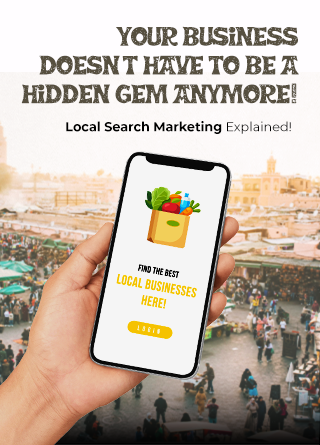
.png.aspx "TechDogs-\"Learn How To Do It Right With Local Search Marketing\"-Your Business Doesnt Have To Be A Hidden Gem Anymore!")
Way back in the old days, long before the internet was a virtual gleam in the world’s collective imagination, there were several different ways to promote a local business. You could take out an ad in the yellow pages, create a terrible commercial for local TV stations (the likes of which are often parodied on Saturday Night Live), advertise in the classifieds or get referrals from your customers.
These days, from yellow pages to informercials – everything is history. The only way to get to customers is to be present on the internet. Why?
Ask yourself this – if you are looking for a diner in a new city, would you go to the nearest bookstand and buy a directory or simply Google “diners near you?” The latter, right? That’s true for your customers as well. That’s why you need a Local Search Marketing (LSM) strategy. However, before jumping on the strategy train, you need to learn all there is about LSM. So, dive right in!
What Is Local Search Marketing?
Local Search Marketing (LSM) is a series of actions that businesses take to promote their business online and attract nearby customers to their physical location. Local Search Marketing is focused on getting your business to show up in search engines (mostly Google) and in other places where consumers search for local businesses. (Hello, Facebook!)
Businesses optimize their websites, social media profiles and use paid marketing tactics like buying ads on Google Maps, to broadcast their existence to the local community. It benefits small businesses like vintage clothing stores, family-owned chocolate shops and your neighborhood dog groomer by letting people within a certain radius of the businesses know about them. It also benefits big businesses that operate in multiple locations.
LSM is the evolved version of the yellow pages for the 21st century. In short, LSM replaces the big, yellow (boring) book of businesses with new tools that any local business can use to promote themselves online. It’s no news that Local Searching Marketing is a modern concept – let's see how it came about.
A Brief History Of Local Search Marketing
The original yellow pages directory was printed in 1883 by Reuben H. Donnelly and distributed to a few select communities. A century later, AT&T introduced their iconic “walking fingers” logo to their own version of the yellow pages, along with the tagline, “Let your fingers do the walking.” Just about every home (and phone booth) had a copy of the yellow pages which listed every business in the area. These phone books represent the origin of Local Search Marketing.

LSM went online in the mid-nineties with the launch of local directory websites like Craigslist and Angie’s List, both founded in 1995. These were glorified classified ads websites with Craigslist having more of a “community yard sale” feel while Angie’s List focused on promoting local mom-and-pop businesses (plumbers, dog walkers, yard cleaner uppers) via crowd-sourced reviews and ratings.
Local business directories got more robust in the early eighties with the launch of Yelp, a San Francisco-based company that publishes crowd-sourced reviews of businesses.
In 2010, Google launched Google Places to help people find places in the “real world” (as they put it!). Places gave every real place its own page filled with information about that place. Businesses could claim their Place Page and customize it with business information (operating hours, photos, videos, coupons, etc.). Notably, businesses in select cities could also promote their business listing for $25/month. Places became Google My Business in June 2014 and was aimed at local and global businesses. Around this same time, social media platforms like Facebook and Nextdoor got into the LSM industry with the introduction of business pages and other business promotion features.
Enough with the history – let's focus on mapping how Local Search Marketing works.
How Does Local Search Marketing Work?
Local Search Marketing is built around a single key factor — your business identity. The goal of LSM is to make your business show up in the search results of Google and other search engines. If you want people to find your business without leaving their house (or their car, as it were), your LSM must include these features:
-
Website
A MOBILE-FRIENDLY website for your business that contains your business address and is optimized for geographic-specific keywords (e.g., plumber in Morris, NJ). Yes, we shouted “mobile-friendly” at you! Quite frankly, we’re not that sorry because if your website isn’t mobile-friendly, you may as well advertise in the phone book or alert people about your newest product or service via smoke signal. Not considering mobile is that primitive, guys!
-
Profile
A business profile in Google My Business. Sad, but true. When it comes to LSM, Google, as with everything else, reigns supreme. So, make sure you have a business profile on Google platforms.
-
Customer Feedback
REVIEWS! Yes, we are shouting again! Over 90% of consumers read reviews and nearly 70% say that positive reviews influence how they feel about your business, so getting reviews from loyal customers is an important feature of your LSM strategy.
-
Listings
Local business listings (e.g., structured citations) on key platforms including Bing, Yelp, and Facebook.
-
Content
You definitely need updated, optimized, fresh and unique content. Unlike that crusty old “yellow pages” book, the internet is a dynamic medium. Customers expect you to keep your website updated, your blog posts fresh and your social media engaging.
-
NAP+W
Consistent NAP+W (name, address, phone number + website URL) – make sure the NAP+W is consistent across all your online profiles. This is something Google search uses to rank your website in local search results.
In case you’re wondering if there are types of LSM then you’re in luck – that's what we have covered next!
What Are The Types Of LSM?
There are basically two main types of LSM: paid and unpaid. Paid LSM is just advertising targeted to a specific region. Unpaid LSM is everything else you do online to promote your business.
-
Paid LSM
involves buying ads or promoting your business listings on platforms and websites like Google, Nextdoor and Yelp. There are lots of places where you can advertise your business to a local audience online. You can target ads by location on Facebook and by neighborhood on Nextdoor. You can also buy advertising on platforms such as Angie’s List, as most platforms have a business page or profile to run ads.
-
Organic LSM
involves optimizing your website with geographically relevant keywords and creating business profiles on platforms like Facebook, Angie’s List, Twitter, Nextdoor, Instagram and (oh so many) more. Most platforms allow businesses to create a profile for free. Content is also important for organic LSM — this includes creating (or updating) your website, posting news and information to social media and blogging about your business and how you work with the local community.
Why Do We Even Need Local Search Marketing?


Businesses need LSM so that local customer can find them. As simple as that! No one’s browsing through dusty old phone books anymore, right? Now our smartphones, keyboards and connected devices are doing the walking and discovering. The stats speak for themselves - 88% of consumers who search for a local business on their smartphone call that business within a day. Nearly half of all Google searches are from people seeking local information. Pretty much everyone learns more about local companies through online avenues than anywhere else.
Importance Of Local Search Marketing
Your business is essentially invisible without LSM and invisibility is not a great growth strategy. Implementing an LSM strategy is important. Still not convinced? Here are some of the benefits of LSM to sway your mind:
-
People will find you and visit you. Think of the fact that 72% of people who perform a local search visit a store within 5 miles of their location.
-
You’re more likely to be at the top of the search results and that matters. 92% of searchers choose businesses on the first page of search results.
-
People will like you more - yes, really! Over 70% of consumers trust a business that has positive reviews. (And reviews should be part of your LSM strategy, remember?)
Trust us, Local Search Marketing is critical for your growth today and will be in the future too. Talking of it, let’s check out the potential future of Local Search Marketing.
Future Of Local Search Marketing
The good news for small business and mid-sized businesses as well is that creating a comprehensive LSM strategy has never been easier. The future of LSM is all about automation, using tools that can help with everything from social media sharing to product feed automation to content creation.
Connecting with potential customer within your local community through social channels and building brand loyalty are also LSM trends that local businesses will soon embrace. This will be done by respecting consumer privacy, proactively solving customer problems and keeping the lines of communication open.
Did we mention the importance of being mobile-friendly? DID WE, PERHAPS, SCREAM IT AT YOU EARLIER? Over half of all website traffic comes from mobile devices. Google prioritizes mobile-friendly websites too. People are, frankly, annoyed if your website doesn’t work well on their smartphones. Heed this trend, oh local business savant, or you shall suffer the fate of invisibility.
Voice search is an ever-important trend and will influence LSM in the near future. One study found that 75% of people who own smart speakers such as Amazon Alexa are using them to perform searches for local businesses. Consider what they might be asking and optimize your website accordingly for the best visibility.
Summing It Up
No one’s flipping through the yellow pages or phone books these days. Classified listings have moved from print to the web. There’s no denying it anymore. Local Search Marketing has evolved with time. Shouldn’t you?
Frequently Asked Questions
What is Local Search Marketing?
Local Search Marketing (LSM) refers to a set of strategies employed by businesses to enhance their online presence and attract nearby customers to their physical locations. It revolves around optimizing various online platforms, primarily search engines like Google, to ensure that businesses appear prominently in local search results. This includes activities such as website optimization, social media management, and utilizing paid marketing tactics like Google Ads. LSM enables businesses, both small and large, to reach their target audience effectively within a specific geographic radius, thereby increasing visibility and foot traffic.
How does Local Search Marketing work?
At its core, Local Search Marketing revolves around establishing and maintaining a strong online business identity. To ensure visibility in local search results, businesses must prioritize certain key elements. This includes having a mobile-friendly website that incorporates geographic-specific keywords, creating a business profile on platforms like Google My Business, actively soliciting and managing customer reviews, maintaining consistent business listings across various online directories, and regularly updating and optimizing content. These efforts collectively contribute to improving a business's online visibility and accessibility to local consumers.
Why is Local Search Marketing important?
Local Search Marketing is crucial for businesses seeking to connect with local customers in today's digital age. With traditional methods like phone books becoming obsolete, consumers increasingly rely on online searches to find local businesses. The statistics underscore the significance of LSM, with a significant percentage of consumers preferring to engage with businesses that appear in local search results. LSM not only drives foot traffic to physical locations but also enhances brand credibility through positive reviews and ensures higher visibility in search engine rankings. In essence, LSM is indispensable for businesses looking to thrive in the competitive digital landscape and maintain relevance in their local communities.
Tue, May 31, 2022

Enjoyed what you've read so far? Great news - there's more to explore!
Stay up to date with the latest news, a vast collection of tech articles including introductory guides, product reviews, trends and more, thought-provoking interviews, hottest AI blogs and entertaining tech memes.
Plus, get access to branded insights such as informative white papers, intriguing case studies, in-depth reports, enlightening videos and exciting events and webinars from industry-leading global brands.
Dive into TechDogs' treasure trove today and Know Your World of technology!
Disclaimer - Reference to any specific product, software or entity does not constitute an endorsement or recommendation by TechDogs nor should any data or content published be relied upon. The views expressed by TechDogs' members and guests are their own and their appearance on our site does not imply an endorsement of them or any entity they represent. Views and opinions expressed by TechDogs' Authors are those of the Authors and do not necessarily reflect the view of TechDogs or any of its officials. While we aim to provide valuable and helpful information, some content on TechDogs' site may not have been thoroughly reviewed for every detail or aspect. We encourage users to verify any information independently where necessary.
Loading comments...