
IT Security
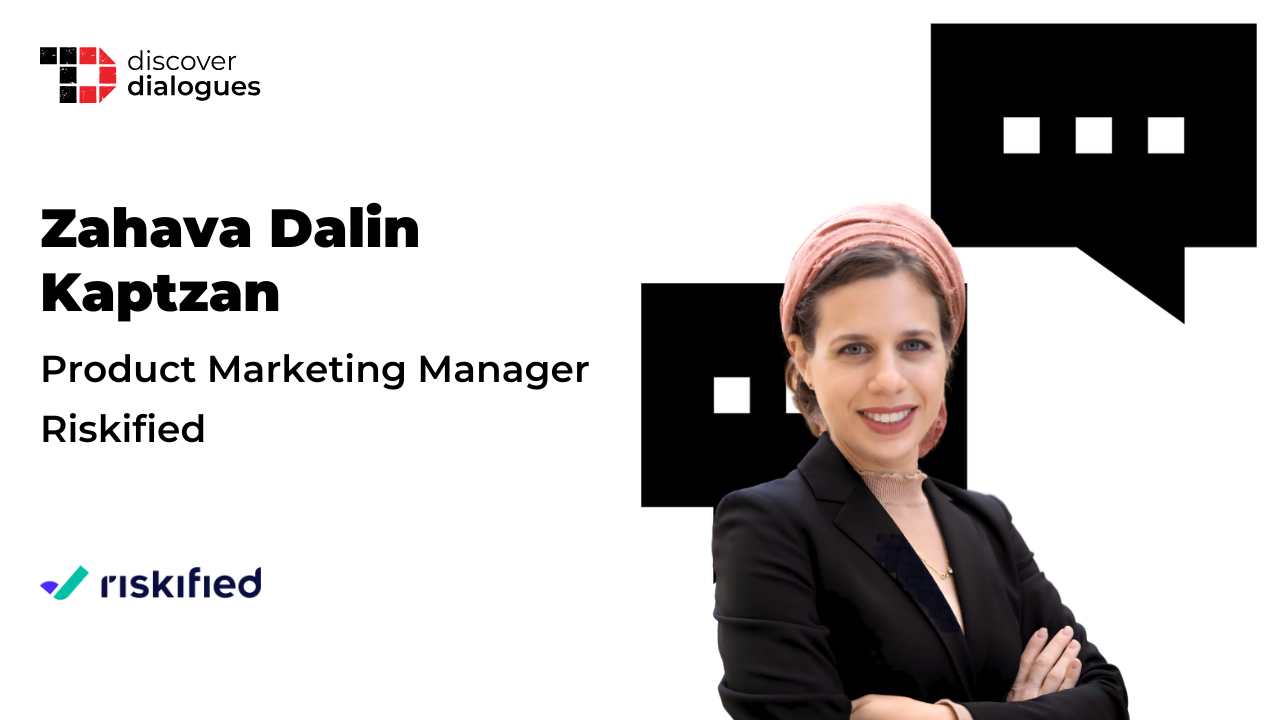
Zahava Dalin Kaptzan, Product Marketing Manager, Riskified, On Smarter Fraud Prevention For Seamless Customer Experiences
Share
Overview
Here is a small introduction to Zahava:
Zahava Dalin Kaptzan is a data-driven Product Marketing Manager at Riskified, specializing in translating complex technologies into compelling, value-driven stories. With extensive experience in strategic positioning and B2B SaaS marketing, Zahava excels in driving business growth through problem-solving and impactful storytelling across sectors like logistics, retail, IoT, and AI.
TD Editor: Given the global nature of e-commerce, how do you tailor fraud prevention solutions to address regional differences and challenges?
Zahava Dalin Kaptzan: For us, fraud prevention and conversion optimization are inseparable, and both hinge on treating every online transaction uniquely. This means identifying secure transactions for a frictionless flow, or, if risk is present, precisely pinpointing it—be it account takeover, credit card fraud, or policy abuse—and adapting the checkout. How we address that risk often differs by region, influenced by local regulations, fraud patterns, customer profiles, and issuer thresholds.
For instance, if our AI detects a fraud ring in a specific region, it automatically applies that intelligence to risk calculations for other merchants in the same area. When an order presents some risk but isn't clear-cut fraud, we might seek additional verification. However, the method varies: consumers and issuers in the U.S. are generally less comfortable with 3D Secure (3DS). We factor this into our recommendations, opting for alternative verification methods where appropriate. By understanding these regional nuances in fraud, issuer preferences, and consumer behavior, we tailor each checkout flow to reduce fraud effectively, minimize false declines, and deliver the best possible customer experience globally.
TD Editor: What role does machine learning play in your fraud prevention strategies, and how do you ensure its ethical use?
Zahava Dalin Kaptzan: Machine learning (ML) is fundamental to our fraud prevention strategy. It enables our solution to identify complex fraud and abuse patterns that rules-based systems cannot detect and to process information at a speed unattainable by manual analysis. A key strength of our ML engine is its capacity for independent learning and its ability to make accurate, real-time decisions without human intervention.
Our ML models are trained on millions of data points from our global merchant network, enabling them to differentiate legitimate from suspicious behaviors. For over a decade, we have developed hundreds of features and continue to add new ones to train our models to detect anomalies in this evolving e-commerce landscape. This allows us to tackle various risks, from account takeovers at login to identifying legitimate, but risky, orders that should be approved, and blocking fraud before it can impact a merchant’s business. To counter evolving fraud tactics, we utilize unsupervised ML for real-time anomaly detection, flagging unusual behavioral combinations like proxy use with repeated credit card entries, and mitigating them before they spread. We also leverage ML to dynamically adapt checkout flows, instantly requesting optimal verification for high-risk, yet potentially legitimate, orders. This empowers merchants to approve more legitimate orders while blocking fraud at every stage.
Trust is a major part of why merchants work with Riskified: trust in our expertise in their specific industry, trust in our results, and trust in the precision of our fraud decisioning. The latter is built not only on our machine learning algorithms but on the expertise of our ML specialists and analysts, who meticulously review results, conduct random testing, and continuously refine algorithms. Their goal is to ensure the engine precisely identifies fraud and abuse while maximizing conversions for legitimate orders. Over a third of our team is dedicated to R&D, reinforcing our commitment to innovation and ethical practices. Additionally, we strictly adhere to privacy regulations like GDPR and CCPA, committing to never share consumer information with third parties, ensuring data privacy and security.
TD Editor: How can e-commerce businesses strengthen their fraud prevention strategies while maintaining a frictionless user experience that fosters loyalty and maximizes conversions?
Zahava Dalin Kaptzan: Fast, exceptional checkout experiences are a big part of brand loyalty and increasing repeat purchases. Avoiding friction is part of that—especially since friction is a direct cause of drop-off at checkout. However, too little friction can inadvertently create a "red carpet" for fraudsters, leading to significant losses.
The reality is that there's no universal "one-size-fits-all" solution. First-time shoppers shouldn’t necessarily be treated the same as VIP customers; different merchants will have different risk levels based on their industries and products. For that first-time shopper, a one-time password (OTP) verification might be a reasonable and expected security measure. However, once that customer is recognized and trusted, requiring the same OTP for every subsequent purchase would quickly become an annoyance.
Conversely, on a financial services website, customers often expect and even appreciate higher levels of security, including multi-factor authentication, due to the sensitive nature of the transactions. The optimal balance is highly dependent on the merchant's specific industry, its customer base, and the inherent risk profile of the transaction itself. Such nuanced understanding necessitates a highly customized and adaptive approach.
This is precisely where Riskified's solution delivers significant value. We've developed the sophisticated capability to assess and act on each order individually. Instead of applying blanket friction indiscriminately or, conversely, letting all orders through by default, our system intelligently tailors the experience. This means we can provide genuinely frictionless experiences to your most trusted and loyal customers, ensuring their checkout is swift and seamless. Simultaneously, we're able to screen out fraudulent transactions before they even impact your authorization rates, protecting your bottom line from chargebacks and associated costs.
Furthermore, for a small segment of "borderline" orders – transactions that present a moderate level of risk but aren't definitively fraudulent – our solution goes beyond a simple "yes/no" decision and can intelligently assess when and how to surgically apply friction - only when truly necessary - or to find alternative ways to verify legitimacy. This nuanced approach is fundamental to safely addressing false declines, preventing legitimate customers from being rejected, and ultimately leading to a significant lift in your approval rates and overall revenue. It transforms fraud prevention from a blocker into a business enabler, optimizing both security and customer experience.
The fundamental advice we give to any e-commerce business aiming to enhance fraud prevention without impacting customer experience is to begin with a comprehensive assessment of their current strategy. You need to map out precisely what’s working, and more importantly, where the critical gaps lie.
When conducting this review, businesses should deeply consider several key areas. For instance, are you truly comfortable with your approval rates and conversion, or is your stringent fraud solution inadvertently preventing potential revenue by blocking good transactions? Does your fraud strategy provide clear pathways for legitimate customers to check out, even if their order is initially too risky to approve as is? It’s also crucial to evaluate if your fraud solution provides regional-specific checkout flows that optimize conversion while taking local regulatory requirements into account. Furthermore, your strategy must adequately address evolving threats like return and refund abuses. With fraud now truly omnichannel, you need to be able to spot complex scenarios, such as returns abuse, where the sale happens online but the return is offline. And critically, as fraudsters increasingly leverage AI tools, your fraud strategy needs to be constantly adapting to these advanced methods.
Once these specific gaps in your fraud strategy are identified, the next crucial step is to research and apply solutions that help you stay one step ahead of fraud and risk. Whatever solutions you implement, it’s vital to ensure they have the capacity to address each order individually. This approach ensures that your best customers continue to enjoy a frictionless experience, while fraudulent orders are precisely identified and stopped without impacting the checkout process for everyone else.
Mon, Jun 16, 2025

Liked what you read? That’s only the tip of the tech iceberg!
Explore our vast collection of tech articles including introductory guides, product reviews, trends and more, stay up to date with the latest news, relish thought-provoking interviews and the hottest AI blogs, and tickle your funny bone with hilarious tech memes!
Plus, get access to branded insights from industry-leading global brands through informative white papers, engaging case studies, in-depth reports, enlightening videos and exciting events and webinars.
Dive into TechDogs' treasure trove today and Know Your World of technology like never before!
Disclaimer - Reference to any specific product, software or entity does not constitute an endorsement or recommendation by TechDogs nor should any data or content published be relied upon. The views expressed by TechDogs' members and guests are their own and their appearance on our site does not imply an endorsement of them or any entity they represent. Views and opinions expressed by TechDogs' Authors are those of the Authors and do not necessarily reflect the view of TechDogs or any of its officials. While we aim to provide valuable and helpful information, some content on TechDogs' site may not have been thoroughly reviewed for every detail or aspect. We encourage users to verify any information independently where necessary.
Loading comments...