
Enterprise Solutions
Why Enterprise Digital Transformation Fails to Deliver Value and How Leaders Can Fix It
Share
The Real Challenge in Enterprise AI Is Not Technology. It Is Closing the Value Gap
For decades, enterprise technology has promised transformation.
From ERP systems to cloud platforms and now artificial intelligence, organizations have invested billions in digital infrastructure designed to modernize operations and accelerate innovation. Yet despite these advances, a persistent challenge remains. It is the gap between implementing technology and realizing its full business value.
This disconnect, often described as the “value gap,” has become one of the defining challenges of enterprise transformation.
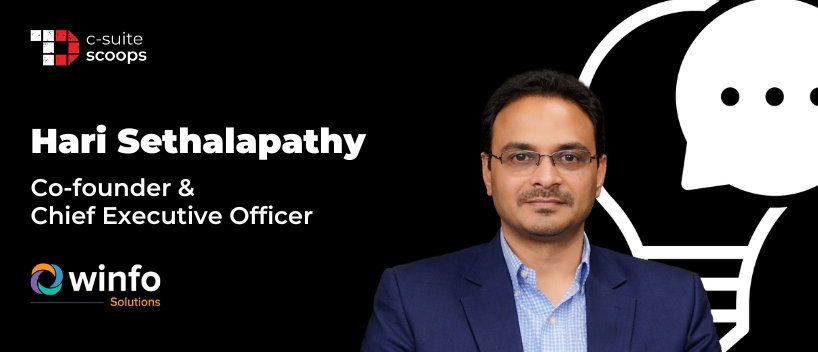
"As enterprises race to adopt AI and automation, the question is no longer whether technology works. The question is whether organizations are actually extracting the outcomes they expected when they invested in it." - Hari Sethalapathy, Co-founder and CEO of Winfo Solutions.
Technology Is No Longer the Hard Part
Historically, enterprise transformation was largely a technical challenge.
Organizations spent months defining requirements, building systems, and implementing platforms that could take years to go live. The focus was on ensuring systems were functional, stable, and delivered within scope.
Today, that model is increasingly outdated.
By the time a traditional implementation is completed, the business environment may already have shifted. Market conditions change. Customer expectations evolve. New technologies emerge.
The result is a growing realization among enterprise leaders. Technology implementation alone does not create transformation.
What matters is what happens after the system goes live.
Organizations that once measured success by delivering projects on time and within budget are now asking a very different question.
What measurable business impact did this transformation create?
This shift from implementation to outcomes is fundamentally changing how companies approach technology.
The Rise of Outcome-Driven Transformation
One of the most significant shifts in enterprise technology today is the move toward outcome-driven partnerships.
In earlier eras of enterprise consulting, projects were transactional. Companies defined requirements, consultants delivered solutions, and the engagement ended once the system was operational.
Modern organizations expect more.
Instead of simply deploying technology, partners are increasingly expected to deliver measurable outcomes. These outcomes may include increasing efficiency, reducing costs, or accelerating time to market.
This shift is also reshaping how transformation projects are structured.
Long implementation cycles built around rigid planning models are giving way to more agile approaches. Rather than waiting months or years to see results, organizations now expect incremental progress in weeks.
Small deployments, rapid experimentation, and continuous improvement have become central to how transformation initiatives operate.
In this environment, speed and adaptability matter as much as technical expertise.
Automation’s Evolution From Efficiency to Intelligence
Automation has been a cornerstone of enterprise technology for years.
Early forms of automation, including spreadsheet macros and robotic process automation, focused primarily on efficiency. They removed repetitive manual tasks and streamlined operational workflows.
Artificial intelligence is now expanding automation far beyond those capabilities.
Traditional automation systems operate through predefined rules. They perform tasks exactly as programmed, with little ability to adapt to new scenarios.
AI-driven automation introduces a new dimension. Intelligence.
Modern AI agents can analyze information, interpret patterns, and make decisions based on context. Instead of simply executing tasks, they can guide processes, resolve issues, and proactively identify solutions.
Consider a typical enterprise support process. Historically, employees submitted tickets that were routed through layers of support teams before reaching resolution.
AI-enabled systems can now analyze historical data, documentation, and previous incidents to provide answers immediately. In many cases, the system resolves issues before a ticket is even created.
The impact extends across enterprise operations.
Expense reporting, financial reconciliation, supply chain monitoring, and customer support are all areas where intelligent automation is transforming how work is performed.
The real opportunity lies not in automation itself but in how organizations redesign their processes around it.
Why Ecosystems Are Replacing Traditional Consulting Models
Another major shift shaping enterprise transformation is the rise of technology ecosystems.
In the past, organizations often relied on a single consulting partner to manage large transformation initiatives.
That approach is becoming increasingly difficult in today’s multi-platform environment.
Enterprise systems now span cloud providers, enterprise applications, AI frameworks, and specialized software platforms. No single organization can maintain deep expertise across every domain.
Transformation is therefore becoming an ecosystem effort.
Strategic partnerships between technology providers allow organizations to combine strengths, integrate solutions, and deliver more comprehensive capabilities to customers.
For enterprises, this approach offers several advantages.
It accelerates innovation by bringing together multiple areas of expertise. It reduces implementation risk by ensuring that no single organization carries the responsibility for every component of a complex system.
Most importantly, it allows businesses to adopt best-of-breed solutions rather than being constrained by a single platform.
The Overlooked Factor in Digital Transformation
Despite the excitement surrounding AI and automation, one factor continues to determine the success or failure of transformation initiatives. That factor is people.
Technology may enable change, but human capability ultimately determines whether organizations can sustain it.
Leaders often focus heavily on technology investments. Transformation requires something deeper. It requires organizational adaptability.
Employees must be willing to learn new tools, adopt new workflows, and rethink how work is performed.
Encouragingly, many organizations are already seeing this shift.
Professionals across industries are actively developing new skills and adapting to emerging technologies. Instead of resisting automation, many employees recognize that these tools can free them from repetitive tasks and allow them to focus on more meaningful work.
In this sense, the rise of AI may not eliminate human roles. It may redefine them.
Closing the Value Gap
As enterprise technology enters the AI era, the real challenge is no longer technological capability.
The tools exist. The platforms exist. Innovation is happening faster than ever.
The challenge now is ensuring that technology investments translate into real and sustained business value.
Organizations that succeed in the coming decade will not simply adopt new technologies. They will build cultures, partnerships, and operating models that allow those technologies to deliver measurable impact.
Closing the value gap requires a shift in mindset. The focus must move from implementing systems to continuously unlocking value from them.
For enterprise leaders navigating this transformation, that shift may be the most important one of all.
Mon, Apr 6, 2026

Liked what you read? That’s only the tip of the tech iceberg!
Explore our vast collection of tech articles including introductory guides, product reviews, trends and more, stay up to date with the latest news, relish thought-provoking interviews and the hottest AI blogs, and tickle your funny bone with hilarious tech memes!
Plus, get access to branded insights from industry-leading global brands through informative white papers, engaging case studies, in-depth reports, enlightening videos and exciting events and webinars.
Dive into TechDogs' treasure trove today and Know Your World of technology like never before!
Disclaimer - Reference to any specific product, software or entity does not constitute an endorsement or recommendation by TechDogs nor should any data or content published be relied upon. The views expressed by TechDogs' members and guests are their own and their appearance on our site does not imply an endorsement of them or any entity they represent. Views and opinions expressed by TechDogs' Authors are those of the Authors and do not necessarily reflect the view of TechDogs or any of its officials. While we aim to provide valuable and helpful information, some content on TechDogs' site may not have been thoroughly reviewed for every detail or aspect. We encourage users to verify any information independently where necessary.
Loading comments...